

Royal Mail second class changes will reshape how letters are delivered across the UK from 2026. The biggest change is that second-class letters will no longer arrive on Saturdays.
Instead, Royal Mail will move to an alternate weekday system, while still aiming to deliver second-class post within three working days.
Key points you need to know:
- Saturday deliveries for second-class letters will end by December 2026
- Second-class post will be delivered every other weekday, Monday to Friday
- First-class letters, tracked items and parcels will still be delivered six days a week
- The rollout will happen gradually, beginning with 240 delivery offices
- Businesses and households may need to send important letters earlier
For anyone who regularly sends bills, appointment letters, invoices or personal correspondence, understanding these Royal Mail second class changes now will help you avoid delays later.
What Are the Royal Mail Second Class Changes for 2026?
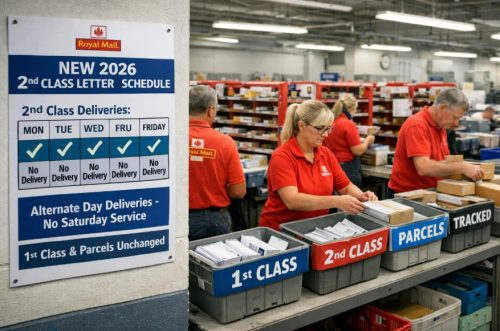
Royal Mail is introducing one of the biggest reforms to the UK postal system in years. From December 2026, second-class letters will no longer be delivered on Saturdays. Instead, they will move to an alternate weekday schedule between Monday and Friday.
Under the new arrangement, second-class letters will still have a target of arriving within three working days, but deliveries will no longer happen every day.
Royal Mail says this is necessary because letter volumes have fallen sharply over the past decade, while the number of parcels has continued to rise.
The changes apply only to second-class letters and standard non-priority mail. First-class letters, tracked services and parcels are not affected.
Why is Royal Mail changing the Second Class Delivery Service?
Royal Mail says the changes are driven by how people now communicate. More households and businesses use email, messaging apps and online billing, which has led to a sharp decline in letter volumes.
The number of letters sent in the UK has fallen from around 20 billion a year to under 7 billion, making a six-day delivery service for second-class post increasingly costly.
- Letter volumes have dropped significantly
- Costs of maintaining six-day delivery have risen
- Demand has shifted towards parcels and first-class post
Royal Mail argues that reducing second-class delivery days will help create a more sustainable and efficient postal network. The regulator Ofcom has approved this direction under updates to the Universal Service Obligation.
Royal Mail chief executive Alistair Cochrane said:
“Moving ahead with reform will make a real difference to Royal Mail’s quality of service, supporting the delivery of a reliable, efficient and financially sustainable postal service for our customers across the UK.”
The company also believes that reducing second-class delivery days will allow it to focus more effectively on first-class post and parcels, where demand remains much stronger.
When Will the New Royal Mail Second Class Changes Come Into Effect Across the UK?
The rollout will happen gradually throughout 2026 rather than beginning nationwide all at once. Royal Mail has already trialled the system in a small number of delivery offices and plans to extend it to 240 offices before rolling it out across the entire UK network.
Rollout Timetable
The new second-class model has already been tested in 35 delivery offices. Following the latest agreement with the Communications Workers Union (CWU), Royal Mail will now expand the trial significantly.
| Stage of Rollout | Number of Delivery Offices | Expected Timing |
| Initial pilot scheme | 35 offices | Already completed |
| Expanded trial | 240 offices | During 2026 |
| Full national rollout | Around 1,200 offices | By December 2026 |
Royal Mail expects every delivery office in the UK to be operating under the new system by the end of December 2026.
However, some areas may notice changes earlier depending on when their local office joins the programme.
Why the Rollout is Being Phased?
Royal Mail and the CWU spent months in discussions over how the changes would affect staff and delivery routes. The gradual rollout is designed to reduce disruption, test the new timetable and allow postal workers to adjust.
A CWU statement explained:
“Delivering change will always be difficult but we are clearly in a stronger position to support our members under the terms of this agreement.”
Will Second Class Letters Still Be Delivered on Saturdays?
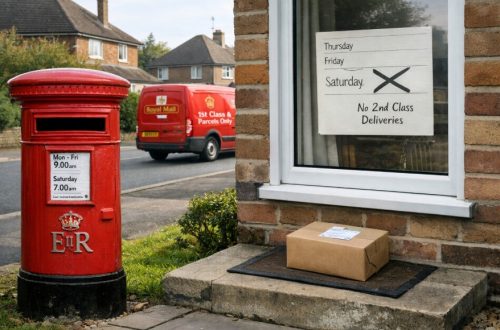
No. Under the new Royal Mail second class changes, Saturday delivery for second-class letters will stop completely.
This does not mean all Saturday deliveries will disappear. Royal Mail will continue to deliver first-class letters, tracked items and all parcels six days a week, including Saturdays.
For many households, the change may initially cause confusion because second-class letters have traditionally arrived Monday to Saturday. Once the new system is fully in place, any second-class letter posted later in the week could arrive after the weekend rather than before it.
How Will the Every-other-weekday Royal Mail Second Class System Work?
Royal Mail has not released a single national timetable for the new second-class delivery system because the pattern is expected to vary between local delivery offices.
However, the overall approach will be the same across the UK: second-class letters will only be delivered on alternate weekdays between Monday and Friday, with no Saturday deliveries.
What Does Every Other Weekday Delivery Mean?
Under the new Royal Mail second class changes, households and businesses will no longer receive second-class letters every weekday. Instead, deliveries will follow a rotating schedule.
For example, one area may receive second-class post on Monday, Wednesday and Friday during one week, then on Tuesday and Thursday the following week. Another area may follow a different pattern depending on local routes and staffing.
Although the delivery days will be reduced, Royal Mail says it will still aim to deliver second-class letters within three working days.
Example Delivery Times Under the New Rules
The new timetable means that posting dates will matter more than before. A second-class letter posted on a Monday may not arrive until Thursday. A letter posted on Wednesday could arrive the following Monday if it misses the next available delivery slot.
| Posting Day | Current Typical Delivery | New Expected Delivery |
| Monday | Wednesday or Thursday | Thursday |
| Wednesday | Friday or Saturday | Monday |
| Friday | Monday or Tuesday | Tuesday or Wednesday |
For businesses that send invoices, reminders or legal notices, this extra delay could become significant.
A regular customer from Birmingham, who frequently sends birthday cards and appointment letters to relatives, described the likely impact:
“I usually post second-class cards on a Thursday because I know they arrive by Saturday. Now I’ll probably have to send them much earlier or switch to first class.”
What Could This Mean for Important Post?
You may need to rethink when you post important documents. If something needs to arrive before the weekend, relying on second-class post may no longer be enough.
To avoid problems, you may need to:
- Post important letters earlier in the week
- Use first-class delivery for urgent documents
- Consider tracked services for time-sensitive items
Overall, the new system means planning ahead will be essential to ensure your post arrives on time.
Which Royal Mail Services Are Changing and Which Will Stay the Same?
The changes only apply to second-class letters and some standard bulk business mail. Other Royal Mail services will continue to operate as normal.
- First-class letters will still be delivered Monday to Saturday
- Parcels will still be delivered six days a week
- Tracked services are unchanged
- Second-class parcels are not affected
- Standard business mail will move to a similar three-day target
This distinction is important because many people assume that all second-class services are changing. In reality, only letters and certain bulk mail products are affected.
How Will the Royal Mail Second Class Changes Affect UK Households?
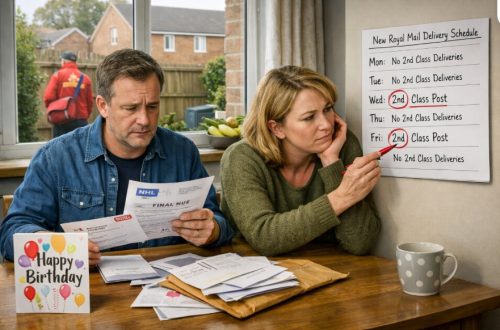
For households, the main effect will be longer waiting times for everyday letters. Documents such as NHS appointment reminders, bank statements, birthday cards and utility letters may now take an extra day or two to arrive.
The change could be especially frustrating for people who rely on postal communication rather than digital alternatives. Older residents, for example, may still receive most of their correspondence by post.
There are also concerns that important medical and legal letters could be delayed. During parliamentary discussions, some union representatives claimed that workers were already being asked to prioritise parcels over letters.
Royal Mail owner Daniel Kretinsky responded:
“There was no management decision for parcels to be prioritised over letters.”
Even so, households may increasingly need to check online accounts, email updates or text notifications rather than relying solely on second-class post.
How Will UK Businesses Need to Adapt to the New Second Class Postal Rules?
Businesses are likely to feel the impact of the Royal Mail second class changes more than individual households. Many companies still depend on second-class letters for invoices, statements, appointment reminders and customer communications.
Business Communications Most Likely to Be Affected
The following types of mail could face longer delivery times:
- Bills and invoices
- Customer statements
- Appointment reminders
- Legal notices
- Marketing letters
- Payment requests
For businesses that work to strict deadlines, even one extra delivery day could create missed payments or delayed responses.
Practical Steps Businesses Should Take
To prepare for the new system, businesses should review how and when they send important post.
- Use first-class mail for urgent or legal documents
- Send invoices and statements earlier than usual
- Build extra delivery time into internal processes
- Encourage customers to switch to email where possible
Many SMEs may also choose to move more communication online to reduce reliance on second-class post.
What Has Royal Mail Agreed With the CWU and Why Does It Matter?
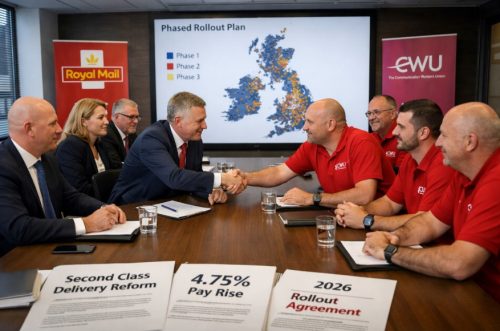
The agreement between Royal Mail and the CWU is important because it allows the rollout to continue after months of disagreement.
Under the deal, workers who joined Royal Mail after December 2022 will receive a 4.75% pay rise and improved terms. Employees on older contracts will receive a 3% rise.
Around 6,000 part-time workers will also be able to increase their hours, while new employees will move to a standard 37-hour week.
These employment changes are designed to support the new delivery system and ensure there are enough staff available to cover the revised routes.
Without the agreement, Royal Mail may have struggled to introduce the reforms nationwide.
What Do the Royal Mail Second Class Changes Mean for the Future of UK Postal Services?
The Royal Mail second class changes are likely to mark the beginning of a wider transformation in the UK postal system. Letter deliveries are becoming less common, while parcels continue to dominate.
For Royal Mail, reducing second-class deliveries is a way to keep the Universal Service Obligation affordable. For consumers and businesses, it means adapting to a postal system that is no longer designed around daily letter delivery.
Over time, more people may switch to digital communication or use premium postal services when speed matters. The days of expecting a second-class letter to arrive on Saturday are coming to an end.
Conclusion
The Royal Mail second class changes will significantly alter how letters are delivered across the UK from 2026.
With Saturday deliveries ending and a new alternate weekday schedule replacing the current system, both households and businesses will need to plan ahead.
While first-class mail, parcels and tracked services remain unchanged, second-class users may face longer delivery times.
To avoid delays, it will be important to send post earlier, review communication methods and use faster services when timing is critical.
Frequently Asked Questions
Will second class stamps still be valid after the 2026 Royal Mail changes?
Yes. Existing second-class stamps will remain valid. The change only affects the delivery schedule, not whether current stamps can still be used.
Are online postage labels and Click & Drop services affected by the second class update?
Only if you select second-class letter postage. First-class, tracked and parcel services purchased through Click & Drop will continue to operate as normal.
Will standard business mail and bulk mail follow the same delivery schedule as second-class letters?
Yes. Royal Mail has said that standard bulk business mail, such as statements and bills, will move to the same three-day delivery target as second-class letters.
Could Royal Mail remove more letter delivery days in the future?
There are no confirmed plans beyond the 2026 changes. However, if letter volumes continue to decline, further reforms could be discussed in future years.
Will the price of second class stamps change because of the new delivery pattern?
Royal Mail has not announced any direct link between the new delivery system and stamp prices. At present, a second-class stamp remains priced at 91p.
Can you still send urgent documents using Royal Mail after these changes?
Yes. First-class post, Special Delivery and tracked services will still be available for urgent or guaranteed deliveries.
How can you check whether your local area has already moved to the new second class schedule?
Royal Mail is expected to provide updates through local delivery offices and its website as the rollout expands across the UK.