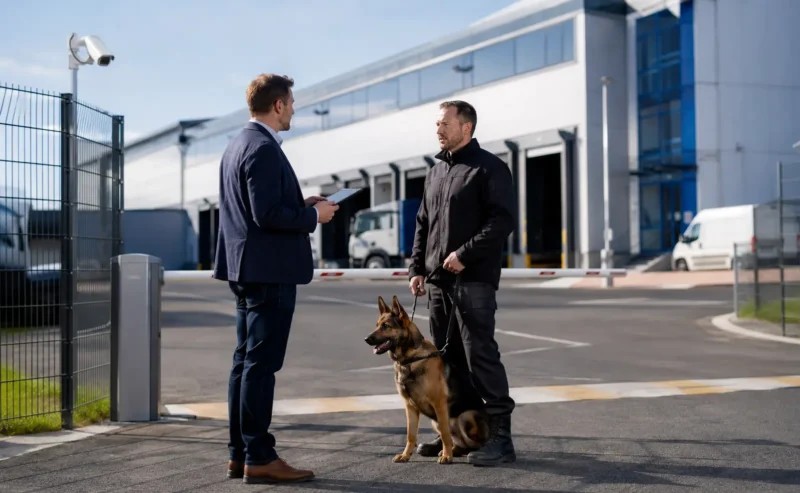
Plenty of business owners get quoted by two or three K9 providers before noticing that none of them asked a single question about the site itself. Same price range, same generic pitch, no mention of the layout, the hours, or what actually went missing the last time something did. That’s usually the first sign a provider is renting out a dog rather than running a proper security service.
Picking the wrong one doesn’t just waste the budget. It leaves the same gaps a static guard or a camera couldn’t cover in the first place, just with a dog walking past them now instead of a person.
How to Choose the Right K9 Security Provider?
Start With the Handler, Not the Dog
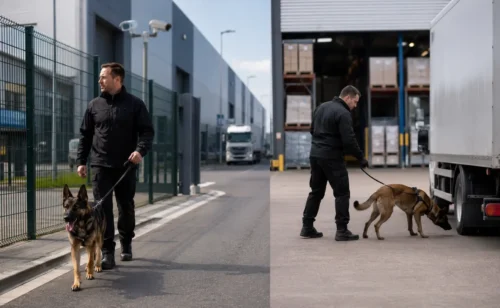
Most of the sales pitch tends to focus on the dog itself: its breed, its training certificate, how many years it’s worked. All of that matters less than who’s holding the lead.
A handler who’s spent years on retail sites or events has a completely different skill set to one who’s used to construction business environments, warehouses, or licensed premises. It’s worth asking specifically where a provider’s handlers have worked before, not just how long they’ve been in the industry generally.
A good provider will tell you which of their handlers actually suit your site, rather than just assigning whoever’s free that week.
Licensing Isn’t Optional
Every handler deploying on a UK site needs an SIA licence, and the dog itself should be trained to a recognised standard, usually through an organisation like the National Association of Security Dog Users.
It’s reasonable to ask to see both directly rather than take a provider’s word for it. A provider who hesitates on this, or offers to sort the paperwork later, isn’t one worth using regardless of how competitive the quote looks.
Insurance sits alongside this and gets overlooked more than it should. Public liability cover specific to K9 operations differs from general security insurance, and not every provider carries it. Getting the certificate before signing anything, rather than after, saves a lot of trouble later.
Match the Dog to the Job
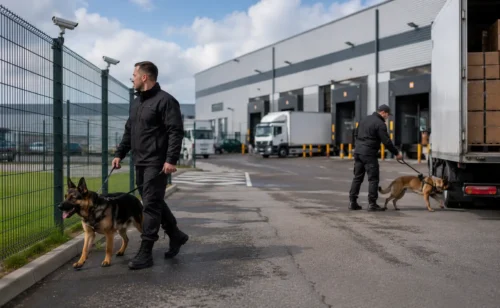
Different roles call for different training. A dog used for pure deterrent patrol work doesn’t need the same specialism as one trained for detection. Some providers run one type of dog for everything, which works fine for a straightforward night patrol but falls short if a site actually needs detection training built in.
It’s also worth asking what happens if the dog is unwell or the handler calls in sick. A provider running one dog and one handler off a single roster has nothing to fall back on, which is exactly the kind of gap this service exists to close.
Reputation Tells You More Than the Website Does
Case studies and testimonials are worth reading, though also worth verifying independently. Asking for a reference from a client with a similar site type, rather than any client a provider chooses to point towards, tends to get a more honest picture.
A provider confident in their work will usually connect you with someone in a comparable industry without much fuss.
Response time after an incident matters just as much as the patrol itself. What happens if the dog flags something at 3 am, who gets called, and what gets logged afterwards, says a lot about whether there’s a proper process behind the service or not.
Getting the Decision Right
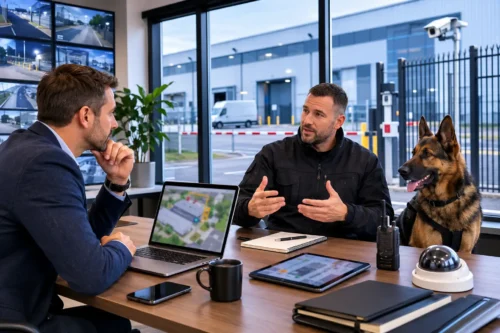
None of this needs to take long to check. A short call covering handler background, licensing requirements, insurance, and backup cover tells you more about a provider than any brochure will.
K9 Security Services built around these checks tend to hold up better under scrutiny: SIA-licensed handlers matched to the site they’re working, dogs trained to recognised standards, and cover in place so a single sick day doesn’t leave a gap in the patrol.
The cheapest quote rarely turns out to be the cheapest option once a gap in cover gets exploited. Spending the extra twenty minutes checking credentials before signing usually makes the right choice obvious on its own.