

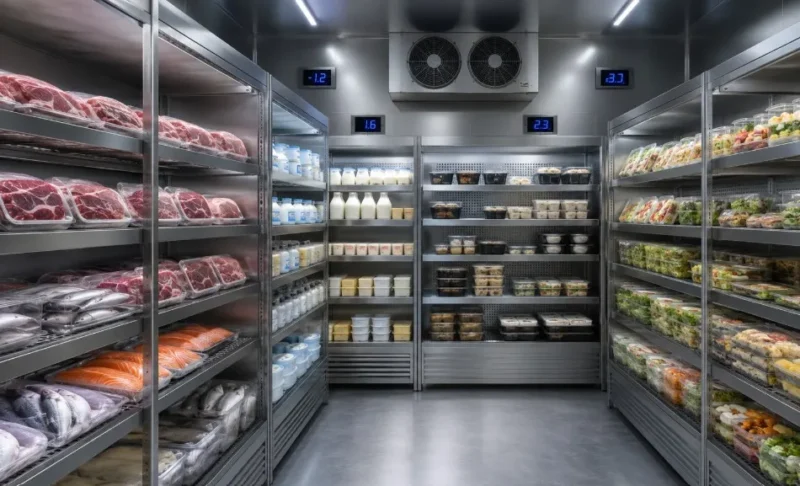
The cold chain is one of the most demanding logistics environments in existence. Food businesses that need to move chilled products from production to retail, food service, or direct-to-consumer know that any failure in temperature control can result in spoiled stock, regulatory issues, and damaged business relationships.
Companies like Run It Cool specialise in chilled food delivery, providing the infrastructure, expertise, and operational reliability that food businesses need to keep their products at the correct temperature throughout the entire delivery journey.
What the Cold Chain Means in Practice?
The cold chain refers to the unbroken sequence of refrigerated production, storage, and distribution activities that maintain food products within a safe and optimal temperature range from the point of manufacture to the point of consumption.
Each link in this chain, from the production facility to the distribution centre, from the distribution centre to the delivery vehicle, and from the vehicle to the receiving premises, must maintain the required temperature without interruption.
A failure at any single point in this sequence can compromise the safety and quality of the entire batch, regardless of how well the other stages were managed.
Why Should You Choose a Specialist Chilled Food Delivery Service for Your Business?
Temperature Requirements for Different Categories of Chilled Food
Different categories of chilled food have different temperature requirements, and a competent chilled delivery service will manage these appropriately.
Fresh meat and fish typically need to be kept between zero and two degrees. Dairy products, prepared foods, and most chilled ready meals are maintained between two and five degrees. Some products require slightly different conditions depending on their specific ingredients and shelf life characteristics.
A good chilled food delivery provider will work with their clients to understand the specific temperature requirements of each product category and ensure that vehicles, handling procedures, and monitoring systems are calibrated accordingly.
Vehicle Standards and Refrigeration Equipment
The quality of the refrigeration equipment used for chilled food delivery directly affects service reliability. Modern temperature-controlled vehicles incorporate advanced refrigeration units with independent power supplies that maintain temperature even when the vehicle engine is switched off, digital temperature monitoring systems that generate a continuous data log of conditions throughout the journey, and insulated bodies that minimise the impact of external temperature on the cargo compartment.
Regular servicing and certification of vehicles and refrigeration units are essential for maintaining consistent performance, and businesses should ask prospective providers about their maintenance schedules and equipment certification standards.
Documentation and Traceability in the Cold Chain
Food businesses operating in the UK are required by law to implement food safety management systems based on HACCP principles, and temperature control during delivery is a critical control point in most chilled food supply chains. This means businesses need to demonstrate, through documented evidence, that their products were maintained at the correct temperature throughout the delivery process.
A professional chilled food delivery service will generate temperature logs for every delivery, provide documentation to satisfy regulatory requirements and customer audits, and maintain records for the period required by relevant legislation.
Flexibility and Capacity in Chilled Delivery
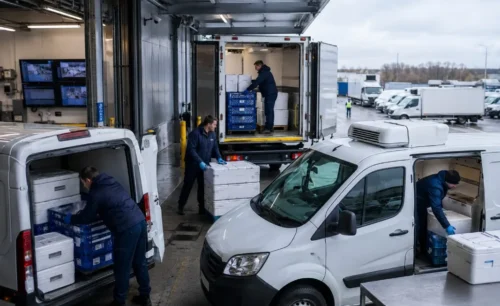
Food businesses often face significant variability in delivery volumes, driven by seasonal demand, promotional activity, new customer relationships, and other factors that are difficult to predict far in advance.
A good chilled delivery partner will have the capacity and operational flexibility to scale up or down in response to changing requirements, without compromising on the service standards that underpin the relationship.
This includes the ability to handle additional delivery points, accommodate changes to delivery schedules, and respond to urgent requirements at short notice. Capacity flexibility is one of the most practical benefits of working with a dedicated specialist rather than relying on a general logistics provider.
Choosing a Chilled Food Delivery Partner for Your Business
Selecting the right chilled food delivery provider is a decision that has ongoing consequences for product quality, regulatory compliance, and customer satisfaction.
When evaluating potential partners, look beyond the headline price and consider the quality of their equipment, the robustness of their temperature monitoring and documentation systems, their experience with the specific categories of food you need to move, and their ability to scale with your business over time.
Ask for references from other food businesses in similar sectors and, if possible, visit their facilities to assess the operational standards they maintain. A chilled delivery partner who understands the food industry and takes their responsibilities seriously is a genuine asset to your business.