Last Checked: 10 July 2026
There is no fixed amount of cash you can deposit in the UK without raising suspicion. Your bank may question a cash deposit if it looks unusual for your account, does not match your normal income or business activity, or cannot be clearly explained with evidence.
Key Takeaways:
- There is no universal UK cash deposit limit that is automatically “safe”.
- Banks look at the source of funds, account history, deposit pattern, and overall risk.
- £5,000 and £10,000 are not automatic personal banking reporting limits.
- You can deposit legitimate cash, but your bank may ask where it came from.
- Splitting a larger amount into smaller deposits can make the activity look more suspicious.
- If the cash came from a sale, gift, savings, inheritance, or business takings, keep proof.
- Business cash deposits may also involve tax, bookkeeping, and anti-money-laundering duties.
How Much Cash Can You Deposit Without Raising Suspicion in the UK?

There is no guaranteed cash amount that avoids bank questions in the UK. A small deposit can raise questions if it is unusual, while a larger deposit may be accepted smoothly if it fits your normal activity and you can explain it.
Is There a Fixed UK Cash Deposit Limit?
No, there is no single personal cash deposit limit that applies to every UK bank account. Your bank may have its own branch, ATM, or account limits, but those limits are not the same as a legal suspicion threshold.
What Amount Might Lead to Bank Questions?
A bank may ask questions about £1,000, £5,000, £10,000, or any other amount if the deposit does not fit your usual account pattern. The amount matters, but the reason, frequency, and evidence matter too.
The Safer Rule
The safest rule is to deposit legitimate cash transparently. Do not try to hide the amount, and do not split deposits just to avoid questions. If the money is genuine, keep documents that show where it came from.
What Does “Raising Suspicion” Mean When Depositing Cash?

“Raising suspicion” means your bank has a reason to check whether the money is lawful, properly explained, and consistent with your normal financial behaviour. It does not automatically mean you have done anything wrong.
Banks deal with many legitimate cash deposits every day. The issue starts when a deposit looks unusual, unexplained, or inconsistent with the customer’s profile.
Suspicion is About Risk, Not Just the Amount
A single number does not decide everything. Banks use a risk-based approach because suspicious activity can involve large deposits, repeated small deposits, sudden changes, or unusual movement of money after cash is paid in.
For example, a café owner depositing regular cash takings may not look unusual. A salaried employee who suddenly deposits a large cash amount with no explanation may be asked for more details.
Examples of Activity That May Look Unusual
A bank may ask questions if you:
- Deposit a large one-off cash amount without a clear reason.
- Pay in many smaller cash deposits over a short period.
- Deposit cash that does not match your job, income, or business.
- Receive cash from someone else and pay it into your own account.
- Deposit cash and quickly transfer it to another person or overseas account.
These examples do not prove wrongdoing. They simply show why the bank may need more information.
Do Banks Report Cash Deposits to HMRC or the Police?
Banks do not automatically report every cash deposit to HMRC or the police just because it is large. However, if a bank suspects money laundering or another financial crime risk, it may make a report through the proper legal process.
Banks Report Suspicion, Not Every Deposit
UK banks and regulated firms have anti-money-laundering responsibilities. The FCA explains that firms must report suspicious activity where they know or suspect money laundering or terrorist financing, usually through a Suspicious Activity Report to the National Crime Agency. You can read the official explanation in the FCA’s guidance on money laundering and terrorist financing.
This means the bank is not simply looking at whether the amount is high. It is looking at whether the transaction appears suspicious in context.
What is a Suspicious Activity Report?
A Suspicious Activity Report, often called a SAR, is a report made when there is knowledge or suspicion of money laundering or terrorist financing. The customer is usually not told if a SAR has been made.
Can HMRC Become Involved?
HMRC may become relevant if the cash relates to undeclared income, business takings, unpaid tax, VAT issues, or unexplained wealth. For example, if someone regularly deposits cash from side work but does not declare taxable income, the tax issue may become more serious than the deposit itself.
Can You Deposit £5,000 Cash in a UK Bank?

Yes, you may be able to deposit £5,000 cash into a UK bank account. However, your bank may ask where the money came from if the deposit is unusual for your account.
£5,000 is often mentioned online, but it should not be treated as a fixed UK legal threshold. Some banks may ask questions below this amount. Others may accept a higher amount if it fits your account activity and you have a clear explanation.
£5,000 is Not a Universal Legal Threshold
There is no official rule saying that £5,000 is always safe or always suspicious. A £5,000 deposit from a private car sale may be reasonable if you have the paperwork. A £5,000 cash deposit with no explanation may lead to more questions.
Why Your Bank May Ask for Proof?
Your bank may ask for proof because cash is harder to trace than a bank transfer. A transfer usually shows the sender and account history. Cash does not show that trail by itself.
Useful proof may include a sale receipt, invoice, gift letter, inheritance paperwork, wage record, or bank statement showing an earlier withdrawal.
What to Do Before Depositing £5,000 or More?
Before depositing a larger cash amount, check your bank’s process. For larger sums, it is often better to use a branch rather than a machine, because branch staff can check ID and discuss the source of funds.
Bring identification and any documents that support your explanation. If the money came from a genuine source, being prepared can reduce delays.
Can You Deposit £10,000 Cash in the UK?
You may be able to deposit £10,000 cash into a UK personal bank account, but this amount is more likely to lead to questions. The bank may ask for identification, source-of-funds evidence, and a clear explanation.
Personal Bank Deposits vs High-value Dealer Rules
A common misunderstanding is that £10,000 is a simple personal banking reporting limit. It is not. The £10,000 figure is especially relevant in certain business anti-money-laundering rules.
For example, GOV.UK explains that a high value dealer may include a business or sole trader that accepts or makes large cash payments for goods. The official high value dealer registration guidance is about business compliance, not a simple personal bank deposit limit.
Important 2026 Update for High-value Dealers
From 30 June 2026, UK high value dealer rules refer to cash payments of £10,000 or more. Before that, the threshold was commonly expressed in euros. This is important for businesses dealing in goods, but it should not be confused with personal banking rules.
Why £10,000 Can Still Attract Questions?
Even if £10,000 is legitimate, the bank may still ask for proof. If the cash came from inheritance, sale proceeds, business income, or savings, keep records that support the explanation.
What Proof Do You Need When Depositing Cash?
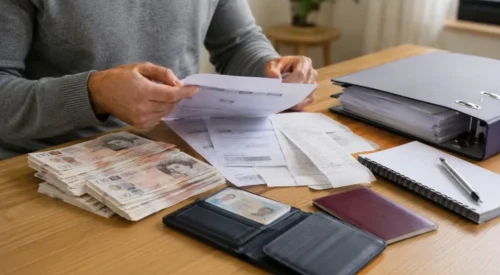
You do not always need formal documents for every small cash deposit. However, the larger or more unusual the deposit is, the more useful it becomes to have proof.
Common Proof of Funds Documents
Depending on the source of the money, helpful documents may include:
- Sale receipt for a car, jewellery, equipment, or furniture.
- Invoice or business sales record.
- Till record or cash takings summary.
- Bank statement showing previous withdrawals.
- Gift letter from a family member.
- Solicitor, probate, or inheritance paperwork.
- Payslips or wage records.
The aim is not to create unnecessary paperwork. The aim is to show a clear and believable trail if your bank asks.
What if You Have Old Cash Savings at Home?
Old cash savings can be harder to prove because there may be no recent record. If possible, gather old withdrawal records, savings records, wage records, or any written explanation that supports how the cash was built up.
If the amount is large, speak to your bank before depositing it. It is usually better to explain the situation upfront than to make several unexplained deposits.
What if the Cash Came From Family?
Cash from family can still raise questions. Your bank may ask who gave it to you, why it was given, and whether there is evidence. A simple signed gift letter, message record, or bank withdrawal record from the person giving the money may help.
Why Splitting Cash Deposits Can Make Things Worse?
Splitting one larger cash amount into several smaller deposits to avoid attention can create more problems. It may make the activity look planned, artificial, or deliberately structured.
What is Structuring?
Structuring means breaking a larger amount into smaller transactions to avoid checks, limits, or attention. Even if the money originally came from a lawful source, this behaviour can look suspicious.
What is Smurfing?
Smurfing usually refers to using several people, accounts, or deposits to move money into the financial system in smaller parts. This term is often used in money laundering discussions.
Why You Should Not Split Deposits to Avoid Checks?
If you have £8,000 from a genuine car sale, paying it in as one transparent deposit with evidence may look more reasonable than paying in £1,000 every day for eight days. Repeated small deposits can look like an attempt to avoid scrutiny.
Personal Cash Deposits vs Business Cash Deposits
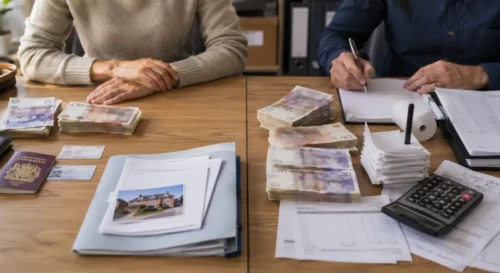
Personal and business cash deposits are treated differently because the reason for the money is different.
If You Are Depositing Personal Cash
Personal cash may come from selling a car, receiving a family gift, saving money at home, or receiving inheritance. The key is to keep evidence that explains the source.
If You Are Depositing Business Cash
Business cash should match your sales records, invoices, till reports, and accounting entries. If you regularly take cash from customers, your deposits should make sense when compared with your business activity.
You should also make sure the income is properly recorded for tax purposes. If you are unsure, speak to an accountant.
If Your Business Accepts Large Cash Payments
Businesses that accept large cash payments may have extra anti-money-laundering duties depending on what they sell and how they operate. This is especially important for businesses dealing in goods, high-value items, or repeated large transactions.
Cash Deposits at a Bank Branch, ATM, or Post Office
Where you deposit cash can affect the process. Branch, ATM, and Post Office deposits may have different limits and checks.
Depositing Cash in the Branch
A branch is often the better option for larger cash deposits. Staff can check your ID, ask questions, and review documents at the same time.
Depositing Cash at an ATM or Self-service Machine
ATM and machine deposits may be convenient for smaller amounts, but they can have daily or transaction limits. They may also be less suitable if you need to explain the source of funds.
Depositing Cash at the Post Office
Some UK bank customers can deposit cash through Post Office counters, depending on their bank’s arrangements. Limits and checks may vary, so check your bank’s current rules before using this option for a large amount.
Comparison Table: What May Happen When You Deposit Cash?
| Situation | Will it automatically be suspicious? | What the bank may ask for | Safer approach |
| Small regular personal cash deposits | Usually not, if consistent | Basic account checks | Keep normal records |
| One-off cash from selling a car | Not automatically | Sale receipt and explanation | Deposit openly with paperwork |
| Repeated small deposits over days | Could raise questions | Source of funds and reason | Do not split to avoid checks |
| Business cash takings | Depends on business profile | Invoices, till records, accounts | Keep clear bookkeeping |
| Family cash gift | Not automatically | Gift letter or explanation | Keep written evidence |
| Large cash payment for goods in business | May create compliance duties | AML and business records | Check HMRC rules |
Misinformation and False Claims to Avoid

Cash deposit rules are often explained badly online. Some claims sound simple, but they can mislead readers.
Anything Under £5,000 is Safe
This is false. A deposit below £5,000 can still raise questions if it looks unusual or suspicious.
Banks Only Report Deposits Over £10,000
This is also misleading. Banks report suspicion, not only deposits over a fixed amount. The National Crime Agency explains that Suspicious Activity Reports alert law enforcement to potential money laundering or terrorist financing.
Splitting Deposits Avoids Suspicion
This is risky and can make the situation worse. Repeated smaller deposits may look more suspicious than one honest deposit with evidence.
The Bank Cannot Ask Where Cash Came From
Banks can ask questions as part of their financial crime controls. If you refuse to explain a large or unusual cash deposit, the bank may delay, reject, or review the transaction.
What Should You Do Before Depositing a Large Amount of Cash?
Before depositing a large cash amount, prepare properly. This does not mean you should be afraid to deposit legitimate money. It means you should be ready to explain it.
- Check your bank’s cash deposit policy: Look at your bank’s current limits for branch, ATM, and Post Office deposits.
- Gather source-of-funds evidence: Collect receipts, invoices, gift letters, withdrawal records, or legal documents.
- Use a branch for larger deposits: A branch can be more suitable when staff may need to check your ID or ask questions.
- Be honest if staff ask questions: Give a clear and simple explanation. Do not invent details.
- Keep copies of documents: Keep records after the deposit, especially if the money relates to tax, business, or a valuable sale.
- Speak to an accountant if needed: If the cash relates to business income, self-employment, VAT, or tax, professional advice may help.
Conclusion
If you are asking how much cash can you deposit without raising suspicion UK, the answer is that there is no universal safe limit. A bank may question any cash deposit if it looks unusual, unexplained, or inconsistent with your normal account activity.
Legitimate cash can still be deposited, but you should be prepared. Keep evidence of where the money came from, use a sensible deposit method, and avoid patterns that look like you are trying to hide the real amount.
FAQs
Is there a legal cash deposit limit in the UK?
There is no single legal cash deposit limit for every personal bank account in the UK. Your bank may set practical limits for branches, ATMs, or Post Office deposits, but those limits are different from anti-money-laundering checks.
Can I deposit £5,000 cash into my bank account?
Yes, you may be able to deposit £5,000 cash, but your bank may ask where it came from. Keep proof such as a sale receipt, gift letter, invoice, or withdrawal record.
Can I deposit £10,000 cash into a UK bank?
You may be able to deposit £10,000 cash, but this amount is more likely to lead to source-of-funds questions. If the money is legitimate, prepare documents before depositing it.
Do banks report cash deposits to HMRC?
Banks do not automatically report every cash deposit to HMRC. However, if a bank suspects financial crime, it may make a Suspicious Activity Report through the proper reporting system.
Can my bank freeze my account after a cash deposit?
A bank may restrict or review an account if it has concerns about a transaction. This depends on the circumstances and the bank’s legal duties.
What happens if I cannot prove where cash came from?
The bank may ask further questions, delay the deposit, refuse the transaction, or review your account. The outcome depends on the amount, risk, and explanation.
Is it suspicious to deposit cash every week?
Not always. Weekly cash deposits may be normal for some businesses or jobs. They may raise questions if they do not match your income, business records, or account history.
Editorial Note
This article is for general information only. It does not provide legal, tax, banking, or financial advice. Cash deposit checks can vary by bank, account type, customer profile, and transaction history. If your situation involves business income, tax, unexplained cash, or a frozen account, consider speaking to your bank, an accountant, or a qualified legal adviser.
How We Checked
We checked the information against official UK sources, including financial crime guidance, anti-money-laundering registration guidance, and Suspicious Activity Report guidance. We also reviewed the topic from a reader-safety perspective to avoid misleading claims, such as suggesting that any fixed amount is always safe or that splitting deposits is a reliable way to avoid checks.