

Somewhere in the country right now, a small business owner is refreshing a banking app, waiting for a customer refund to clear so a supplier can be paid. It is a familiar tension, and it stands in sharp contrast to a corner of the digital economy where money moves almost instantly.
The best real-money online casinos reviewed for UK players in 2026 have turned rapid PayPal and Apple Pay withdrawals into a headline feature, sitting alongside their bonuses, payout speeds and game libraries as one of the first things any comparison site checks.
For a reader weighing up how these operators work, the banking side is often the deciding factor, because a generous welcome offer means little if getting the winnings out feels like wading through treacle. That expectation of same-day money has quietly become the benchmark, and it holds useful lessons for anyone running a business.
What Business Owners Can Learn From Instant Payouts?
Why Speed Became the Selling Point?

It is easy to assume the gaming sector chased quick withdrawals for its own sake, but the truth is more grounded. Customers voted with their feet. Faced with a choice between an operator that paid out in minutes and one that dragged the process across three working days, players simply drifted towards the faster option. Speed stopped being a nice extra and turned into a basic condition of trust.
Business owners will recognise the pattern instantly. A restaurant that refunds a cancelled booking within the hour keeps goodwill intact. A tradesperson who settles a supplier invoice the same day tends to get pushed to the front of the queue next time stock runs short.
The gaming firms simply industrialised a principle that any corner shop understands: people remember how quickly they got their money back, and they judge everything else through that lens.
The Technology Doing the Heavy Lifting
The reason a withdrawal can land in a PayPal balance within minutes is not magic; it is infrastructure. Digital wallets act as a settlement layer that sits on top of the older, slower banking rails, letting funds move without waiting for the traditional overnight batch processing that still governs a lot of everyday transfers.
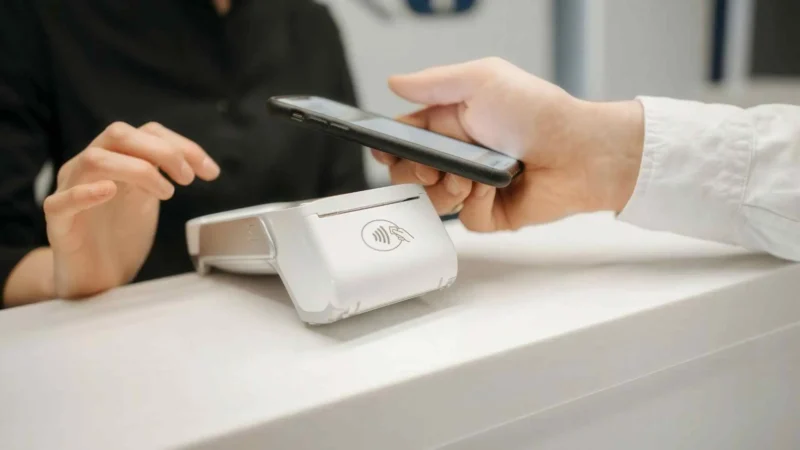
Apple Pay adds a tokenisation step that keeps card details out of the transaction entirely, which reduces friction and the risk of a payment being flagged and held.
This shift did not happen overnight. Academic work such as research on emerging payment technologies has mapped how instant systems create fresh operational demands even as they solve old ones, from fraud screening that has to keep pace with the speed to reconciliation that can no longer wait until the end of the week.
For a business owner, the takeaway is that fast money is a systems problem, not a marketing slogan. The firms that pull it off have invested in the plumbing, not just the promise.
What Small Businesses Can Copy Straight Away?
The good news is that a small business does not need a gaming firm’s budget to borrow the same thinking. A café that adds Apple Pay at the till, a freelance designer who bills through PayPal, or a coach hire company that lets customers pay a deposit by digital wallet all tap into the same instant infrastructure. The tools are off the shelf now, and the cost of ignoring them is measured in abandoned baskets and hesitant customers.
Consider the everyday friction points. A customer standing at a market stall does not want to hunt for cash. A client approving a quote by email wants to settle it in one tap, not dig out a chequebook. Every extra step is a chance for the sale to cool. The gaming sector learned this lesson at scale, and the lesson translates neatly to a two-person startup: remove the wait, and you remove one of the biggest reasons people change their minds.
The Trust Dividend Nobody Talks About

There is a subtler benefit hiding behind all this speed, and it has more to do with psychology than with pounds and pence. When money moves fast in both directions, customers relax.
They spend more freely because they know a refund will be painless. They come back because the whole experience felt effortless. The operators that mastered quick withdrawals did not just save themselves some admin; they built a reputation that competitors struggle to dent.
Central banks have taken notice of exactly this dynamic. A detailed study on new digital payment methods explores how the certainty and immediacy of a transaction shapes consumer confidence far beyond the sum involved.
For a business, that confidence is the quiet asset behind repeat custom. A guest who trusts a hotel to refund a cancelled night without fuss is a guest who books again. The speed is the visible part; the trust is the return on it.
Turning the Lesson Into Practice
None of this means a business should bolt on every new payment tool at once. The smarter move is to pick the friction that hurts most and fix it first. If deposits sit uncollected, a digital wallet option at checkout may pay for itself in a week. If refunds generate complaints, automating them through PayPal can turn a sore point into a selling point.
The gaming operators did not stumble into fast withdrawals; they treated payment speed as a product feature worth engineering. Any business owner can adopt that mindset without adopting the industry. Look at where customers wait, ask why, and remember that in a world of instant money, patience is the one thing most people have run out of.