

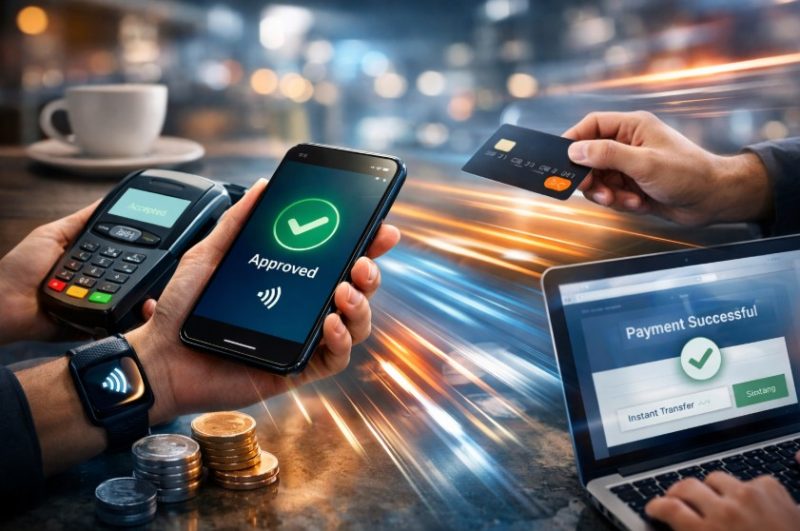
The way people in the UK spend their money is undergoing a transformation that would have been difficult to anticipate just ten years ago. In the last decade, physical purchases have ceased being the primary method of discretionary spending.
Instead, consumers’ use of digital entertainment has taken on an increasingly influential role, shaping both how they allocate their time and how they spend their money.
Today’s consumer expects their entertainment to be readily available, personalised, and accessible across multiple platforms. As a result, the manner in which individuals allocate their expenditures is evolving into a fluid, more frequent, and more entrenched pattern within the digital ecosystem.
How Digital Entertainment Shaping Consumer Spending Patterns in the UK?
The Expansion of Digital Entertainment Ecosystems
Digital entertainment now covers a wide range of platforms, from streaming services and gaming apps to social media and interactive experiences. In this broader mix, platforms such as casino sites UK operators sit alongside video-on-demand services and mobile games as part of a growing digital leisure economy. What matters is not the category itself, but the shared ability of these platforms to attract attention and convert engagement into spending.
In addition to an increased availability of entertainment at all hours (whether in route to work, on a lunch break, or late into the evening), consumers are no longer limited by their schedule or physical location.
Additionally, there has been a shift from passive consumption to active participation; users who were once simply watching or listening are now interacting with content, competing against each other, and engaging with others in real-time, thereby creating more opportunities to spend money as part of that experience.
Users can interact with apps in real time. The ability to interact with an app in real time creates new opportunities to spend money within the app itself.
Subscription Culture and Recurring Spending
One of the most significant developments in recent years is the rise of subscription-based services. Streaming platforms, music apps, gaming libraries, and even niche content providers now operate on monthly payment models. For consumers, this offers convenience and consistent access. For businesses, it provides predictable revenue.
However, this model has led to what many describe as a subscription stack. Households often pay for several services at once, sometimes without fully tracking the total cost. While each subscription may seem affordable on its own, the combined monthly expense can be substantial.
Microtransactions and the Psychology of Spending
The popularity of subscriptions is complemented by the development of microtransactions. Microtransactions are a series of small payments an individual may make to use additional functionality, purchase digital goods, or obtain access to additional content in apps or platforms. While each transaction may appear insignificant individually, over time, it can be a meaningful portion of one’s monthly expenditure.
To facilitate successful microtransactions, developers have designed them with minimal friction. Payment transactions are typically completed quickly as they usually require no more than a tap to confirm. Furthermore, these payment options are seamlessly integrated into the user experience, which reduces the sense of friction associated with making a purchasing decision.
Additionally, many platform operators utilise gamification techniques to encourage repeat customers to continue using their platforms. Platforms operate reward systems, provide tracking for user progress, and offer limited-time opportunities for users to make a purchase.
The Influence of Mobile-First Entertainment
Mobile devices have become the primary gateway for digital entertainment and spending. Smartphones allow users to access content instantly and make purchases with minimal effort. Digital wallets and saved payment methods have made transactions faster than ever.
This ease of access has changed the nature of consumer behaviour. Spending is no longer something that requires planning or intention. It can happen spontaneously, triggered by a recommendation, a notification, or a moment of curiosity.
Short-form content platforms have amplified this trend. Continuous streams of content keep users engaged, while subtle prompts encourage interaction and spending. The result is an environment where consumption and commerce are closely linked.
The Role of Data and Personalisation
Data plays a central role in shaping modern consumer spending. Digital platforms collect and analyse user behaviour to deliver personalised recommendations and targeted offers. This makes content more relevant and increases the likelihood of engagement.
From a business perspective, this level of insight allows for more effective monetisation. Consumers are more likely to spend when the offer aligns with their interests and habits.
At the same time, there is growing awareness of how data is used. Concerns around privacy and transparency are becoming more prominent, which may influence how platforms operate in the future.
What This Means for the Future of UK Consumer Spending?
Digital entertainment has moved from the margins to the centre of consumer life. It shapes not only how people spend their free time but also how they spend their money.
The trajectory is clear. Spending is becoming more digital, more experience-driven, and more influenced by the platforms that dominate everyday life. Businesses that understand these behavioural shifts will be better positioned to adapt, compete, and grow in an increasingly digital economy.