

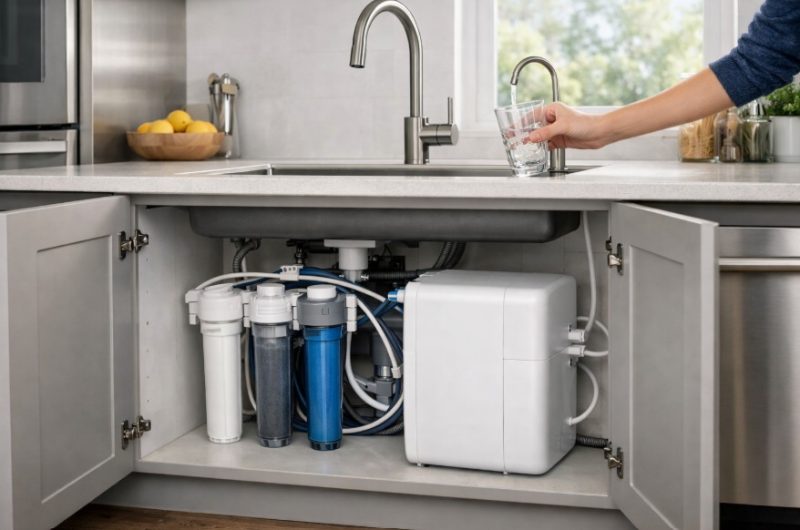
Direct flow reverse osmosis is a tankless format of home water purification. Instead of storing treated water in a separate reservoir, the system produces purified water as it is needed.
This design supports compact installation, continuous access to drinking water, and easier integration into modern kitchens where under-sink space is limited.
How Direct Flow Reverse Osmosis Filters Work in Modern Homes?
What a Direct Flow Reverse Osmosis Filter is?
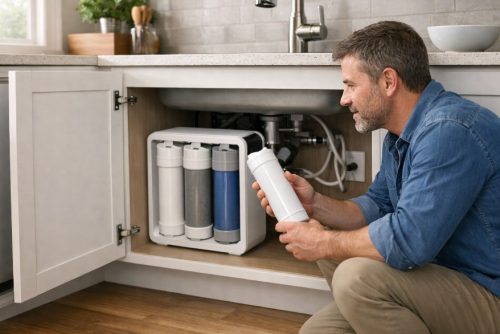
A direct flow reverse osmosis filter is a reverse osmosis filter built around pre-treatment cartridges, an RO membrane, and direct delivery to the faucet without a storage tank.
Direct flow RO and traditional RO filters use the same purification principle, but the system format is different: direct flow systems are tankless and designed for on-demand purified water.
How Water Passes Through Each Filtration Stage?
In a typical direct flow water filter, water first passes through a sediment filter that helps reduce sand, rust, and other particles. It then moves through a carbon filter that helps reduce chlorine and substances in water affecting taste and odor.
After that, water reaches the reverse osmosis membrane, where the main separation takes place and dissolved contaminants are reduced. A final polishing stage may then improve taste before the water reaches the tap.
What Makes Direct Flow Systems Different From Tank-based RO Filters?
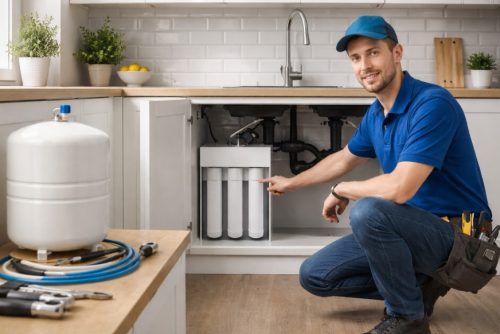
The main difference is the absence of a storage tank. A tank-based RO filter prepares water in advance and stores it until needed, while a direct flow RO system filters and delivers water in the same operating cycle.
In practice, this usually means a more compact footprint, steadier access to fresh purified water, and less dependence on tank refill after heavy use.Main benefits of direct flow reverse osmosis systems
The main benefits of direct flow reverse osmosis systems are compact size, continuous water supply, and strong purification performance in a modern under-sink format.
This combination can support a cleaner kitchen layout, easier everyday use, and fresh filtered water for drinking, cooking, tea, and coffee. For many households, that makes a direct flow water purifier a practical upgrade from older tank-based designs.
Maintenance Tips and How to Keep the System Efficient
To keep a direct flow RO system efficient, replacement cartridges should be changed at the recommended intervals and the system should be serviced regularly.
Timely replacement of sediment and carbon cartridges helps support stable water quality and protect overall system performance. Attention to changes in taste or flow rate can also help show when service is needed.
Conclusions
Direct flow reverse osmosis works by moving water through several treatment stages and an RO membrane, then delivering purified water directly to the tap without storage.
That tankless format makes the system compact, convenient, and well suited to modern household use. For homes looking for efficient water purification with everyday practicality, direct flow RO is one of the strongest current formats in under-sink drinking water filtration.