As energy prices soar and environmental concerns deepen across the UK, more homeowners are turning to solar panels as a practical solution.
These systems promise energy savings, lower bills, and greater sustainability, but one question still lingers, do solar panels add value to your house in the UK?
This blog dives into the numbers, the market opinions, and the homeowner realities. Whether you’re considering solar panels for your personal residence or a property investment, understanding their long-term impact on value is crucial.
Why Are UK Homeowners Investing in Solar Panel Systems?
Solar panel systems are rapidly becoming a smart energy solution in British households. For most, the motivation stems from rising electricity costs, environmental responsibility, and the appeal of greater energy independence.
Here are some of the main reasons homeowners make the switch:
- Energy Cost Savings: Households can cut between £190 and £700 annually depending on usage and setup.
- Government Incentives: With VAT relief running through 2027 and schemes like the Smart Export Guarantee, the UK government is making solar investment more affordable.
- Environmental Awareness: Solar panels reduce carbon emissions, helping homes become greener.
- Long-Term Durability: Panels typically last 25 years or more, offering reliable energy generation.
- Increased EPC Ratings: A higher Energy Performance Certificate rating can boost home value and make properties more attractive to buyers.
In addition to these reasons, many UK homeowners are future-proofing their homes in anticipation of evolving environmental legislation and building standards.
For forward-thinking investors, this shift presents an opportunity to increase property value and long-term profitability.
Do Solar Panels Add Value to Your House?
Yes, solar panels can add value to your house, though how much depends on several factors. Research from The Eco Experts indicates that properties with solar panels may see up to a 14% increase in value.
More conservative estimates, like those from Solar Energy UK, suggest an uplift between 0.9% and 2%. The variation often hinges on property location, the quality of installation, and how recent the system is.
Homeowners in urban areas may experience modest increases, while properties in regions with high energy costs or high sunshine levels may benefit more.
Ultimately, the value solar panels bring to your home isn’t just financial. They contribute to improved EPC ratings, reduced bills, and stronger buyer interest, all elements that support a better return when it’s time to sell.
What Does the UK Property Market Say About Solar Panels?
Opinions in the UK property market are divided, but the trend is moving in favour of solar technology. Estate agents, including those from Knight Frank and RICS, suggest that while solar panels don’t always sway buyers, their presence is increasingly seen as a plus, especially when they come with proof of energy savings.
Research shows that solar-equipped homes can command a price premium, particularly in areas where energy costs are highest. Some buyers may be discouraged by aesthetics or older panels, but others are actively seeking out energy-efficient properties.
According to installers like GB Solar, solar systems can increase property value by 2% on average, though this varies significantly by property type and location.
Market preferences are also evolving. More buyers are focused on sustainability and looking to reduce their carbon footprint.
This growing trend may mean that solar-equipped homes will see even stronger demand in the coming years, particularly as green legislation and eco-expectations rise.
Can Solar Panels Help You Sell Your Home Faster?
Selling a home in a competitive market often hinges on what sets your property apart. Solar panels are becoming a key feature for buyers who value energy efficiency and long-term savings.
Homes with solar energy systems may sell faster, especially when supported by documented reductions in energy bills. Buyers today look beyond just the visual appeal, they’re also focused on cost-saving features and sustainability.
Estate agents note that showing energy usage before and after installation can positively influence a buyer’s decision. Lower running costs make a home more attractive to budget-conscious buyers.
With the UK’s increasing emphasis on green living, solar-equipped homes appeal to a broader audience, including electric vehicle owners.
While not every buyer expects solar panels, having them can boost your property’s visibility and help it sell more quickly than comparable homes without this eco-friendly upgrade
Are Solar Panels a Worthwhile Investment in the Current UK Economy?
With rising energy bills, shifting government incentives, and more awareness about climate change, solar panels remain a popular option for property upgrades in 2025. As with any investment, the value of installing solar panels depends on individual goals and timelines.
If you plan to stay in your home for the next 10 to 15 years, the long-term energy savings can justify the initial cost. However, if you’re planning to sell sooner, the return might be lower unless you’re in a high-demand market where solar features are highly valued.
Importantly, with VAT currently at 0% and support schemes active, the financial barriers to entry have lessened, making solar panels a more accessible and strategic investment in today’s economy.
How Does Return on Investment Compare to Other Home Improvements?
When evaluating ROI for home upgrades, solar panels are among the more promising options, especially with energy bills projected to rise further.
Compared to other improvements like a conservatory, new kitchen, or loft conversion, solar panels offer a dual benefit: value appreciation and ongoing energy cost reduction.
| Home Improvement | Average ROI (%) | Additional Benefits |
| Solar Panels | 2% – 14% | Lower bills, eco-friendly appeal |
| Loft Conversion | Up to 20% | Adds space and utility |
| Kitchen Renovation | 4% – 10% | Modern appeal to buyers |
| Conservatory | 5% – 12% | Increases usable living space |
| Double Glazing | 6% – 10% | Boosts EPC rating and insulation |
While solar panels might not deliver the highest resale ROI on paper, they do add consistent value through lower energy costs and environmental appeal, two strong buyer considerations in today’s market.
Are There Government Incentives That Boost Value?
Yes, the UK government provides several incentives that reduce the cost of solar installation and enhance your property’s long-term value.
A major financial benefit is the 0% VAT on energy-saving materials like solar panels, available until at least 2027. This means upfront costs are significantly reduced compared to just a few years ago.
The Smart Export Guarantee (SEG) allows you to sell excess electricity back to the grid, creating a passive income stream from your system.
Group-buying schemes such as Solar Together make it easier for homeowners to access solar installations at reduced rates. All of these programs not only reduce your installation costs but also increase the desirability and value of your property for potential buyers.
What Are the Risks or Downsides to Installing Solar Panels?
While solar panels offer several benefits, it’s important to weigh them against potential downsides, particularly from a financial and aesthetic standpoint. Not every home or buyer will find solar installation equally beneficial.
Key considerations include:
- High Upfront Costs: Installation typically ranges from £5,000 to £12,000 or more, depending on size and battery storage.
- Limited Sunlight: The UK averages only 1,274 hours of sunshine annually. Lower output may impact ROI.
- Aesthetic Concerns: Some buyers may find solar panels unattractive, especially in conservation areas or on period properties.
- Battery Storage Costs: Adding a home battery can cost an additional £1,500 to £10,000.
- Planning Restrictions: In listed buildings or special zones, permissions may be required.
- Variable Buyer Sentiment: Some buyers see panels as valuable, while others consider them unnecessary or unsightly.
Despite these factors, for many homeowners the benefits outweigh the risks, particularly when systems are modern, well-maintained, and professionally installed.
Do Buyers Perceive Solar Panels as an Asset or Liability?
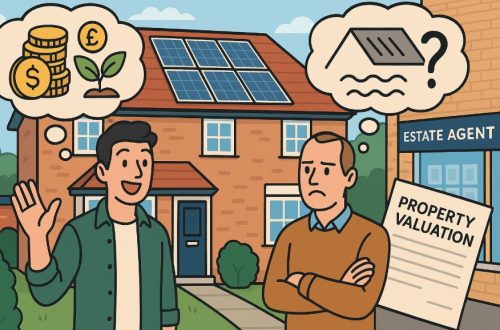
Buyer perception is one of the most critical, and most variable, aspects of how solar panels affect property value. For some, especially those concerned with rising energy costs or environmental responsibility, solar panels are a clear asset. They reduce bills, improve EPC ratings, and signal a future-ready home.
However, not all buyers share this view. Others may see them as unattractive additions, or worry about maintenance and warranty transfers. For buyers unfamiliar with the technology, solar systems can raise questions rather than instil confidence.
The key is clear communication, when homeowners present tangible energy savings and reliable equipment information, panels are more likely to be viewed as a valuable upgrade.
What Do Estate Agents and Surveyors Think in 2025?
Estate agents and property surveyors have mixed, yet evolving, views on solar panels. Some professionals suggest that solar panels don’t necessarily make or break a sale, unless their benefits are clearly demonstrated through energy savings and documentation.
Jeremy Leaf, a former residential chairman at RICS, notes that panels can deter or attract buyers depending on how their value is framed.
On the other hand, newer agents and buyers are more open, particularly in high-bill regions or newer builds where energy efficiency is a bigger draw.
Surveyors increasingly consider EPC improvements and installation age when factoring in value, suggesting a more positive long-term outlook for solar-equipped homes.
Should You Consider Solar Panels Before Selling Your Home?
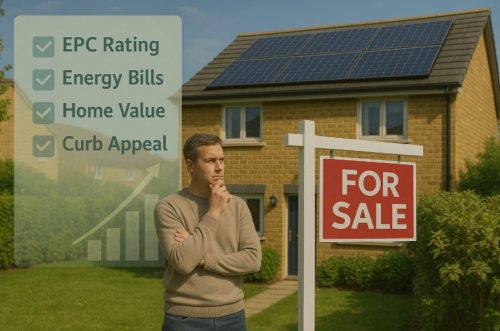
Whether or not to install solar panels before selling depends on your goals and the timing of your sale. If you’re planning to list your property in the next few months, it may not be cost-effective, as you likely won’t recoup the full investment through increased value alone.
However, if you have a few years before selling or you’re in a high-demand area, solar panels can help future-proof your home, increase your EPC rating, and attract environmentally conscious buyers.
To make the most of it, keep all energy-related documentation, showcase reductions in bills, and consider additional upgrades like battery storage or LED lighting.
Combined, these factors can turn your home into a top-tier energy-efficient listing that stands out in the market.
Estimated Solar Panel ROI and Cost Comparison (2025)
If you’re considering solar panels in 2025, understanding the return on investment (ROI) and costs by system size can help you make an informed decision.
Here’s a quick comparison based on property type, estimated cost, annual savings, and typical payback period.
| System Size | Suitable Property | Estimated Cost | Annual Savings | Payback Period |
| 3kW | 1–2 Bedroom Home | £4,500–£6,000 | £300–£500 | 10–13 Years |
| 4kW | 2–3 Bedroom Home | £5,000–£8,500 | £500–£700 | 8–10 Years |
| 5kW+ | Larger Households | £7,000–£10,500+ | £600–£800+ | 8–12 Years |
Whether you own a small flat or a large family home, solar panels can offer long-term financial and energy-saving benefits.
With payback periods ranging from 8 to 13 years, the right system can significantly reduce your energy bills over time.
Conclusion
So, do solar panels add value to your house in the UK? In most cases, yes, but the degree of added value depends on location, buyer preference, and how well the system is integrated and marketed.
Beyond financial returns, solar panels offer environmental benefits, energy savings, and a clear alignment with future government goals.
For long-term homeowners and strategic investors, solar systems can be a smart upgrade that improves marketability and property performance.
But like any investment, it’s important to evaluate the risks, local demand, and your personal financial goals. With the right approach and professional guidance, solar panels can be a valuable part of your home’s future.
FAQs About Do Solar Panels Add Value to Your House
Do Buyers Prefer Homes with Existing Solar Panel Installations?
Yes, many buyers appreciate the long-term savings and eco-friendliness associated with homes that already have solar panels installed, reducing the effort and cost of future upgrades.
Can Solar Panels Be Transferred to a New Property?
While technically possible, it is not usually cost-effective. Most homeowners leave the system in place, which can increase the home’s appeal and market value.
How Do Surveyors Account for Solar Panels in Property Valuation?
Surveyors consider solar panels under the property’s energy efficiency and overall condition, with some reflecting it in the valuation depending on age and output.
Are There Any Downsides to Installing Solar Panels Before Selling?
Potential downsides include upfront installation costs, aesthetic preferences of buyers, and reduced appeal if the system is leased rather than owned.
Does the Type or Brand of Solar Panel Influence Home Value?
Higher efficiency panels from reputable brands can have a positive influence, especially when paired with a strong warranty and recent installation.
How Do Leased Solar Panels Impact the Selling Process?
Leased systems may complicate the sale process, as buyers need to agree to take on the lease or negotiate a buyout before completing the purchase.
What Is the Average Payback Period for Solar Panels in the UK?
Typically, the payback period ranges from 8 to 12 years in the UK, depending on energy usage, panel efficiency, and available government schemes.