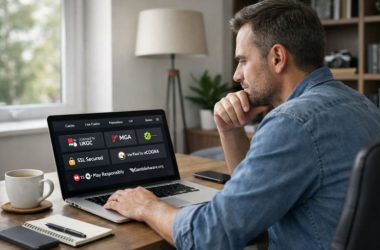


There’s a particular kind of tiredness that only shows up after the fifth or sixth consecutive 12-hour day at a laptop. It isn’t the sleepy kind you can fix with an early night.
It’s the sort that lingers behind the eyes, dulls decision-making by mid-afternoon, and makes even routine tasks feel heavier than they should. For a growing number of UK business owners, this has become less of an occasional bad week and more of a permanent operating mode.
Recent workplace surveys have found that a meaningful share of small business owners and senior managers now regularly clock more than 60 hours a week, most of it in front of a screen.
Between running the business, checking in on staff, managing client calls, and trying to keep on top of admin that never seems to shrink, the laptop has quietly become the single most-used tool in the modern employer’s day. What’s less discussed is what that volume of screen time is actually doing to the people carrying the business on their shoulders.
The Physical Toll Nobody Puts on the Agenda
Long hours in front of a laptop bring a specific set of physical costs that rarely make it into a board meeting. Eye strain is one of the most common, and it builds gradually rather than announcing itself.
A founder might notice their eyes feeling gritty by 3pm, or find themselves squinting at spreadsheets they could read easily a few months earlier. Headaches creep in. Neck and shoulder tension from hunching toward a smaller screen becomes a daily fixture rather than an occasional ache.
None of this is dramatic on its own, but it compounds. An employer who spends the bulk of their week fighting mild discomfort has less mental bandwidth left for the decisions that actually move the business forward.
Comfort during long screen sessions has become enough of a priority that some employers have started paying closer attention to things that used to feel minor, from monitor height to lens choice.
Plenty of people managing back-to-back video calls have switched to Biofinity contact lenses specifically because they hold moisture better through a long day, which matters when blinking rate drops during concentrated screen work.
Decision Fatigue Sets In Earlier Than People Expect

Cognitive load doesn’t distribute evenly across a working day. Most people make their sharpest decisions in the first few hours after starting work, then gradually lose precision as fatigue accumulates.
For an employer working a standard eight-hour day, that decline is manageable. For someone stretching that into a 12-hour laptop marathon, the sharp decision-making window closes far earlier relative to how much work is still left to do.
This is where the real business cost shows up. A tired founder is more likely to approve a mediocre proposal just to clear it from their inbox, skim a contract instead of reading it properly, or snap at a team member over something minor.
None of these are one-off mistakes. They’re the predictable result of asking a brain to keep making high-stakes calls well past the point where it’s operating at full capacity.
The Business Impact Is Measurable, Even If It’s Rarely Measured

Very few companies track the relationship between founder or manager fatigue and business outcomes directly, but the indirect signs are everywhere. Missed deadlines that trace back to a distracted final read-through.
Client relationships that cool slightly because a follow-up email went out three days late. Hiring decisions made in a rush because the person doing the interviewing simply ran out of energy to properly weigh the options.
Some of the more forward-thinking small businesses have started treating this as an operational issue rather than a personal one.
That’s shown up in small but telling changes: encouraging managers to take proper lunch breaks away from a screen, building in buffer time between back-to-back calls, and normalising the idea that stepping away from a laptop for ten minutes isn’t the same as slacking off.
A shift from treating long hours as a badge of commitment to treating them as a risk that needs managing.
Recovery Habits Are Becoming Part of the Job Description

What’s changed most in the last couple of years is how openly employers talk about managing the physical side of long screen hours. It used to be something people quietly dealt with on their own, if they dealt with it at all.
Now it’s not unusual to hear founders comparing notes on blue light settings, standing desk setups, or which contact lens brand holds up best through a 14-hour day of calls and screen work.
It’s a small shift, but it reflects a bigger one: the recognition that running a business well requires the person running it to actually function well too.
There’s also more willingness to build recovery into the calendar rather than treating it as something that only happens on holiday.
A short walk between meetings, a proper break for lunch, or simply logging off at a set time in the evening are being treated less as luxuries and more as basic maintenance, the same way a car needs an oil change to keep running.
Where This Leaves Employers Now?
The 60-hour laptop week isn’t going away for most small business owners any time soon, and for many it’s simply the reality of running a lean operation.
What’s shifting is the acknowledgment that this pace has a physical cost, and that ignoring it doesn’t make the business more resilient, it just moves the breaking point further down the line.
Paying attention to the small things, from screen breaks to proper eye care, isn’t about comfort for its own sake. It’s about making sure the person steering the business still has something left to steer with by the time Friday comes around.