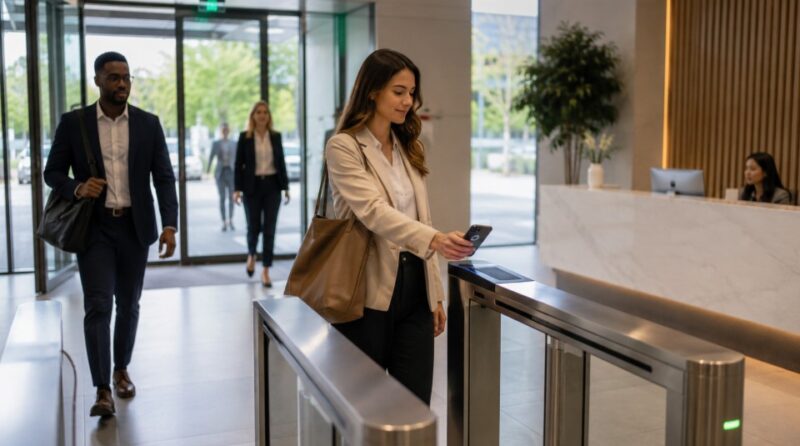
Office buildings across the UK are undergoing a quiet transformation. As hybrid working reshapes how people move through commercial spaces, the systems that manage entry and exit have had to keep pace. What once meant a simple lock and key now involves layers of technology designed to balance convenience with genuine protection.
The Shift From Traditional Locks to Smart Systems
For decades, security in commercial buildings relied on mechanical keys and manned reception desks. That approach worked when staff numbers were predictable and visitors were rare.
Today’s offices look different. Employees split their week between home and the office, contractors move between sites, and visitor numbers fluctuate daily. Mechanical systems struggle to adapt to this fluidity, which is why many facilities managers have turned to digital alternatives.
Card readers, mobile credentials and biometric scanners have replaced traditional keys in a growing number of buildings. These systems allow administrators to grant or revoke entry permissions instantly, without the cost or delay of rekeying locks.
When someone leaves a company, their access can be switched off within seconds rather than requiring a physical retrieval of keys that may never happen.
What Businesses Should Consider Before Upgrading?
Choosing a new entry system involves more than picking the most advanced technology available. Businesses need to think about how the system integrates with existing infrastructure, how it handles data privacy, and whether it can scale as the organisation grows or changes.
Access control has become a broader concept than simply deciding who can open a door. Modern platforms now track patterns of movement, flag unusual behaviour, and generate reports that help building managers understand how spaces are actually used.
This data can inform decisions about desk allocation, meeting room capacity, and even cleaning schedules.
Several factors tend to influence which system a business ultimately selects:
- Compatibility with existing HR and identity management software
- Ease of use for staff and visitors, particularly in high-traffic buildings
- Compliance with data protection regulations, including how biometric information is stored
- Scalability across multiple sites or departments
- Total cost of ownership, including maintenance and software updates
Getting these decisions right from the outset saves considerable disruption later. Retrofitting a poorly chosen system often costs more than the original installation, particularly if it requires new wiring or hardware throughout a building.
Balancing Security With Everyday Convenience

One of the biggest challenges facilities teams face is making sure security measures don’t become an obstacle to daily work. Staff who face repeated delays getting into their own office are likely to find workarounds, some of which undermine the very protections the system was meant to provide.
Propped doors and shared access cards are common examples of security being sacrificed for convenience. The most effective systems manage to disappear into the background.
Employees badge in without thinking about it, visitors are guided through a straightforward check-in process, and building managers retain full oversight without needing to intervene constantly.
This balance requires careful planning during installation, along with clear communication to staff about how and why the system works the way it does.
Buildings that get this right tend to see fewer security incidents and higher staff satisfaction. People are more likely to follow procedures they understand and trust, rather than rules imposed without explanation.
Looking Ahead
As commercial buildings continue to adapt to changing work patterns, entry management will likely become even more closely tied to broader building operations.
Facilities teams that treat security as an integrated part of workplace design, rather than a separate concern, are best placed to create spaces that feel both safe and genuinely functional for the people who use them every day.