

Finishing is rarely the part of manufacturing that makes the headlines. It sits at the end of the line, after the machining, welding and assembly, and it tends to be noticed only when something goes wrong.
A coating that chips in transit or a batch that has to be reworked can undo a good deal of earlier effort.
That’s one reason many factories have been taking a harder look at how they apply their finishes.
Liquid paint has been the default for generations, but powder coating has steadily taken a larger share of industrial metalwork, from steel fabrications and shelving to agricultural parts and architectural components.
The appeal is a mix of durability, process control and cost, and each of those comes from a slightly different place.
How the Two Processes Differ?
Wet paint relies on solvents to keep the coating liquid while it’s sprayed and to help it stick to the surface. Powder skips that step entirely. Dry particles are given an electrostatic charge as they leave the gun, so they’re drawn to the earthed metal part and cling to it.
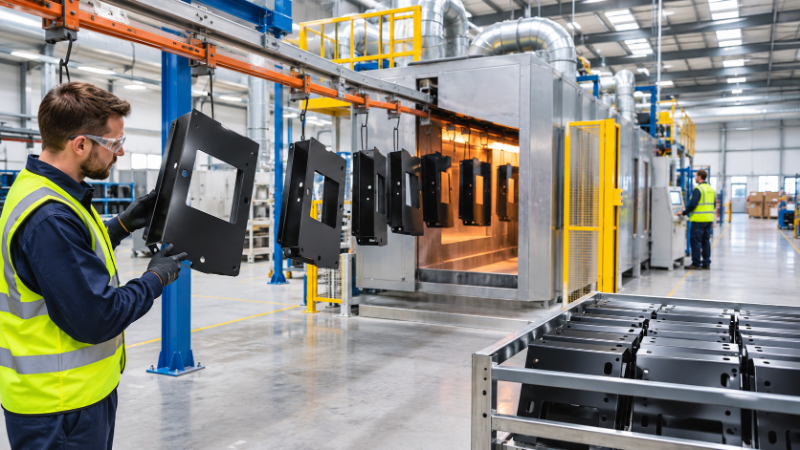
The part then moves into an oven, typically running at around 200 degrees Celsius, where the powder melts, flows and fuses into a continuous film.
Because the finish is cured rather than simply dried, it tends to be hard, even and resistant to scratching. It also forms a sealed skin over the metal, which helps limit the risk of corrosion on parts that will spend their working lives outdoors or in damp workshops.
The Cost Argument
Material waste is where many finance directors start paying attention. In any spraying process, a good share of the coating misses the part. With liquid paint, that overspray is largely lost.
With powder, it can be collected and reused, particularly on lines that run a single colour for long periods. Savings of that kind add up quickly across a year of production.
Labour is another factor. Powder is applied electrostatically, it’s recoverable and it brushes away easily, which makes it well suited to simple automation.
A line that needs fewer operators to hold a consistent finish frees skilled staff for work that genuinely needs them. Thicker coatings are also achievable without the runs and sags that liquid paint can produce, which cuts down on rework.
Durability feeds into the numbers as well. A coating that survives handling, transport and years on site means fewer warranty claims, fewer returns and less time spent on touch-ups.
For manufacturers selling to contractors or retailers, a finish that arrives in perfect condition and stays that way is a quiet but real selling point.
What a Finishing Line Actually Needs?
A powder line is more than a spray gun and a steady hand.
Most set-ups combine several stages: pre-treatment to clean the metal and, where needed, apply a chemical layer; a booth with extraction to contain the powder and protect the operator; application equipment; a curing oven; and a conveyor to move parts through at a consistent pace.
Under-specifying any one of those stages tends to show up later as poor adhesion or an uneven finish.
Pre-treatment deserves particular attention. Oils, rust and residues left on the metal will undermine even the best powder, which is why dip tanks, box washers and in-line washers are common on production sites.
Ovens matter just as much. Uneven heat means uneven curing, and an under-cured coating can look fine on the day it’s applied yet fail early in service.
Where Wet Paint Still Makes Sense?
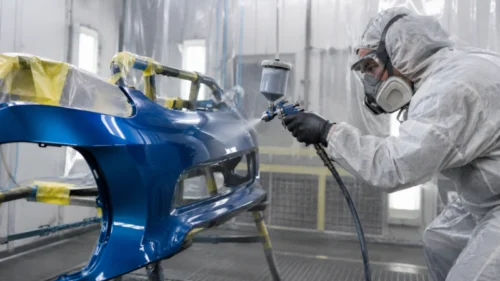
None of this means liquid paint has had its day. Very large items, heat-sensitive materials and parts that can’t tolerate a 200 degree cure are often better served by wet finishes.
Specialist colour matching and some decorative effects are also easier with liquid systems. Plenty of sites run both, using each where it fits best.
Even then, the decision doesn’t have to be all or nothing. Some manufacturers keep a small liquid line for specials and move their high-volume, repeat products to powder, which lets the cost and consistency benefits apply where they matter most.
Questions Worth Asking Before Changing Process
Switching isn’t a decision to make on enthusiasm alone. Sensible starting points include the range of part sizes and materials passing through the line, expected volumes, how often colours change, and the floor space and utilities available.
Colour change frequency matters more than most people expect, because it affects how quickly a booth can be cleaned and whether powder can be reclaimed at all.
Safety and environmental requirements also need to be part of the planning from the outset rather than bolted on afterwards. Extraction, the fire risk from fine dust and the handling of any pre-treatment chemicals all shape how a line is laid out and how it’s run day to day.
Thinking About the Longer Term
Finishing equipment is a long-term purchase. A well-built line can stay in service for decades, so the cheapest option on day one isn’t always the cheapest over its life.
Maintenance access, the availability of spares and the ease of adjusting the line as products change all deserve a place in the comparison.
For manufacturers under pressure on quality, waste and energy costs, the finishing line is an area where careful decisions can pay back quietly and steadily. It may never be the glamorous end of the factory, but it’s often where a product’s reputation is won or lost.