

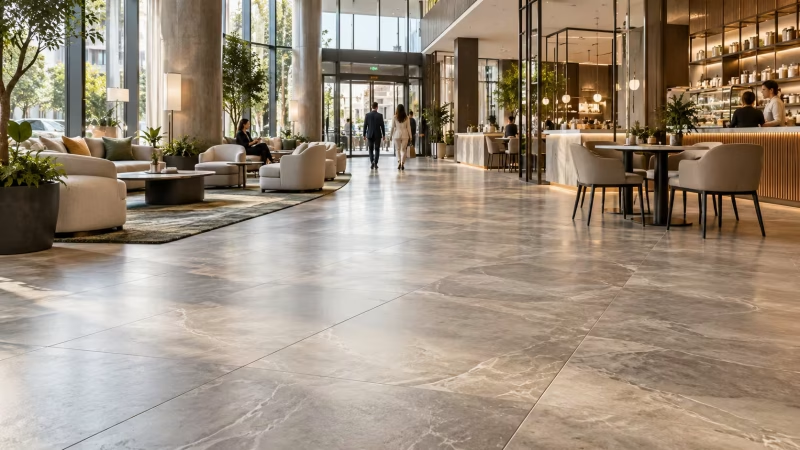
Commercial interiors are expected to do more than simply make a strong first impression. Shops, cafés, hotels, restaurants, and workspaces are used intensively every day, which means their surfaces need to support movement, maintenance, comfort, and visual identity at the same time.
Commercial interiors are expected to do more than simply make a strong first impression. Shops, cafés, hotels, restaurants, and workspaces are used intensively every day, which means their surfaces need to support movement, maintenance, comfort, and visual identity at the same time.
In this context, commercial floor tiles are no longer selected only for their appearance. Their role has expanded, reflecting a broader change in the way public interiors are designed: aesthetics and performance are increasingly considered as part of the same decision.
Public Interiors Ask More of Every Surface
The demands placed on a commercial floor are different from those of many residential settings. Constant foot traffic, regular cleaning, moisture, and long opening hours mean that surfaces are exposed to repeated use and need to maintain their qualities over time.
This makes durability an essential part of the design process. A floor must be able to respond to the practical reality of the space while still contributing to the atmosphere visitors experience.
For this reason, commercial flooring is increasingly evaluated according to how well it supports everyday activity.
Its success depends not only on how it looks when the project is completed but also on how it performs once the space becomes fully operational.
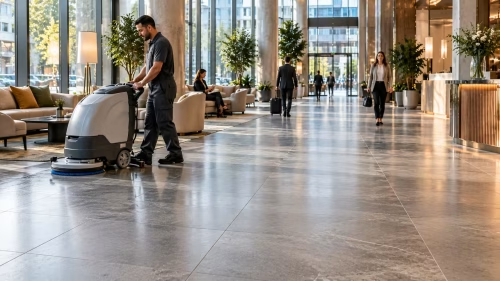
High-Traffic Performance Without Visual Compromise
Materials designed for commercial interiors need to withstand intensive use without forcing designers to sacrifice aesthetic freedom. Porcelain stoneware responds particularly well to this requirement thanks to its resistance and durability.
Commercial floor tiles can therefore be used in environments where movement is constant, from busy retail spaces and cafés to hotels, restaurants, and workplaces.
Their resistance helps surfaces retain their functionality even when they are subject to repeated footfall throughout the day.
Safety and Maintenance as Part of the User Experience
Some of the most important qualities of a commercial interior are often barely noticed when they work well.
Easy maintenance, resistance to humidity, and surfaces suitable for frequently used environments all contribute to how comfortable and well managed a space feels.
A floor that is easier to clean can help maintain a more consistent appearance throughout the day, particularly in environments such as cafés, restaurants, shops, or hospitality spaces where high footfall is part of normal activity.
Designing for Atmosphere as Well as Function
Performance alone does not define a successful commercial interior. Different environments also need to communicate a specific mood, personality, or brand identity.
The variety of material effects available in porcelain stoneware gives designers considerable freedom in shaping this atmosphere. Wood-inspired surfaces can introduce warmth and familiarity, while concrete effects may reinforce a contemporary or urban character.
Stone and marble interpretations can add greater visual depth or a more refined presence.
These choices allow commercial floor tiles to respond to very different settings without losing their practical qualities.
The same material category can therefore support the relaxed atmosphere of a café, the sophistication of a hotel, the professional character of a workspace, or the stronger visual identity of a retail interior.
Commercial Spaces Designed for Everyday Reality
The new expectations placed on commercial interiors reflect a simple principle: surfaces should be designed around the way spaces will actually be used.
Appearance remains important, but it can no longer be separated from durability, maintenance, comfort, and long-term performance.
Commercial floor tiles respond to this shift by allowing design and everyday practicality to work together.
Their value lies not only in helping a space look complete on opening day, but in supporting its activity, atmosphere, and identity through continued use over time.
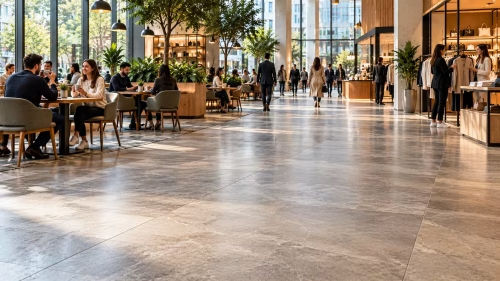
Design, Technology, and Long-Term Value: The Ceramiche Keope Vision
A surface can influence a project long after the initial design choices have been made. Its value is measured not only by appearance, but by its ability to remain appropriate as spaces are used, adapted, and experienced over time.
This broader idea of durability is part of the vision that has guided Ceramiche Keope since 1995.
The company develops porcelain stoneware collections for residential, commercial, and public architecture, combining Italian design culture with technological research and advanced production expertise.
A wide range of formats, finishes, thicknesses, and material effects allows each collection to respond to different aesthetic directions while preserving the technical qualities required by contemporary projects.
In commercial interiors, this balance is especially important. Shops, cafés, hotels, restaurants, and workplaces need surfaces capable of supporting intensive use without losing their visual role within the space.
Porcelain stoneware combines resistance to frequent foot traffic and humidity with easy maintenance, while wood, stone, marble, and concrete effects provide different ways to shape atmosphere and identity.
Floor and wall applications can therefore contribute both to the practical life of the environment and to the experience it creates for visitors and users.
The same combination of design and performance is reflected in ULTRAsilky and ULTRAmatt. ULTRAsilky offers an extra-smooth, velvety satin texture with enhanced slip resistance for interior wet areas.
ULTRAmatt combines a deep extra-matt appearance with a soft, uniform feel, easier maintenance, and R10 A+B performance for residential and commercial floors and walls.
Long-term value also extends to the way resources are managed. Ceramiche Keope’s closed-cycle production system fully reuses production water, recovers fired ceramic waste, and reintegrates raw material residues.
Around 75% of the energy required is generated internally, while the remainder comes exclusively from certified renewable sources.
ISO 17889, WELL Building Standard V2, and Declare reinforce this commitment to transparency, responsible manufacturing, and material quality.
The Environmental Product Declaration (EPD) adds a product-specific dimension, presenting independently verified data on the environmental impacts of porcelain stoneware across its life cycle.
For Ceramiche Keope, long-term value emerges when design, technology, and production work together to create surfaces that continue to support both the function and identity of a space well beyond its first impression.