

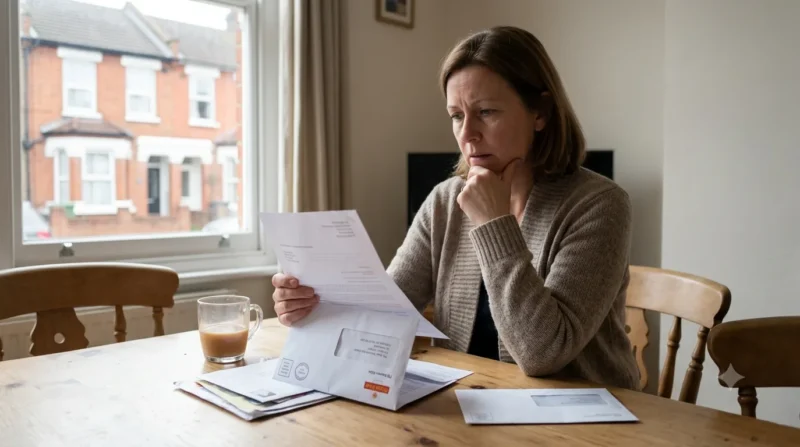
Receiving an unexpected letter marked PO Box 61278, London, N17 1DS can be confusing because the return address does not clearly identify the company contacting you.
Available information indicates that it is a bulk-mail return address associated with MailSmart and premises at MBA House on Garman Road, London.
The PO box may be used to process mail for different organisations. Therefore, seeing PO Box 61278 on an envelope does not, by itself, reveal who sent the letter or prove that a payment demand is genuine.
Updated On 01.07.2026
What Is PO Box 61278 London?
The address commonly appears in the following format:
MailSmart
PO Box 61278
London
N17 1DS
Some versions may also mention MBA House or Garman Road. MailSmart appears to operate as a mailing and returns-processing service, which means it may print, send or receive correspondence on behalf of other businesses.
This distinction is important. The business operating the mailing facility is not necessarily the company claiming money from the recipient. The actual sender should be named inside the letter.
Who Uses PO Box 61278?
Letters displaying PO Box 61278 have been reported in connection with private parking matters and debt recovery correspondence. Names reported by recipients have included Debt Recovery Plus, Zenith Collections and private parking operators.
However, the address may be shared by more than one client. It should not automatically be assumed that every envelope with this return address came from the same organisation.
To identify the sender, check the letter for:
- The full company or trading name
- A company registration number
- The name of the original creditor
- A parking operator’s name
- A vehicle registration number
- An account or case reference
- The date and location of the alleged incident
- An explanation of how the amount was calculated
The information printed inside the letter is more useful than the return address on the envelope.
Is PO Box 61278 Connected to MBA Group?
PO Box 61278 is commonly associated with MailSmart and MBA House on Garman Road. MBA Group Limited is an active UK company with a registered office at MBA House, Garman Road, London, N17 0HW.
The postcode attached to the PO box is N17 1DS, while the physical registered office uses N17 0HW. This difference is not necessarily suspicious because PO boxes can have separate postal codes from the premises handling the mail.
The apparent connection supports the view that PO Box 61278 is used for mail processing. It does not prove that MBA Group created the debt, issued a parking charge or made the demand contained in a particular letter.
Does a Letter From PO Box 61278 Mean You Owe Money?
Not necessarily. A return address only tells Royal Mail where an undelivered envelope should be sent. It does not establish that the recipient owes the amount claimed.
Before paying, confirm:
- Who is requesting the money?
- What is the alleged debt or charge for?
- Is the name and address correct?
- Does the vehicle, account or incident belong to the recipient?
- Has evidence supporting the claim been supplied?
- Is there a deadline for payment or appeal?
- Is the letter a reminder, debt collection notice or formal court document?
Mistakes can happen because of outdated address records, incorrect vehicle details, similar names or administrative errors.
Is a Letter From PO Box 61278 a Scam?
The PO box itself should not be described as a scam. It appears to be a genuine postal return address used for commercial mailing.
Nevertheless, criminals can copy real company names and addresses. A genuine-looking return address does not guarantee that every payment request is legitimate.
Warning signs include:
- Demands for an immediate bank transfer
- Requests for passwords, PINs or full security details
- Payment instructions using an unrelated personal bank account
- A QR code leading to an unfamiliar website
- Missing information about the original charge
- Incorrect vehicle, date or address details
- Threats that do not explain the legal process
- Pressure to pay before the sender provides evidence
Do not use a telephone number, payment link or QR code until the organisation has been independently verified. Find the company’s official contact information separately and ask it to confirm the reference number.
What Should You Do After Receiving the Letter?
Read the Entire Letter
Do not rely only on the name visible through the envelope window. Read the document carefully and identify the company making the demand, the original creditor and the reason for contact.
Keep the Letter and Envelope
Retain the original letter and its envelope. The return address, posting date, reference numbers and wording may become relevant if the claim is disputed.
Photograph or scan every page so that there is a secure copy.
Verify the Sender Independently
Check that the named company exists and that its contact details match independently available records. Avoid relying entirely on a telephone number or website printed in an unexpected letter.
When contacting the company, provide only the minimum information needed to confirm whether it sent the correspondence.
Check the Alleged Charge
Compare the date, amount, vehicle registration, location and account details with personal records. Parking receipts, photographs, bank statements, emails and previous correspondence may help establish what happened.
Request Evidence
If the demand is unfamiliar or unclear, ask the named sender to provide a written explanation and supporting evidence. This may include details of the original charge, photographs, notices, account statements or evidence that it has authority to collect the money.
Respond Before the Deadline
Do not ignore a genuine dispute, appeal or court deadline. If more time is needed to obtain advice, contact the named organisation promptly and keep a record of the communication.
What If It Concerns a Private Parking Charge?
Many searches for PO Box 61278 relate to private parking correspondence. A private Parking Charge Notice is generally a contractual payment demand from a private operator. It is different from a Penalty Charge Notice issued by a council or another public authority.
Check:
- The name of the parking operator
- The date and location of the parking event
- Photographs of the vehicle
- Entry and exit times
- The alleged breach of the parking terms
- Whether earlier notices were sent
- The available appeal procedure
- The payment and appeal deadlines
Possible grounds for challenging a charge can include an incorrect registration number, payment-machine failure, inadequate signage, a valid permit, incorrect timings, mistaken vehicle identification or circumstances requiring reasonable adjustments.
Do not assume the matter is invalid merely because a debt recovery company is now involved. Equally, do not pay automatically without confirming that the details and amount are correct.
Are Debt Collectors the Same as Bailiffs?
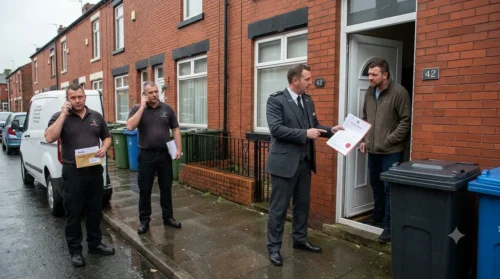
No. A debt collection company normally contacts people by letter, telephone or email and requests payment on behalf of a client. It does not automatically have the enforcement powers available to a certificated enforcement agent.
A debt collector cannot simply enter a home or seize possessions because it has sent a demand letter. Enforcement usually requires a formal legal process and, where applicable, a court judgment that has not been dealt with.
The following documents should not be treated as ordinary reminders:
| Document | Why It Matters |
| Debt collection letter | Requests payment but is not automatically a court order |
| Letter before claim | Indicates that legal proceedings may be considered |
| County Court claim form | Requires action within the stated court deadline |
| Court judgment | Records the court’s decision |
| Enforcement notice | May indicate that formal enforcement has begun |
If a genuine court claim or formal pre-action letter is received, obtain appropriate advice promptly.
What If the Letter Is Addressed to Someone Else?
If the named person does not live at the address, do not pay the demand or provide personal information in an attempt to resolve it.
Write “Not known at this address – return to sender” on the unopened envelope and place it back in a postbox. Avoid destroying correspondence addressed to another person.
If repeated letters continue, the current occupier can contact the organisation named on the envelope or visible through the address window and explain that the recipient does not live there. Keep a brief record of when the company was notified.
Receiving another person’s debt letter does not make the current resident responsible for that person’s debt.
Can You Reply Directly to PO Box 61278?
Only use PO Box 61278 if the letter specifically states that replies should be sent there. A return address is sometimes intended only for undelivered mail and may not be the correct address for appeals, complaints or evidence.
The letter may provide a separate postal or online process. Before responding, confirm:
- The correct department
- Whether a reference number is required
- The deadline
- Whether copies rather than original documents should be supplied
- Whether proof of posting should be retained
When sending an important response, keep a complete copy and obtain proof of posting.
Should You Pay the Amount Demanded?
Payment should depend on the evidence and circumstances, not on the unfamiliar PO box.
| Situation | Sensible Next Step |
| The charge is recognised and correct | Check the deadline and available payment arrangements |
| The details are incorrect | Dispute the demand in writing and provide relevant evidence |
| The charge is unfamiliar | Ask the named sender to explain and substantiate it |
| The letter is for another person | Return it as not known at the address |
| The letter appears fraudulent | Do not use its payment details; verify the company separately |
| Court papers have arrived | Respond through the official court process before the deadline |
| Payment is unaffordable | Contact the creditor and seek independent debt advice |
Paying immediately can make it harder to recover the money if the demand later proves incorrect. Conversely, ignoring a valid claim can cause missed appeal opportunities or further action. Verification followed by a timely response is usually the safest approach.
How Can You Protect Your Personal Information?
When checking the letter, avoid supplying more personal information than necessary. A legitimate company should already be able to identify the matter using its own reference number.
Do not disclose:
- Online banking passwords
- Card PINs
- One-time security codes
- Copies of identity documents without a clear reason
- Full financial details before verifying the organisation
If documents must be supplied, remove information unrelated to the dispute wherever appropriate.
Final Thoughts
PO Box 61278, London, N17 1DS appears to be a commercial mail-processing return address rather than the identity of one particular creditor. It has been reported on letters relating to private parking and debt recovery, but the PO box alone cannot establish who sent a specific document.
The safest response is to identify the company named inside the letter, verify it independently, check the evidence and act before any genuine deadline. Do not panic, but do not ignore formal correspondence particularly a letter before claim, court claim form or enforcement notice.
Frequently Asked Questions
What company is PO Box 61278 London?
The return address is commonly associated with MailSmart and a mail-processing operation at MBA House on Garman Road. The organisation responsible for an individual letter should be named inside it.
What is the postcode for PO Box 61278?
The postcode normally printed with the address is N17 1DS.
Is PO Box 61278 a debt collection agency?
The PO box itself is not a debt collection agency. It is a postal return address that may be used to process correspondence for debt recovery, parking and other commercial clients.
Is PO Box 61278 connected to parking tickets?
Recipients have reported the address on correspondence concerning private parking charges. The letter should identify the parking operator and explain the alleged breach.
Can a debt collector enter my home?
An ordinary debt collector does not have the same powers as an enforcement agent and cannot simply enter a home or remove possessions because it sent a letter.
What if I do not recognise the debt?
Do not rush to pay. Ask the named sender for a written explanation, the original creditor’s details and evidence supporting the amount claimed.
Should I ignore a letter from PO Box 61278?
No. Verify the sender and respond appropriately. Pay, dispute or seek advice according to the contents of the letter, especially when a formal deadline is stated.