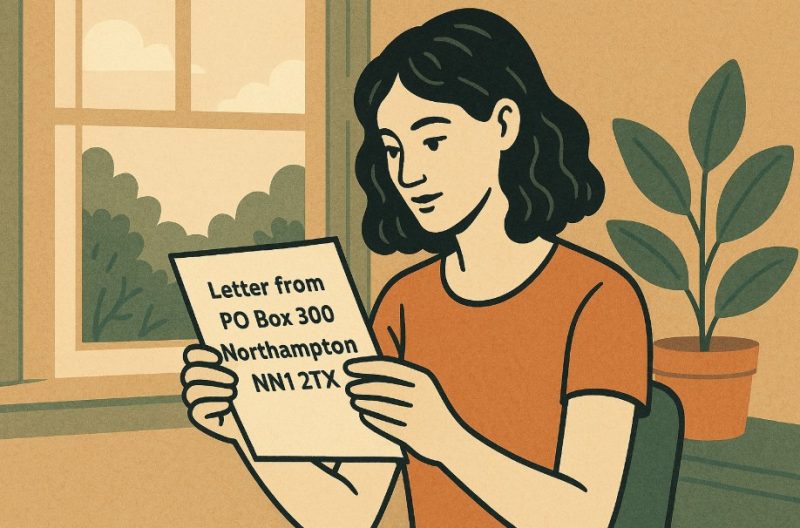
Have you recently received an unexpected letter from PO Box 300, Northampton, NN1 2TX, and wondered what it’s all about? You’re not alone.
Many people across the UK receive correspondence from this address without any prior warning, often sparking confusion or even panic.
Could it be a scam, a mistake, or something serious? It’s natural to question the origin and purpose of such a letter, especially when it arrives without clear context.
Understanding where it’s come from and what action, if any, you need to take is crucial. Let’s explore what this address represents and how you should respond if it lands in your mailbox.
Who Uses PO Box 300 Northampton NN1 2TX?

The postal address PO Box 300, Northampton NN1 2TX is used by the Northampton County Court Business Centre (CCBC).
This centre is part of the HM Courts & Tribunals Service and is responsible for processing civil legal matters across England and Wales.
It’s not an individual or private company sending the letter, it’s an official legal entity. This PO Box serves as a dispatch hub for thousands of legal notifications each day, particularly for county court claims involving unpaid debts, civil enforcement, or money disputes.
Essentially, this is the address from which creditors and courts initiate formal legal correspondence.
What Is the Northampton County Court Business Centre (CCBC)?
The Northampton County Court Business Centre (CCBC) is a centralised civil court located at St Katharine’s House, Northampton.
It deals with non-complex monetary claims, typically those filed online via MoneyClaim Online (MCOL). As part of the HM Courts system, it issues claim forms, judgments, and court orders for debts, repossessions, and other financial disputes.
Since it processes claims electronically, the CCBC handles cases from creditors all over the UK, hence the standardised return address at PO Box 300, Northampton.
Why Did You Receive a Letter from PO Box 300 Northampton NN1 2TX?
Receiving a letter from PO Box 300, Northampton NN1 2TX often means one thing, a legal claim has been started against you.
This address is used by the CCBC to notify individuals that a civil money claim has been submitted by a creditor or agency claiming you owe them money.
Reasons for Receiving a Letter
- An unpaid credit card, loan, or catalogue debt.
- A utility bill or broadband contract that went into default.
- An old debt that was sold to a debt collection agency.
- A penalty charge notice or unpaid parking fine.
- Mistaken identity or outdated address linked to someone else’s debt.
The letter may include a Claim Form, which outlines the amount owed and provides you with a response deadline, usually 14 days. It’s crucial not to ignore this letter as it is part of a legal process that could lead to a County Court Judgment (CCJ).
Even if you suspect the debt is incorrect, take immediate steps to understand the claim, verify its legitimacy, and act within the stated timeframe to avoid automatic legal consequences.
Could This Be a County Court Claim or Judgment (CCJ)?

Yes, it could. In fact, that’s often exactly what it is. A letter from PO Box 300 Northampton usually precedes or includes a County Court Claim Form.
This is a formal notice that a creditor has taken legal steps to recover money they believe you owe. If you ignore this or fail to respond, the court can issue a County Court Judgment (CCJ) against you.
This judgment becomes legally binding and shows on your credit report for six years, affecting your ability to obtain loans, credit cards, mortgages, and even mobile phone contracts.
The CCJ could lead to further enforcement such as bailiff visits or wage deductions. That’s why even if you think the letter doesn’t apply to you or was sent in error, you must not ignore it.
Confirm the name, account number, and claim details, because once a CCJ is issued, resolving it becomes far more complex.
Is a Letter from PO Box 300 Northampton Always Related to Debt?
While the most common reason for receiving a letter from PO Box 300 Northampton NN1 2TX is debt-related, it’s not exclusively about unpaid bills.
This address is associated with the Northampton County Court Business Centre, which handles other civil enforcement matters, such as property repossessions, claims for damages, and statutory demands.
However, the vast majority of cases processed at this court are tied to money claims, usually involving unpaid debts.
So, if you’ve never missed a payment or been involved in a loan agreement, it’s worth checking if this could be a case of mistaken identity or a debt linked to a previous tenant at your address. Either way, it’s important not to disregard the letter.
Even if you’re confident the claim isn’t valid, you still need to respond to ensure the court doesn’t issue a default judgment simply because they didn’t hear back from you.
What Steps Should You Take If You Get a Claim Form from This Address?
If you receive a claim form from PO Box 300 Northampton, it’s essential to act quickly and follow a structured process.
What to Do?
- Read the letter thoroughly to understand the nature of the claim, including who is suing you, for what amount, and why.
- Check the deadlines stated in the claim pack, usually 14 days to respond, or 28 days if you file an Acknowledgment of Service.
- Confirm if the debt is yours by reviewing any past accounts, statements, or agreements you’ve signed.
- Keep all correspondence: You’ll need it if you plan to defend the claim or challenge the amount.
- Respond using the correct forms: These include the admission form (if you agree), the defence form (if you disagree), or the acknowledgement form (to get more time).
Ignoring the form will likely result in a default judgment, which can be hard to overturn later. Always consider seeking legal advice if you’re unsure about your rights or obligations.
Can You Ignore a Letter from the Civil National Business Centre?
No, ignoring a letter from the Civil National Business Centre (often associated with PO Box 300) is one of the worst mistakes you can make.
These letters are not optional notices or marketing materials, they’re formal legal notifications. If you disregard them, the court can assume you have no defence, and issue a County Court Judgment (CCJ) by default.
This can have serious implications on your financial stability, creditworthiness, and even employment prospects in some sectors.
Many enforcement processes begin with these letters, bailiffs, wage garnishments, and bank account freezes are all possible outcomes. Even if you think it’s a mistake or the debt isn’t yours, you must respond to explain your side.
If you do nothing, the system moves forward without you. Always treat these documents with urgency, even if you’re confused or overwhelmed.
If in doubt, seek assistance from Citizens Advice, StepChange, or a solicitor specialising in debt claims. Delaying action reduces your options.
What Happens If You Don’t Respond to a County Court Claim?

Not responding to a County Court claim can cause irreversible consequences. The most immediate result is a default judgment, where the court rules in the claimant’s favour without hearing your side.
Key Outcomes Include
- A County Court Judgment (CCJ) added to your credit file for 6 years.
- The court may order you to pay the full amount instantly or in instalments.
- Your credit rating drops, affecting your ability to borrow or get approved for financial products.
You Could Also Face
- Bailiff enforcement (High Court or County Court enforcement agents).
- Attachment of earnings orders (money taken directly from your wages).
- Charging orders (a claim on your property).
This process is fast and automatic if you don’t take action. It doesn’t matter if the debt is incorrect or outdated, if you don’t respond, the court won’t know.
Always file an Acknowledgement of Service if you need time. At the very least, send a written explanation of your situation before the deadline to preserve your legal standing.
How Do You Respond to a Claim Form from the CCBC?
Responding to a Claim Form from the CCBC involves completing the forms provided and returning them within the deadlines.
First, Assess the Pack you Received
- Claim Form: Outlines who is making the claim and for how much.
- Response Pack: Includes three forms: Admission, Defence, and Acknowledgement of Service.
Your Response Options
- Admit the claim: Fill in the admission form and offer payment proposals.
- Defend the claim: Complete the defence form if you believe the claim is incorrect or unlawful.
- Request time: Submit an Acknowledgment of Service to gain 28 days to file a full defence.
How to Return?
- By Post: mail it to the Northampton County Court Business Centre.
- Online: visit the MoneyClaim Online portal for digital filing.
If you’re uncertain, always seek legal guidance before submitting your forms. An error in your response could weaken your defence or lead to unnecessary financial obligations.
Is It Possible to Challenge a Judgment in Default?
Yes, you can challenge a default judgment by making an application to set it aside, but there are specific requirements.
First, you must demonstrate a valid reason for not responding to the original claim, such as not receiving the claim form or not living at the address it was sent to.
Second, you need a realistic defence against the claim. Courts generally require a completed N244 form, accompanied by a witness statement explaining the circumstances and your defence. You’ll also need to pay a court fee, unless you qualify for a fee waiver.
Once submitted, a judge may schedule a hearing to review your case. If granted, the default judgment will be reversed, and you’ll get a chance to defend yourself properly.
This process can be complex, and it’s wise to consult a solicitor or legal adviser. But be aware, if your reasons aren’t compelling or if you’ve delayed too long, the court may refuse the application.
How Can You Contact Northampton County Court Business Centre?

If you’ve received a letter or need clarification about a claim, contacting the Northampton County Court Business Centre (CCBC) is straightforward.
Contact Options
- Phone: Call 0300 123 1056, available Monday to Friday from 8:30 am to 5:00 pm.
- Email: Reach out via ccbc@justice.gov.uk for general inquiries.
- Post: Write to County Court Business Centre, St Katharine’s House, 21–27 St Katharine’s Street, Northampton, NN1 2LH.
Additional Details
- Document Exchange (DX): DX 702885 Northampton 7
- Always quote your claim number in any communication.
- Be clear and concise in your message or inquiry.
Whether you’re seeking more information or submitting a defence, it’s important to use the correct contact method.
Avoid delays by double-checking your reference numbers and ensuring your documents are complete. If calling, try earlier in the day to reduce wait times.
Conclusion
Receiving a letter from PO Box 300 Northampton NN1 2TX might feel alarming, but understanding its origin and purpose is key.
This address is used by the Northampton County Court Business Centre, which processes debt-related court claims. If you receive such a letter, do not ignore it, review the details, verify the legitimacy, and respond promptly.
Whether it’s a valid debt or a mistaken claim, taking the right steps can help you avoid a County Court Judgment or more serious enforcement action.
Seek legal advice where necessary, and remember: timely action can protect your financial standing and legal rights.
FAQs About PO Box 300 Northampton NN1 2TX
What does “Judgment in Default” mean in the UK legal system?
It means the court issued a decision against you because you didn’t respond in time. This usually results in a CCJ being registered automatically.
How can I verify if the letter is legitimate or a scam?
Check the court seal, reference number, and contact details. You can also call the CCBC directly using the number listed in the letter.
Will a CCJ from the Northampton court affect my credit score?
Yes, a CCJ will stay on your credit file for six years. It can make borrowing money or getting credit more difficult during that time.
Can you contact the Northampton County Court Business Centre directly?
Yes, you can contact them by phone, email, or post. Always quote your claim number when making an inquiry.
What if the court letter is for someone who no longer lives at my address?
Return the letter to sender and notify the court. It’s also a good idea to check if your address is associated with the debt.
Is there a time limit to respond to a County Court claim in the UK?
Yes, typically you have 14 days to respond. You can apply for an extension using an Acknowledgment of Service form.
Are there any fees for disputing a court claim or requesting a hearing?
Yes, fees may apply when submitting defence forms or challenging judgments. You might be eligible for help with fees if you’re on a low income.