

The gaming industry is no stranger to innovation. From 8-bit consoles to immersive VR, each generation has redefined how we play. But one of the most transformative changes yet is happening now: blockchain gaming.
Powered by decentralized networks and digital assets, blockchain gaming is reshaping not just gameplay but the economic model of games, introducing player-owned assets, decentralized finance (DeFi), and true digital ownership into the mainstream.
What was once considered a niche experiment is now a multi-billion-dollar industry. According to DappRadar, over 1.2 million unique active wallets interacted with blockchain games daily in 2023, accounting for over 50% of all blockchain activity. Games like Axie Infinity, Gods Unchained, and Star Atlas are showing the world that blockchain gaming is not a trend—it’s a paradigm shift.
This article explores how blockchain is revolutionizing gaming through asset ownership, play-to-earn models, and real-time trading opportunities, including integrations with tools like netherexpro, which help users monetize in-game assets and token-based profits.
What Is Blockchain Gaming?
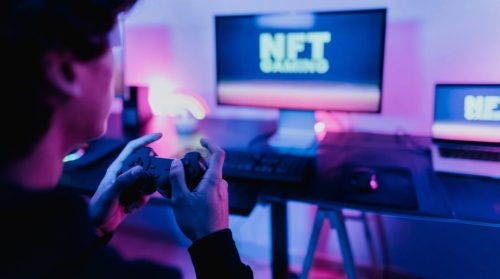
Blockchain gaming refers to video games that utilize blockchain technology to provide decentralized ownership, secure transactions, and player-centric economies. Unlike traditional games where assets are stored on centralized servers, blockchain games record ownership of characters, weapons, or land on distributed ledgers.
Key Features:
- NFT Integration: In-game items are represented as NFTs (non-fungible tokens), which players can own, sell, or trade.
- Token Economies: Players earn and spend cryptocurrencies, enabling real-world economic activity.
- Smart Contracts: Govern gameplay mechanics, rewards distribution, and marketplace rules transparently.
The Rise of Play-to-Earn (P2E) in Digital Economy
Play-to-Earn (P2E) has become the flagship model of blockchain gaming. It incentivizes players to earn tokens or NFTs by participating in gameplay activities.
Popular P2E Models:
- Battles and competitions (e.g., Axie Infinity)
- Staking and farming in-game currency
- Selling NFT-based items or land on marketplaces
Example:
Axie Infinity allowed players, particularly in developing countries like the Philippines, to earn more than minimum wage by breeding and battling NFT creatures (Axies). At its peak, Axie generated over $2 billion in total trading volume on its marketplace.
Benefits of Blockchain Gaming
Pros:
- True Digital Ownership: Players fully control their in-game assets.
- Cross-Game Interoperability: NFTs and tokens can be transferred between games or platforms.
- Transparency and Security: Blockchain ensures that game logic and marketplaces are fair and tamper-proof.
- New Income Streams: Players can earn real income through gameplay and trading.
Cons:
- High Entry Barriers: Some games require significant upfront investment in NFTs or tokens.
- Volatility: Token-based economies are subject to price fluctuations.
- Regulatory Ambiguity: Legal treatment of in-game assets and tokens remains unclear in many regions.
- Scams and Rug Pulls: As with DeFi, some gaming projects have proven unreliable or fraudulent.
Case Studies in Blockchain Gaming
Case 1: Decentraland
Decentraland is a metaverse game where users buy, develop, and trade virtual land parcels. In 2022, a piece of land sold for over $2.4 million. Players can monetize their land through digital storefronts, games, or virtual events.
Case 2: Illuvium
Illuvium, a high-fidelity RPG with NFT-based monsters, attracted over $100 million in funding and introduced a decentralized autonomous organization (DAO) for governance. It’s an example of a blockchain game appealing to hardcore gamers while integrating DeFi mechanics.
Blockchain Gaming and Trading
Blockchain gaming and crypto trading share core mechanics: value speculation, real-time asset liquidity, and decentralized access. Players and traders can monetize game tokens or NFTs in real-world terms using platforms like netherexpro, which helps users:
- Trade in-game tokens on supported exchanges
- Monitor token price trends for profitable exits
- Set algorithmic trading strategies linked to game-based token economies
This convergence is creating a new class of hybrid users: gamer-traders who earn while they play and invest in virtual economies with real-world implications.
Conclusion
Blockchain gaming represents a profound shift not just in how we play, but in how we value digital experiences. With player-owned economies, real-world income potential, and decentralized ecosystems, it blurs the line between work and play, trading and gaming.
As blockchain technology becomes more scalable and user-friendly, we can expect even deeper integration of gaming with DeFi, NFTs, and the metaverse. Platforms like netherexpro are helping users capitalize on this intersection, whether they’re gamers earning tokens or traders seeking the next breakout trend in game-based assets.
In this emerging landscape, blockchain gaming isn’t just entertainment. It’s economic participation, and understanding its mechanisms is key to unlocking new digital opportunities. The game has changed, and now, you can earn every time you play.
Frequently Asked Questions (FAQ)
What makes blockchain games different from traditional games?
Blockchain games offer true ownership, the ability to earn real assets, and decentralized governance, features absent in traditional game ecosystems.
Are blockchain games free to play?
Some are, but many require initial NFT or token purchases. However, newer models like Free-to-Own (F2O) are emerging.
How do players make money from blockchain games?
Through selling NFTs, earning tokens during gameplay, staking, and participating in in-game marketplaces.
What is an NFT in gaming?
NFTs are unique digital items (characters, weapons, land) that can be owned, traded, and stored in a crypto wallet.
Are blockchain games safe?
Generally yes, but players should do due diligence. Look for audits, active communities, and transparent teams to avoid scams.
Can NFTs be used across multiple games?
Sometimes. Projects like Enjin and Immutable aim to enable cross-platform asset use, but it’s still an evolving capability.
What happens if a blockchain game shuts down?
Players still retain ownership of NFTs and tokens, but their utility may be lost unless adopted by other platforms.
Are there environmental concerns?
Games using proof-of-work blockchains (like Ethereum before the Merge) faced criticism, but many now run on eco-friendly Layer 2 solutions.
Can blockchain gaming be a full-time job?
For some, especially in regions with lower income levels, yes. It’s often referred to as the “GameFi” workforce.
How do I start trading game tokens?
You’ll need a wallet and access to an exchange. Platforms like netherexpro provide a trading dashboard tailored to token-based economies.