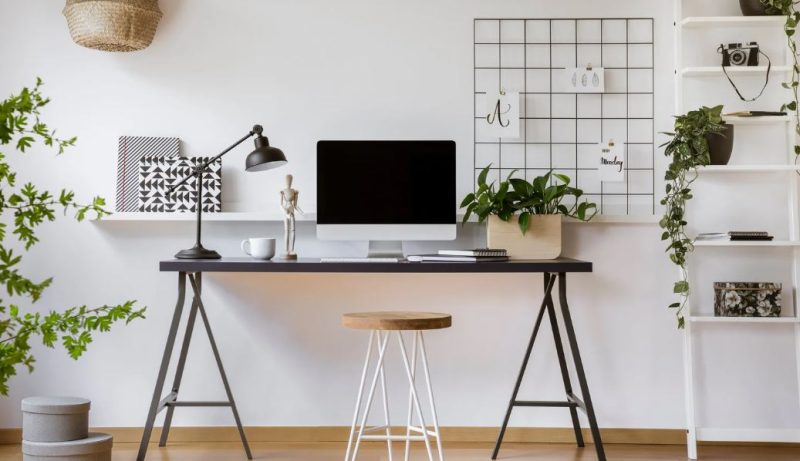
The way we work in Britain has undergone a seismic shift, and our homes are at the epicentre of this transformation.
According to recent figures from the Office for National Statistics, around 40% of the UK’s working adults operate on either some form of hybrid model, splitting their time between home and a central office, or work fully remotely.
This is no longer a temporary measure; it’s a new professional reality that is fundamentally altering our relationship with our living spaces.
We are witnessing the rise of the ‘home hub’, a modern, multi-functional environment that must effortlessly blend the demands of a career, the comforts of family life, and the needs of personal leisure under one roof.
Accordingly, this evolution in work culture is fundamentally changing what British homeowners look for in a property, moving beyond traditional considerations like the daily commute.
How Remote Work is Reshaping the Modern British Home?

The Blurring Lines: Navigating the New Work-Life Reality
The greatest challenge of this new era is managing the increasingly blurred boundary between professional and personal life. When your kitchen table doubles as your desk, the mental “commute” that once signalled the end of the working day disappears, making it difficult to switch off.
This has led to a productivity imperative: the growing need for dedicated, purpose-built workspaces within the home that help to provide focus, productivity, and, crucially, mental well-being. Without a physical separation, the risk of burnout and diminished performance increases significantly.
Simultaneously, the decline of the five-day-a-week commute is reshaping our communities. With less time spent travelling to city centres, there’s a renewed focus on local amenities, giving rise to the concept of the “15-minute neighbourhood” across the UK, where daily necessities are all within a short walk or cycle. This hyperlocal focus further cements the home’s role as the central point of our lives.
Adapting and Thriving: Practical Solutions for the Modern Home
As our homes take on these expanded roles, intelligent design and adaptation have become paramount. Homeowners are increasingly seeking creative ways to carve out functional spaces that support this new lifestyle.
Creating the Ideal Home Office
The makeshift desk in the corner of a bedroom is no longer sufficient. The modern home hub requires a separate, quiet, and professional-looking space that’s conducive to video calls and deep, focused work.
This dedicated area should ideally have a door that can be closed, physically and mentally separating work from the rest of the home.
The options for creating such a space are varied, ranging from converting a spare bedroom or underused dining room to more significant structural changes. And as the demand for extra space grows, many homeowners are turning to more innovative solutions.
A loft conversion, for example, can transform a dusty, unused attic into a stunning home office, with specialist companies like Nuloft creating these bespoke living and working areas.
Other popular solutions include garden rooms and small extensions, which provide complete separation from the main house.
The Rise of Multi-Functional Spaces
Beyond the dedicated office, the principle of versatility is key. Other areas of the home are being reimagined to serve multiple purposes.
A dining room might feature integrated storage and smart lighting to quickly convert into a client presentation area. A well-designed kitchen island can double as a temporary workstation for catching up on emails.
Bespoke joinery, sliding partitions, and clever furniture choices allow spaces to adapt throughout the day, transforming from a productive work zone to a relaxing family area in minutes.
Designing for Wellbeing
Creating a successful home hub is also about nurturing well-being. Maximising natural light has been proven to boost mood and productivity alike. Investing in ergonomic furniture prevents the physical strain associated with long hours at a desk.
Furthermore, integrating smart technology, such as robust Wi-Fi networks, smart lighting that adjusts throughout the day, and efficient climate control, can all create a comfortable and inspiring environment to both live and work in.
The Financial Angle: Investing in Your Home Hub

Investing in your home to better accommodate remote work is a sound financial decision. In the current UK property market, features that support a flexible, work-from-home lifestyle are highly sought after, directly impacting a property’s value.
Return on Investment (ROI)
Certain renovations consistently offer an excellent return. According to property market analysts, adding a well-designed home office can increase a property’s value by as much as 10%.
Loft conversions and small extensions that add a bedroom or dedicated workspace also typically provide a strong ROI, often recouping a significant portion, if not all, of the initial outlay upon sale.
These additions are no longer seen as luxuries but as essential features for a growing segment of buyers. A home that is ‘move-in ready’ for a hybrid worker holds a significant competitive advantage in the marketplace.
Tax Considerations
For self-employed individuals and small business owners, there can be tax advantages. If you use a room exclusively for business purposes, you may be able to claim a portion of your household running costs – such as council tax, heating, and electricity – as a business expense.
It’s always advisable to consult with an accountant to understand the specific rules and what you can legitimately claim.
Financing Renovations
Funding these home improvements is more accessible than many assume. Homeowners in the UK have several options, including remortgaging to release equity, taking out a home improvement loan, or using a personal loan for smaller projects.
Choosing the right financing depends on the project’s scale and your personal financial circumstances.
Home and Work: A Blueprint for the Future
The remote work revolution has irrevocably changed our perception of home. It is no longer just a sanctuary but a dynamic ‘hub’ for our professional, personal, and family lives.
The key trends of creating dedicated workspaces, designing multi-functional living areas, and prioritising well-being reflect a permanent shift in our priorities.
As we move forward, the importance of adapting our living spaces to this new and evolving way of working cannot be overstated.
The future of residential architecture will undoubtedly be defined by this deepening connection with our professional lives, creating homes that are not only smarter and more flexible but also more attuned to our holistic human needs.