

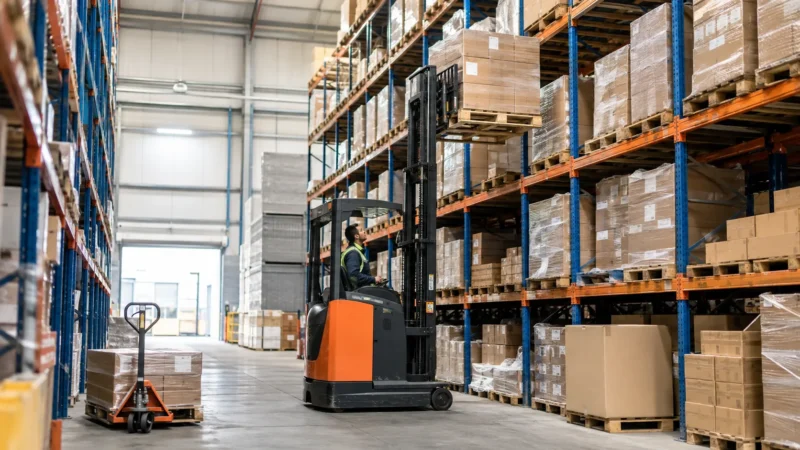
Storage needs rarely stay still for long. A warehouse that felt spacious six months ago can suddenly become tight, awkward, or inefficient after a seasonal rush, a product line expansion, or a change in fulfilment strategy.
For many businesses, the real challenge is not simply finding more space. It is making the space they already have work harder, without locking themselves into long-term equipment decisions that may not suit next quarter’s demands.
That is where forklift hire becomes especially useful. It gives businesses room to respond, test, and adjust as operations evolve.
Why Storage Demands Change Faster Than Expected?
Warehousing has become more dynamic over the past decade. Stock profiles shift faster, customer expectations are tighter, and supply chains are less predictable. Even businesses with stable core demand are dealing with more variables than before.
A few common triggers tend to reshape storage requirements:
- seasonal peaks and short-term contracts
- SKU growth and product diversification
- warehouse reconfiguration or relocation
- shifts from bulk storage to faster pick-and-pack models
- temporary overflow caused by supply chain disruption
In each case, equipment requirements change alongside the layout. A forklift fleet that suited wide aisles and pallet-heavy storage may not be ideal once racking is altered, stock turns accelerate, or available floor space shrinks.
Owning the wrong equipment can become a hidden operational drag. It may still function perfectly well, but if it is oversized, underused, or unsuitable for the revised environment, productivity slips. Operators take longer routes, loading becomes less precise, and safety margins tighten.
Forklift Hire Creates Breathing Space
Hiring forklifts gives businesses something valuable in periods of change: flexibility without guesswork.
Instead of making a capital purchase based on today’s assumptions, managers can bring in the equipment they need for the current phase of operations. If that phase changes, the fleet can change with it. That matters when the warehouse itself is in transition.
A business expanding racking upwards, for instance, may need reach trucks for a limited period while new storage density is tested.
A distributor taking on an additional temporary site may need extra counterbalance trucks for inbound movement, but only for a few months. In both cases, access to flexible equipment leasing solutions can make the difference between a smooth adjustment and an expensive mismatch.
The point is not just cost control, although that matters. It is operational agility. Hire allows companies to treat materials handling as an adaptable resource rather than a fixed constraint.
Matching Equipment to the Storage Model
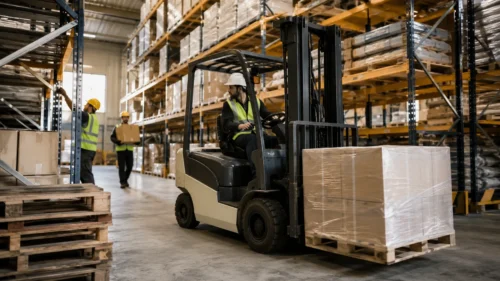
Not all storage problems are actually space problems. Often, they are movement problems.
When goods cannot be received, stored, picked, and dispatched efficiently, the warehouse feels fuller than it really is. The right forklift setup can ease those pinch points.
Adapting to Narrower Layouts
As businesses try to increase storage density, aisles often become tighter and rack access more demanding. That can create friction if the existing fleet was chosen for a more open floor plan.
Hiring more suitable trucks allows operators to work effectively within the revised layout while management assesses whether the new configuration is sustainable long term.
Supporting Temporary Overflow
Overflow storage is common during peak periods, but temporary areas are rarely designed for ideal handling conditions. Goods may be split between external units, yards, or secondary warehouse zones with different surfaces and access routes.
Forklift hire helps businesses match equipment to those short-term realities instead of stretching the main fleet too thin.
Responding to Product Mix Changes
A change in inventory type can quickly alter handling requirements. Heavier pallets, fragile stock, unusual dimensions, or faster turnover all affect how goods should move through the building.
Hiring gives operations teams a way to respond without rushing into a purchase that may only suit one trading cycle.
A Practical Way to Manage Risk
Long-term planning still matters, of course. But in warehousing, some of the biggest costs come from committing too early to the wrong assets.
Forklift hire reduces that risk in several ways.
It Supports Trial-and-Adjust Decisions
Warehouse changes are often introduced in stages. A business may trial new racking, test a revised picking route, or open a temporary mezzanine area before rolling out a wider redesign.
Hired equipment fits neatly into that process. It allows managers to evaluate how different trucks perform in real operating conditions before making longer-term decisions.
It Helps Avoid Idle Capacity
Buying additional forklifts for a short-lived spike can leave a business with underused assets once volumes return to normal. Hire avoids tying up capital in machines that may spend much of the year parked.
That is particularly useful in sectors with sharp seasonal swings, including retail, food distribution, and construction supply.
It Keeps Operations Moving During Disruption
Breakdowns, delayed deliveries of new equipment, and sudden contract wins all place pressure on warehouse operations. Hire can act as a buffer, helping businesses maintain throughput while longer-term plans catch up.
In practice, that continuity is often just as important as the financial flexibility.
What to Consider Before Hiring?
Forklift hire works best when it is tied to a clear operational objective. That sounds obvious, but it is easy to focus on availability and overlook the wider warehouse context.
Before bringing in additional equipment, businesses should think through a few practical questions:
What has actually changed in the warehouse?
Is the issue higher stock volume, a denser layout, faster order profiles, or limited loading capacity? The answer shapes the type of truck needed.
How long is the demand likely to last?
A two-month overflow requirement calls for a different approach than a rolling period of uncertainty after a site expansion.
Will operator requirements change?
New equipment types may require familiarisation, revised safety planning, or changes to traffic management inside the warehouse.
Is this a temporary fix or a longer-term signal?
Sometimes short-term hire reveals a more permanent operational shift. If a hired truck solves a persistent bottleneck, that may point to a broader need to rethink fleet strategy.
Flexibility Is Becoming a Competitive Advantage
Warehousing is no longer just about storing more. It is about staying responsive when customer demand, stock patterns, and building constraints change at speed.
Forklift hire helps businesses adapt without overcommitting. It offers a practical way to align equipment with current storage realities, whether the challenge is seasonal overflow, a layout redesign, or a more fundamental shift in how inventory moves through the operation.
For businesses trying to balance efficiency with uncertainty, that kind of flexibility is not a luxury. It is a smarter way to keep storage decisions aligned with the pace of the market.