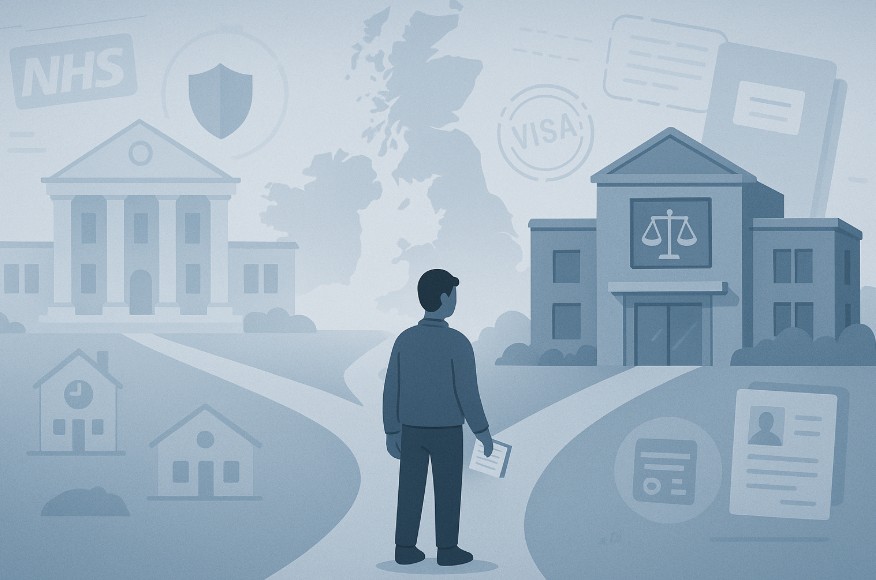
Have you ever wondered if individuals living in the UK without legal status are eligible to receive any kind of financial or social support? This question has been widely debated, often misunderstood, and surrounded by myths.
In reality, immigration laws in the UK are strict when it comes to the allocation of public funds. Individuals without the legal right to remain in the country are generally not allowed to claim benefits.
However, there are nuanced rules that differentiate between illegal immigrants, asylum seekers, and refugees. This guide explores what support exists, if any, and what your legal options might be.
Who Is Considered an Illegal Immigrant in the UK?

The term “illegal immigrant” refers to someone who is living in the UK without valid permission under immigration law.
This may happen through various situations and is not always the result of intentional wrongdoing. Understanding the definition is essential to grasp the legal limitations and potential pathways to regularisation.
People are generally considered illegal immigrants if they:
- Entered the UK without a valid visa or entry clearance.
- Overstayed a visa after it expired without renewing or applying for a different status.
- Were denied asylum but chose to remain in the country.
- Violated the terms of their visa, such as by working illegally.
- Were born in the UK to parents who do not have legal status and have never been granted permission to stay.
- Received a deportation order but did not leave and continued to live in the UK.
Authorities treat illegal immigration seriously, often detaining or deporting individuals without legal status. This can include placement in immigration detention centres or receiving removal notices.
Employers and landlords who knowingly assist undocumented migrants may also face prosecution. However, everyone in the UK has the right to a fair legal process and should seek legal advice if detained or facing removal.
Are Illegal Immigrants Entitled to Any Welfare or Public Benefits?
Illegal immigrants in the UK are generally not eligible for state benefits or public funds. This includes mainstream support such as Universal Credit, Child Benefit, Housing Benefit, and income-related support.
Access to such welfare is limited to individuals with legal immigration status, such as British citizens, refugees, or those with indefinite leave to remain.
Those living in the country without permission fall under immigration control and are barred from claiming any social security assistance under UK law.
The principle behind this policy is to prevent misuse of taxpayer-funded systems and to uphold the UK’s structured immigration enforcement.
What Types of Support Are Completely Restricted?
While some public services are universally accessible, others are off-limits to individuals without lawful immigration status. Here are the key types of support that illegal immigrants cannot access:
- Universal Credit
- Child Benefit and Tax Credits
- Housing Benefit and Council Tax Reduction
- Income Support and Pension Credit
- Disability Living Allowance (DLA) or Personal Independence Payment (PIP)
- Jobseeker’s Allowance or Employment Support Allowance
Illegal immigrants are also not eligible for local authority housing or homelessness support. Most local government funding is conditional on having the right to reside and meeting the habitual residence test.
These restrictions are designed to ensure that public funds are used only for those who meet immigration and residence eligibility.
Why Can’t Illegal Immigrants Access Universal Credit or Child Benefit?
Universal Credit and Child Benefit are classified as public funds under UK immigration legislation. Those with a “No Recourse to Public Funds” (NRPF) condition explicitly cannot access them.
Key reasons include:
- Immigration Control: If your stay is subject to immigration control, you’re automatically disqualified.
- Lack of Legal Residency: These benefits are meant for residents with lawful status.
- Presence and Residence Tests: Illegal immigrants do not meet the residency tests or contribution requirements.
- Risk of Prosecution: Attempting to claim benefits fraudulently can lead to removal or criminal charges.
Public benefits are tightly regulated and monitored by the Department for Work and Pensions (DWP) and HMRC. Benefit fraud is a serious offence, and claims made under false identity or unlawful status are grounds for enforcement action.
What Does “No Recourse to Public Funds” (NRPF) Mean?
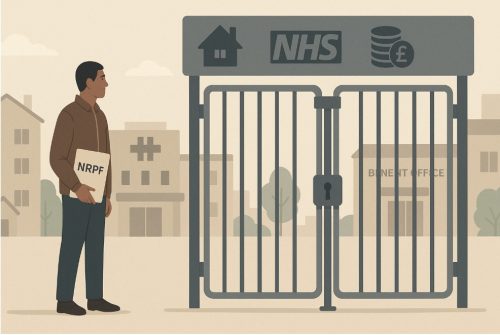
“No Recourse to Public Funds” (NRPF) is a legal condition applied to people who are subject to immigration control. It means you cannot claim most welfare benefits or access certain housing services provided by the state.
This restriction is typically attached to individuals with limited leave to remain or no legal status in the UK. NRPF ensures that public funds are only available to those lawfully living and working in the country.
If you are under NRPF, any attempt to claim benefits may result in a breach of immigration rules, making it harder to secure future legal status.
How Does NRPF Apply to Asylum Seekers and Undocumented Migrants?
NRPF directly affects individuals who are either in the UK unlawfully or have not yet been granted asylum. While asylum seekers are under immigration control, they are not completely excluded from support.
Instead, they are offered specific government aid like housing and basic living allowance. However, they cannot apply for general public funds like Universal Credit or Housing Benefit.
For undocumented migrants with no pending asylum claim or legal status, the restriction is absolute. Only certain emergency or humanitarian exceptions are considered, and these must be assessed through formal legal channels.
What Benefits Can Asylum Seekers Receive in the UK?
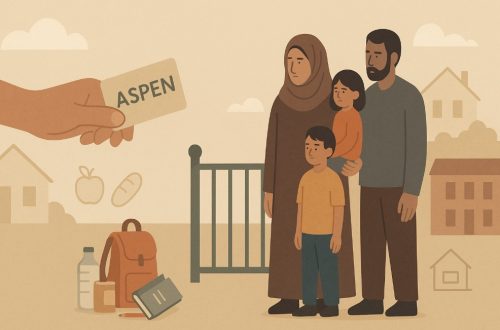
Asylum seekers in the UK are not eligible for mainstream welfare benefits but can access a special type of government support while their claim is being assessed.
This support, which is not considered public funds, helps cover basic living needs such as housing and a small financial allowance.
If you have no money or accommodation, you can apply for asylum support through the Home Office. The aim is to prevent destitution while your right to remain in the UK is reviewed.
What you may receive as an asylum seeker:
- Accommodation: You will be provided with housing if you have nowhere to live. This could be in a house, flat, hostel or B&B. You cannot choose where to live and are unlikely to be placed in London or the southeast.
- Weekly Allowance: You’ll typically receive £49.18 per person per week via an ASPEN card (prepaid debit card). This is used for buying essentials like food, toiletries, and clothing.
- Reduced Rate (With Meals Provided): If your accommodation includes meals, you will receive £9.95 per person instead.
- Healthcare Access: Asylum seekers can access NHS services for free, including prescriptions, dental care, and eye tests.
- Education for Children: Children between the ages of 5 and 17 can attend state schools for free, and some may be eligible for free school meals.
Additional support is available for vulnerable groups, such as pregnant women or mothers with children under three. This includes:
- Extra Weekly Payments:
- Pregnant women: £5.25
- Babies under 1: £9.50
- Children aged 1–3: £5.25
- One-Off Maternity Grant:
- £300 can be claimed if your baby is due in 11 weeks or less or is under six months old.
This support continues until your asylum claim is fully processed. If granted refugee status, you may then become eligible for regular benefits and public housing assistance, subject to meeting eligibility requirements.
Can Refused Asylum Seekers Still Get Help?
If your asylum claim is refused, it does not necessarily mean that all support is immediately cut off. You may still be eligible for limited assistance if you meet specific criteria.
This is intended as a temporary measure and is available to those who are preparing to leave the UK or have a reason they cannot return to their country right away.
This support is offered under Section 4(2) of the Immigration and Asylum Act 1999 and is managed by the Home Office. To qualify, you must show that you are destitute and that there is a legal or practical barrier preventing your departure from the UK.
What Support Is Available After Rejection?
As a refused asylum seeker, you may still receive some essential services and support, but only under strict conditions.
Here’s what you could be eligible for:
- Accommodation: You must accept the offer of housing to receive any other form of support.
- Weekly Allowance: £49.18 per person per week, provided via an ASPEN payment card (or £9.95 if meals are included in your accommodation).
- Maternity Support: A one-off £300 payment may be available for pregnant mothers if the baby is due within 11 weeks or is under six months old.
- Medical Support: Continued access to NHS services including GP appointments, prescriptions, dental and eye care.
- Childcare Needs: Help getting your child’s birth certificate and applying for schooling.
However, you will not be eligible for:
- Any cash support without accepting the housing.
- Additional payments beyond what is listed above.
To apply, you must complete and submit form ASF1 and may be asked to provide medical documentation (section 4 medical declaration) if your support claim is based on health reasons.
Do Illegal Immigrants Have Access to Healthcare, Education, or Housing?
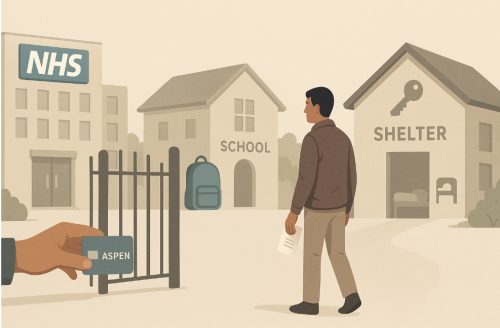
Illegal immigrants in the UK are generally not entitled to public benefits, but they can access certain essential services on humanitarian and public health grounds. They may use NHS emergency services and receive urgent medical treatment.
Healthcare professionals do not have to report patients to immigration authorities when providing emergency care, so seeking help is possible without fear of immediate removal.
Children of illegal immigrants can attend state-funded schools between the ages of 5 and 17, regardless of immigration status. Schools are not involved in immigration enforcement, and some children may qualify for free school meals based on family circumstances.
Access to housing support is extremely limited. Illegal immigrants are not eligible for council housing or homelessness services.
In rare cases, temporary help from charities or humanitarian groups may be available, especially for families with children or vulnerable individuals.
What Legal Options Exist to Become a Legal Resident in the UK?
If you’re in the UK without valid immigration status, there may be legal options to regularise your stay based on factors like family ties, length of residence, or risk in your home country.
While the process can be complex, gaining legal status offers protection from deportation and access to future rights.
You may consider applying under one of the following legal routes:
- Asylum: If you fear persecution in your home country due to religion, nationality, political opinion or other factors.
- Human Rights Applications: Based on Article 8 of the European Convention on Human Rights (e.g. right to family and private life).
- Long Residence Route: If you’ve lived in the UK continuously for 20 years or more, you may qualify for limited leave to remain.
- Family-Based Applications: If you have a child, spouse or partner who is British or has settled status.
- Windrush Scheme: For those affected by the Windrush scandal or who arrived in the UK before 1988.
Legalising your stay can lead to access to education, work, healthcare, and eventually public funds.
How Can the Windrush Scheme or Private Life Visa Help?
The Windrush Scheme was introduced to assist individuals who came to the UK before 1988 from Commonwealth countries and who may not have official documentation.
If eligible, you may apply for leave to remain, a biometric residence permit, and even compensation for hardships faced due to your undocumented status.
Another viable route is the Private Life Visa, which allows individuals who have lived in the UK for extended periods without status to remain legally.
You might qualify if:
- You’ve lived in the UK for 20 years continuously.
- You are aged 18 to 24 and have spent at least half of your life in the UK.
- You are a child who has lived in the UK for at least seven years and it would be unreasonable to expect you to leave.
Both of these options are complex, and seeking legal advice is crucial before submitting an application.
What Should You Do If You Are in the UK Without Valid Immigration Status?
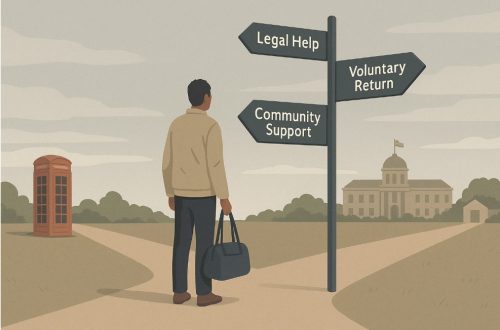
Being in the UK without lawful status places you at significant legal and personal risk. If this is your situation, taking prompt, informed action is essential to prevent further complications.
The longer you remain undocumented, the harder it becomes to demonstrate continuous residence, good character, or compliance with immigration laws, factors that are key in future applications.
Here’s what you can do:
- Seek Legal Advice Immediately: Contact an immigration lawyer or an accredited advice service like Citizens Advice or the Joint Council for the Welfare of Immigrants.
- Avoid Further Breaches: Do not use fake documents, work illegally, or misrepresent your status.
- Collect Supporting Documents: Gather evidence of your residence, family life, community integration, medical conditions, and ties to the UK.
- Make a Legal Application: Depending on your case, this could be for asylum, a human rights-based application, or a family visa.
- Prepare for Possible Departure: If removal is imminent, consider voluntary return schemes. These may reduce the time you are barred from re-entering the UK.
Acting early and legally gives you the best chance of remaining in the UK or leaving without long-term penalties.
Conclusion
In the UK, illegal immigrants face strict limitations when it comes to accessing public benefits. While asylum seekers may receive limited government support, undocumented individuals without a valid claim cannot access welfare like Universal Credit or Housing Benefit.
However, humanitarian services such as emergency healthcare and children’s education remain available. For those without status, the best route forward is to explore legalisation pathways such as the Windrush scheme, long residence route, or private life applications.
Seeking professional advice early is key to protecting your future in the UK and gaining access to essential services through lawful means.
Frequently Asked Questions
Can an undocumented immigrant apply for a Private Life Visa?
Yes, if you have lived in the UK for 20 years or more or meet other private life requirements, you can apply for this visa with supporting evidence.
Is free NHS treatment available to illegal immigrants?
Emergency NHS care is available to everyone regardless of status, but non-urgent services may require payment unless you qualify for specific exemptions.
What happens if someone works illegally in the UK?
Working without the right to work is a breach of immigration law and can lead to fines, detention, or removal from the UK.
Are there organisations offering legal aid to illegal immigrants?
Yes, charities like the Joint Council for the Welfare of Immigrants and Citizens Advice offer confidential legal support and guidance.
Can a child born in the UK to illegal immigrants attend school?
Yes, all children between ages 5 and 17 have the right to free state education regardless of their or their parents’ immigration status.
Is voluntary departure better than forced deportation?
Voluntary return often leads to fewer long-term re-entry bans and may offer support with travel arrangements and reintegration.
What does the ASPEN card cover and who gets it?
The ASPEN card provides weekly funds to asylum seekers for essentials like food and toiletries and is available only if you qualify for asylum support.