


The UK government’s Autumn Budget has introduced a significant overhaul of the nation’s driving and taxation framework. Among these changes, the most notable is the introduction of a mileage-based car tax, set to take effect in April 2028.
These new policies, announced by Chancellor Rachel Reeves, have far-reaching implications for millions of UK motorists, particularly electric vehicle (EV) and plug-in hybrid owners.
This article provides a professional, in-depth analysis of the December car tax changes, offering clarity on how these updates will affect drivers across the country.
What are the Key December 2025 Car Tax Changes Introduced by HMRC?
In the December update, HMRC confirmed several regulatory and fiscal updates following the Chancellor’s Autumn Budget. These changes are aligned with the government’s wider environmental and economic objectives, including reducing carbon emissions, improving tax fairness, and addressing the decline in fuel duty revenues due to rising EV adoption.
Key Updates Include:
- Introduction of a mileage-based EV tax (eVED) effective April 2028
- Updated fuel duty policies for internal combustion engine (ICE) vehicles
- Increased funding for EV infrastructure and incentives
- Revised rules for drivers aged 70 and above
- Changes to Expensive Car Supplement thresholds to encourage EV sales
These changes are not just technical adjustments, they signify a shift in how the government envisions sustainable transport taxation in the years to come.
How Will the New Mileage-Based Car Tax System Work?
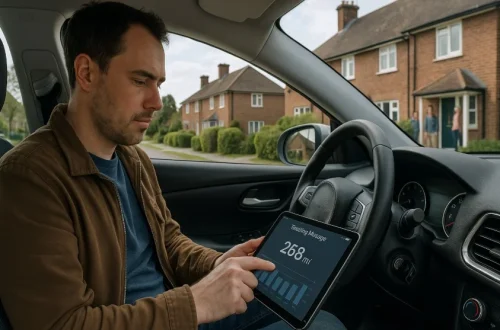
The centrepiece of the December car tax changes is the Electric Vehicle Excise Duty (eVED), a mileage-based taxation system that applies exclusively to electric and plug-in hybrid vehicles. This measure is a response to the decreasing revenue from fuel duty as more motorists shift away from petrol and diesel.
Self-Reporting Mileage
From April 2028, EV and PHEV owners will be required to estimate their annual mileage and report it directly to HMRC. They will have the option to:
- Pay upfront for the estimated annual mileage
- Pay monthly via Direct Debit
Mileage Verification Through MOT
Mileage figures will be checked annually:
- During routine MOT tests for older vehicles
- Through a new annual verification procedure at approved MOT stations for newer vehicles
Charging Rates and Exemptions
The tax rates have been confirmed as follows:
| Vehicle Type | Charge per Mile (2028–2029) | Notes |
| Battery Electric Vehicles | 3p | Applies from April 2028 |
| Plug-in Hybrid Vehicles | 1.5p | Lower rate due to partial fuel reliance |
| Electric Vans, Trucks, Bikes | 0p | Temporarily exempt |
These new charges are designed to replace the fuel duty revenue gap while maintaining fairness among vehicle types.
Who Will Be Affected by the Mileage-Based Tax From 2028?
The new mileage-based tax, set to take effect from 2028, will primarily impact several key vehicle categories. Battery Electric Vehicle (BEV) owners will be most affected, as they currently pay no fuel duty; the government estimates an annual cost of around £255 for a driver covering 8,500 miles.
Plug-in Hybrid Vehicle (PHEV) owners will also face charges, though at a lower rate of 1.5p per mile due to their mixed fuel use.
Drivers aged over 70 may experience additional changes under new December driving laws, including potential re-evaluation of driving fitness and licence renewals, illustrating tighter regulations even if not directly linked to tax.
Business and fleet vehicle owners using EVs will need to adjust cost structures, with mileage reporting posing operational challenges across large fleets.
What Are the Financial Impacts of the Mileage Charge for EV Owners?

The financial implications of the December car tax changes are considerable, particularly for those who chose EVs to save on running costs.
According to the Office for Budget Responsibility (OBR):
| Scenario | Mileage | Estimated Annual Charge |
| Average EV driver | 8,500 | £255 |
| High-mileage user (e.g., sales rep) | 15,000 | £450 |
| Low-mileage user | 5,000 | £150 |
While these charges are still less than typical fuel duty costs, they represent a new running expense that EV owners will need to factor in from 2028 onwards.
In comparison, the average petrol or diesel driver pays fuel duty at around 57.95p per litre, meaning the cost of the new mileage-based tax remains relatively lower, but the psychological impact of a new charge may influence consumer behaviour.
Why Is the Government Introducing a Mileage-Based EV Tax?
The government’s rationale for implementing this new taxation system is grounded in fiscal sustainability and policy fairness.
Reasons Behind the Shift:
- Decline in fuel duty revenue as EV adoption increases
- Need to maintain road infrastructure funding
- Ensure all drivers contribute fairly, regardless of fuel type
- Alignment with net-zero goals without disproportionately favouring one vehicle type
The OBR forecasts the tax will generate £1.1 billion in its first year, rising to £1.9 billion by 2030, providing essential revenue to support infrastructure and public transport initiatives.
How Will These Tax Changes Affect the Popularity of Electric Vehicles?

The introduction of eVED could have a chilling effect on EV sales if not balanced by incentives. The OBR has projected that the new tax may result in:
- 440,000 fewer EVs sold in the first five years
- A possible shift in consumer preference back to hybrid or even efficient petrol vehicles
However, the government is taking countermeasures, including:
- Raising the Expensive Car Supplement threshold, which reduces the tax burden on premium EVs
- Additional investment in charging infrastructure
- Extending first-year VED discounts for EVs beyond 2025
What Other December Driving Laws Should UK Motorists Be Aware Of?
Aside from taxation, December 2025 driving law updates include additional measures targeting driver safety and regulatory compliance:
Updates Include:
- Tighter licensing review for drivers over the age of 70
- Mandatory reporting of medical conditions for continued licence eligibility
- Increased funding for MOT station modernisation
- Potential for smart mileage monitoring in future phases
These developments show a clear trajectory toward more digitally integrated and data-driven motoring policies.
How Can UK Drivers Prepare for These Upcoming Changes?

With the December car tax changes still a few years away from full implementation, drivers have time to prepare effectively.
Recommended Steps for Motorists:
- Track mileage now to better estimate future costs
- Consider buying or leasing vehicles with accurate mileage logs or tracking systems
- Review insurance policies to ensure mileage estimates match usage
- Plan for potential upfront tax payments or budgeting monthly for the added cost
- If approaching age 70, review DVLA licence renewal requirements and health checks
What Does This Mean for the Future of Car Taxation in the UK?
The December car tax changes signal the start of a broader shift in how UK motorists are taxed. The traditional fuel-based model is gradually becoming outdated, and the introduction of mileage-based taxation could be the first step toward more digital-focused fiscal policies.
Looking ahead, possible developments may include dynamic pricing based on time of day or road congestion, smart tracking systems integrated into vehicle telematics, and further integration of carbon emissions-based taxation.
To make this transition successful, the government will need to balance climate objectives, revenue requirements, and public acceptance carefully, ensuring that motorists are not alienated while progressing toward more sustainable and efficient taxation.
Conclusion
The December car tax changes mark a pivotal shift in the UK’s approach to vehicle taxation, especially for EV and hybrid owners.
With the upcoming mileage-based system set for 2028, drivers must begin preparing for new costs and compliance requirements.
While the reforms aim to balance tax equity and environmental goals, they also signal a new era of digital, usage-based motoring policy. Staying informed and adapting early will be key to navigating these significant changes effectively.
Frequently Asked Questions
Will classic cars and low-emission vehicles be affected by the new tax system?
Classic cars over 40 years old are usually exempt from vehicle excise duty. Low-emission vehicles like hybrids will face a lower mileage-based tax of 1.5p per mile.
Can drivers appeal or dispute their reported mileage under the new system?
Disputes are expected to be possible through HMRC’s digital reporting portal. MOT discrepancies could trigger a re-assessment, though the appeal process is not fully outlined.
How will the new tax impact company car drivers in the UK?
Company cars, including electric models, follow the same mileage-based tax rules. Fleet managers will need tracking systems to manage compliance and tax obligations.
What is the Expensive Car Supplement and how is it changing?
The supplement applies to cars over £40,000. The government plans to raise the threshold for EVs to encourage adoption and reduce tax impact.
Will the EV tax apply to lease vehicles or only owned cars?
Yes, leased EVs are also subject to mileage-based tax. Leasing companies will likely handle compliance and pass costs to customers via monthly payments.
How are fuel duty changes expected to impact everyday motorists?
Fuel duty remains unchanged for now but will lose value as EV adoption grows. ICE vehicle users may face future increases to encourage switching to EVs.
Are similar mileage-based tax models being used in other countries?
Yes, countries like the U.S. (Oregon) and New Zealand have trialled or implemented per-mile schemes. These aim to supplement or replace fuel tax as EV use rises.