


The ongoing cost of vaping depends on more than the price paid for the device. Prefilled pods are ready to use, making them convenient and simple to replace when the e-liquid runs out.
Replacement pods then become the main ongoing purchase. Refillable systems, on the other hand, use bottled e-liquid and reusable pods, although pods or coils may need replacing over time.
The difference becomes more important with regular use. E-liquid consumption, pod or coil lifespan, device durability and usage frequency can all change the total amount spent.
A system with a lower initial price may therefore cost more over several months. The financial trade-off is straightforward: prefilled systems prioritise convenience, while refillables can provide greater control over recurring costs.
Prefilled Pods: Where the Money Goes?
A prefilled pod system uses a rechargeable vape device with replacement pods that are supplied already filled with e-liquid. When the pod is empty, the user replaces it with a compatible prefilled pod rather than adding bottled e-liquid.
A prefilled pod system should not be confused with a single-use vape. In the UK, the sale and supply of single-use vapes have been prohibited in the UK since 1 June 2025, while reusable devices that use replacement prefilled pods remain a separate category.
The ongoing cost of a prefilled system comes mainly from the consumables purchased after the initial device. Replacement pod prices, the amount of e-liquid supplied and how frequently pods are used all affect the total spend.
Buying replacement pods
Replacement pods are usually the main recurring purchase for a prefilled system. Each time a pod runs out, another pod or pack is needed. For someone who uses pods regularly, these repeated purchases can make up most of the long-term vaping cost.
Cost per millilitre
With a prefilled pod, the price covers both the e-liquid and the ready-filled pod. Comparing the price per millilitre can therefore show how the consumable cost differs from bottled e-liquid, although the calculation does not account for the convenience of a ready-filled format.
Convenience and recurring cost
Prefilled pods remove much of the handling involved with refillable systems. There is no need to carry a bottle, fill a pod or deal with liquid spills. Many systems also avoid separate coil maintenance. Replacing a used pod is quick and straightforward.
The ready-to-use format can therefore come with a higher cost per millilitre than some bottled e-liquids, although actual prices vary between products and retailers.
Usage frequency matters
The amount spent depends heavily on consumption. An occasional user may replace pods less often, while a frequent user can go through several pods or packs over the same period.
The main cost factors can be summarised as follows:
| Cost factor | Prefilled pod system |
| Initial device | One-time purchase |
| Replacement pods | Recurring |
| E-liquid | Included in pod |
| Filling required | No |
| Maintenance | Usually limited |
| Cost per ml | Often higher than bottled e-liquid |
Refillable Vape Systems: Understanding the Recurring Cost
A refillable vape system is a reusable device that can be filled with bottled e-liquid when the liquid runs out. Unlike prefilled pods, you buy the e-liquid separately and refill the pod or tank yourself. The same device can be used repeatedly, although some parts will eventually need replacing.
The recurring cost of a refillable system is spread across e-liquid and the parts that need replacing during use. Unlike a prefilled system, the liquid is purchased separately, so users can compare e-liquid prices by volume and account separately for pod or coil replacement.
E-liquid becomes the main consumable.
For many refillable systems, bottled e-liquid is the main consumable cost. Users can choose the bottle size and buy enough liquid for their regular consumption. Since the liquid is purchased separately, the cost can be compared by volume rather than by individual pod.
Pods and coils
Replacement parts add another cost, although the amount depends on the device. Some refillable pods have integrated coils, so the entire pod is replaced when the coil reaches the end of its useful life. Other systems use separate, replaceable coils. In both cases, how long the pod or coil lasts affects the overall running cost.
Cost per millilitre
Bottled e-liquid can provide a lower cost per millilitre than some prefilled pod products because the purchase is based on the liquid rather than a sealed replacement pod. The difference is not universal, however. Brand, bottle size, nicotine strength and retailer pricing all affect the calculation.
More control over spending
Refillable systems also give users greater control. They can choose the bottle size, e-liquid brand, flavour and nicotine strength, then replace pods or coils according to their actual condition and usage.
The refillable model shifts spending from prefilled replacement units to bottled e-liquid plus occasional pod or coil replacement. The total cost still depends on how much e-liquid is used and how often components need replacing.
Taken together, these expenses can be separated into recurring consumables and occasional replacement costs:
Ongoing cost = consumables + replacement parts + occasional device replacement.
Prefilled vs Refillable: Short-Term Cost
A refillable setup requires the device and bottled e-liquid, while some users may also buy a spare pod or coil. Filling the device takes a little more involvement, so the initial experience is less straightforward.
For short-term spending, prefilled can appear financially simpler because the initial setup does not require a separate bottle of e-liquid or coil. That does not mean refillable is always more expensive overall; the difference becomes clearer as consumables are purchased repeatedly.
The main differences in the initial setup can be seen below:
| Factor | Prefilled | Refillable |
| Initial setup | Simple | More involved |
| First consumable | Replacement pod | Bottled e-liquid |
| Filling required | No | Yes |
| Spending flexibility | More limited | Greater |
Long-Term Cost: Where Refillable Systems Can Pull Ahead?
The long-term difference comes down to what needs to be purchased after the initial device. With a prefilled system, another compatible pod is required when the existing pod runs out. A refillable setup instead uses bottled e-liquid, with a pod or coil replaced when necessary.
The UK retail example above shows a clear difference in liquid cost per millilitre. That does not automatically make refillables cheaper overall, because replacement pods, coils and devices also contribute to the final bill.
For regular users, a lower consumable cost can therefore improve the long-term value of a refillable system.
What Changes the Overall Cost?
Consumption usually has the biggest effect on the final bill. A person who uses more e-liquid will naturally spend more on consumables than a lighter user, regardless of the system chosen.
The lifespan of pods and coils comes next. A refillable system may look cheaper on paper, but frequent replacement can narrow the gap. E-liquid pricing matters too, particularly when comparing premium liquids with lower-priced alternatives.
Device lifespan should also be included when looking at ownership over six months or a year. A replacement device, spare pod or charging accessory may not be a monthly expense, but each purchase still contributes to the total.
Example: Comparing Costs Over Several Months
Looking at spending over several months gives a clearer picture than comparing the price of one pod or bottle. A useful starting point is the cost per millilitre, calculated as:
Cost per ml = product price ÷ e-liquid volume
For example, SKE Crystal Plus prefilled pods are currently listed at £4.99 for two 2ml pods, giving 4ml of e-liquid in total. That works out at approximately £1.25 per ml at the standard listed price. The same retailer also shows a three-pack offer for £12, which reduces the cost to £1 per ml.
A 10ml e-liquid product currently listed at £3.99 gives a standard cost of approximately 40p per ml. Some products are also included in a three-for-£10 offer, bringing the cost to around 33p per ml when the promotion is used.
The figures can be compared directly on a cost-per-millilitre basis:
| Cost comparison | Prefilled pods | Bottled e-liquid |
| Example price | £4.99 | £3.99 |
| E-liquid volume | 4ml | 10ml |
| Standard cost per ml | £1.25 | £0.40 |
| Example multi-buy | £12 for 3 packs | £10 for 3 bottles |
| Multi-buy cost per ml | £1.00 | £0.33 |
The figures compare consumable prices rather than complete ownership costs. The SKE Crystal Plus refillable pod is currently listed at £4.99 for two pods, so the refillable setup also has a pod cost that needs to be considered.
The pod can be used repeatedly before it eventually needs replacing, although its lifespan varies with usage and e-liquid. Device costs, coil replacement and other accessories should also be included when calculating the total.
To see how the difference can build over time, the same cost-per-ml calculation can be extended across six months:
Six-month cost = initial device + consumables used over six months + replacement pods or coils + any replacement device or accessories
The actual total will vary according to e-liquid consumption, pod or coil lifespan and the prices paid for the products used.
The fairest comparison is therefore to use the same period and a similar level of consumption for both systems rather than comparing one prefilled pod with one bottle of e-liquid.
A simple hypothetical example shows how the calculation works:
For illustration, suppose a user consumes 20ml of e-liquid per month. At the standard listed price of £1.25 per ml for the example prefilled pods, the prefilled-pod cost would be about £25 per month, or £150 over six months. At £0.40 per ml, the bottled e-liquid cost would be about £8 per month, or £48 over six months.
These figures compare the cost of the prefilled pods with the cost of bottled e-liquid only. A refillable system would also require replacement pods or coils over time, so the £48 figure should not be treated as its complete six-month ownership cost.
Retail prices checked in August 2026. Prices and promotions may change.
Which System Offers Better Value?
There is no universal winner on cost. Prefilled pods make spending simpler because each replacement has a clear price and requires no filling. Refillable systems involve more maintenance, but bottled e-liquid can offer a lower cost per millilitre and greater control over consumables.
For someone who uses less e-liquid, the convenience of prefilled pods may matter more than the potential saving. Regular users may see greater value from a refillable system when bottled e-liquid is available at a competitive price and replacement pods or coils last for a reasonable period.
The fairest comparison is therefore based on actual consumption and total spending over several months rather than the initial device price alone.
UK Vaping Costs and Current Rules
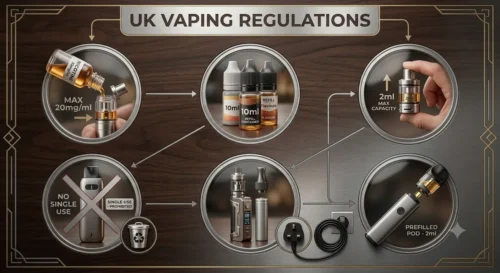
UK vaping products follow specific limits under the Tobacco and Related Products Regulations 2016 (TRPR), while separate legislation governs single-use vapes and vaping taxation.
Nicotine-containing e-liquid has a maximum strength of 20mg/ml, nicotine-containing refill containers have a maximum volume of 10ml, and nicotine-containing tanks or cartridges have a maximum capacity of 2ml.
The UK single-use vape ban came into force on 1 June 2025, prohibiting the sale and supply of single-use vapes in the UK. Reusable vape devices remain permitted, including devices that use replacement prefilled pods. A prefilled pod therefore does not automatically classify a device as single-use.
How Will Vaping Products Duty Affect UK Vape Costs?
Vaping Products Duty (VPD) will apply from 1 October 2026 at a flat rate of £2.20 per 10ml of vaping liquid, regardless of whether the liquid contains nicotine. The duty applies to vaping liquid produced in or imported into the UK.
Current retail prices vary by product type, brand, and format. Vapeverse currently lists e-liquids from £3.49 and vape kits from around £6.79, providing a current reference point for UK vaping costs.
Final Thoughts
The cost of a vape system cannot be judged from the device price alone. Replacement pods, bottled e-liquid, coils, pod lifespan and device replacement all contribute to the final bill. Prefilled pods offer a simpler purchasing routine, while refillable systems can provide a lower cost per millilitre and more control over consumables.
For a meaningful comparison, calculate what each option would cost over the same period and at a similar level of use. That approach gives a clearer picture of long-term value than comparing the first purchase alone.
FAQs
Are refillable vape systems cheaper than prefilled pods?
They can be cheaper over the long term because bottled e-liquid can cost less per millilitre than some prefilled pod products. However, pod, coil and device replacement costs also affect the final amount.
Do prefilled pods cost more over time?
They can, mainly because users need to keep buying replacement pods as each one runs out.
What is the biggest ongoing cost of a refillable vape?
Bottled e-liquid is usually the main consumable cost, although replacement pods or coils can add to the total depending on the device.
How long does a refillable pod last?
There is no fixed lifespan. Usage, e-liquid choice and the condition of the pod can all affect how long it remains usable.
Are refillable pods better value?
They can offer better long-term value when bottled e-liquid costs less per millilitre and pods or coils last for a reasonable period. Actual savings depend on consumption, e-liquid prices and replacement-part costs.
Which is cheaper for regular use?
Refillable systems can be more economical for regular users because bottled e-liquid can have a lower cost per millilitre than prefilled pods. The actual saving depends on consumption, e-liquid prices and how often pods or coils need replacing.
Is a refillable vape cheaper in the UK?
A refillable vape can have lower ongoing costs when bottled e-liquid costs less per millilitre than prefilled pods. The overall saving depends on e-liquid consumption, pod or coil replacement and device lifespan.
Do refillable vapes save money?
They can save money over time, particularly for users who consume e-liquid regularly. The savings are not guaranteed because replacement pods, coils and devices also contribute to the total cost.