

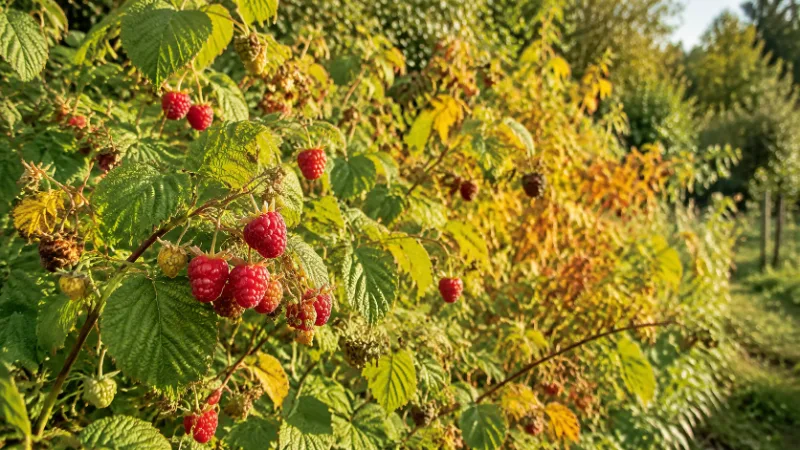
If you’ve ever stood in front of a raspberry plant selection and wondered why there are many distinct types, you are not alone.
The names are fairly self-explanatory but the differences go deeper than just when the fruit appears, and choosing the wrong type for your situation can lead to a frustrating first season wondering what went wrong.
The experts at Pomona Fruits recommend getting clear on the basics before you buy. Here’s what you actually need to know.
When They Fruit?
Summer raspberries produce their crop once a year, typically from late June through to August depending on the variety. Autumn raspberries fruit later, from around August through to October, on canes that grew earlier that same year.
If you are still deciding which to go for, the Pomona Fruits range of raspberry plants covers both types with clear information on what each variety produces.
That distinction between the two types matters more than it might seem, because they fruit on completely different wood, which is what drives the difference in how you look after them.
How They Grow?
Summer raspberries fruit on canes from the previous year. A cane grows through year one, produces fruit in year two, and then dies back. New canes grow alongside to take over the following season. It is a relay race that, once established, runs itself fairly smoothly.
Autumn raspberries are simpler in that regard. A cane grows and fruits in the same year, then dies back over winter. There is no need to keep track of which canes are old and which are new.
Pruning: Where People Go Wrong?
This is where the summer versus autumn distinction really counts, because the pruning approach for each is completely different and mixing them up means losing a year of fruit.
With summer varieties, prune in August or September once fruiting has finished. Cut out only the canes that have just produced fruit and tie in the new growth to your support wires. Those new canes will carry next summer’s crop.
With autumn varieties, the job is much simpler. Cut everything back to ground level in winter, clear the decks completely, and let the new canes come through in spring to fruit later that year.
Support and Space
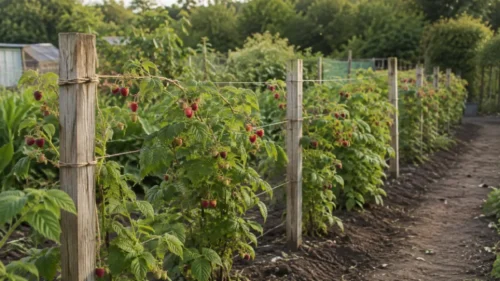
Both types will need some form of support unless you are growing one of the shorter dwarf varieties. Horizontal wires strung between posts at heights of around 75cm up to 1.5m work well, with the canes tied in loosely as they grow.
The dwarf summer variety Ruby Beauty is the exception, being self-supporting and well suited to container growing.
Autumn varieties can be grown in a large pot of around 50cm in diameter with three canes to a pot. Ruby Beauty works well in something smaller, around 30cm for a single plant.
A Note on Soil and Replanting
Whichever type you choose, one rule applies to both without exception. Never plant raspberries in ground that has previously grown raspberries or other cane fruit like blackberries.
A dormant replant virus can persist in the soil for up to 30 years and will suppress growth of anything planted there afterwards. Fresh ground is not a suggestion, it is the starting point.
A neutral, well-draining soil with a pH of around 6.0 to 6.7 is ideal. Dig in well-rotted manure or compost before planting, soak the roots for an hour or two beforehand and apply mycorrhizal fungi directly to the roots at planting time to help establishment along.
So Which Should You Choose?
It depends on what you want from your garden. Summer varieties give you a concentrated crop at the height of the season. Autumn varieties spread the harvest later into the year when most other soft fruit has finished, which has its own appeal.
Plenty of gardeners grow both, staggering the harvest across several months. If space allows, it is hard to argue against it.