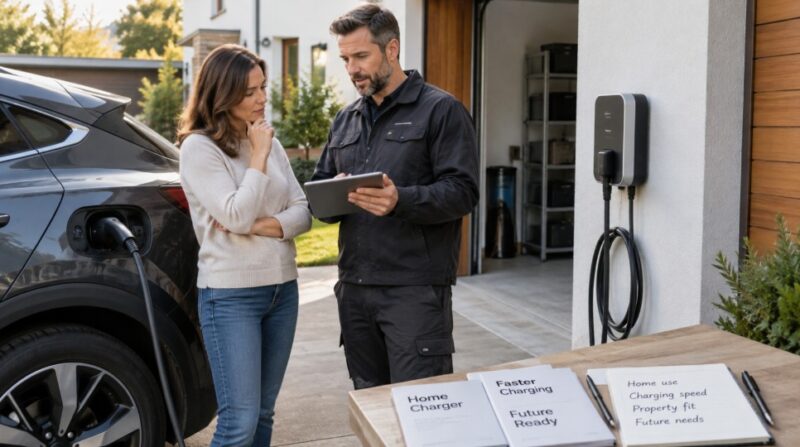
Switching to an electric vehicle is often presented as a straightforward decision: choose a car, install a charger and start driving. In practice, the charging setup deserves more careful thought.
The right solution depends on where you park, how far you travel, your property’s electrical capacity and how quickly you need to recharge.
A well-planned system can make EV ownership convenient and predictable. A poorly matched one may lead to unnecessary expense, slow charging or installation complications. Before comparing charger brands or headline charging speeds, it helps to understand the factors that should shape your decision.
Start With Your Everyday Charging Routine
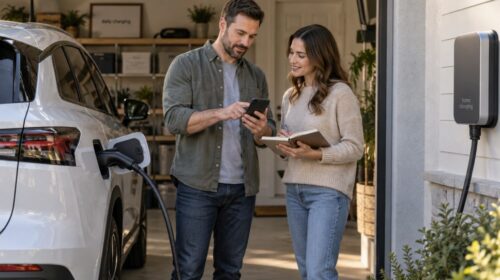
The most important question is not “What is the fastest charger available?” but “Where will my vehicle spend most of its time?” For many drivers, home is the main charging location.
If the car is parked overnight, a standard home charger can replenish the battery while you sleep, making ultra-rapid charging less important for day-to-day use. Drivers without off-street parking, however, may rely heavily on workplace, public or destination charging.
Consider your typical weekly pattern:
- How many miles do you drive?
- Can you park near a suitable electrical supply?
- Is the vehicle usually at home overnight?
- Do you regularly make long journeys?
- Will more than one EV need to charge at the property?
A driver covering 20 miles a day has very different requirements from a taxi operator, delivery business or family with two electric cars. Understanding usage first prevents you from paying for capacity you rarely need, or choosing a system that cannot keep up.
Understand Charging Speeds
EV chargers are commonly discussed in terms of power output, measured in kilowatts (kW). Higher power generally means faster charging, but the vehicle’s onboard charging capability also matters.
A car that accepts only 7kW from an AC charger will not charge faster simply because a higher-rated unit is installed.
AC Charging for Homes and Workplaces
Alternating current (AC) charging is the usual choice for domestic and workplace installations. In the UK, home chargers often operate at 3.6kW or 7kW, with some properties able to support 11kW or 22kW systems if the vehicle and electrical connection are suitable.
A 7kW charger can add roughly 25–30 miles of range per hour for many vehicles, although the exact figure depends on battery size, efficiency and charging conditions. Overnight charging is therefore sufficient for most daily driving.
DC Rapid Charging for Longer Journeys
Direct current (DC) rapid chargers are typically found at motorway services, public forecourts and commercial sites. They can deliver much higher power because electricity is supplied directly to the battery, bypassing the vehicle’s onboard AC charger.
Rapid charging is valuable when time matters, but it is more expensive and technically demanding to install. It may also be unnecessary for a home driveway. Frequent high-power charging can create additional battery heat, so most drivers use it strategically rather than as their primary charging method.
Check the Property’s Electrical Capacity
Before selecting a charger, arrange an assessment of the intended installation location. The existing consumer unit, cable route, earthing arrangement and available supply all influence what is practical.
Older properties may require upgrades, while detached garages or parking spaces some distance from the main building can involve substantial cabling work. In certain cases, the local electricity network may need to approve a connection upgrade.
This is where choosing suitable EV charging equipment involves more than comparing power ratings. The installation must work safely with the rest of the property’s electrical system and comply with relevant regulations.
A qualified installer should assess load capacity, protective devices and cable sizing rather than treating the charger as an isolated appliance. Smart charging can also reduce the pressure on a household supply.
Instead of charging immediately at maximum power, a smart unit can schedule charging for overnight periods, respond to electricity tariffs or balance demand with other appliances. Some systems can integrate with solar panels, using surplus generation to charge the vehicle rather than exporting it to the grid.
Consider Future Needs, Not Just Today’s Car

An EV charger may remain in place for many years, while the vehicle itself could change much sooner. If you expect to replace your car, add a second EV or install solar generation, these possibilities should inform the decision.
Look for a system that offers:
- Suitable charging power for likely future vehicles
- Load management for multiple chargers or high-demand appliances
- Reliable connectivity if smart scheduling matters
- A cable length and mounting position that will remain practical
- Compatibility with the relevant vehicle connector
It is also worth checking whether the charger supports tethered or untethered operation. A tethered unit has a permanently attached cable, which is convenient but can look less discreet.
An untethered model uses a separate charging lead and may suit households that value a cleaner appearance or need flexibility between vehicle types.
Compare Total Cost, Not the Headline Price
The purchase price is only one part of the cost. Installation complexity, cable runs, protection equipment, maintenance and software features can all affect the final figure.
A lower-cost charger may be perfectly adequate for a simple installation, but the cheapest option is not automatically the best value. Equally, advanced features are not useful if you will never use them. Ask for a clear quotation that separates the unit, installation, upgrades and any ongoing subscription fees.
Check the warranty, technical support and replacement process too. A charger is a connected electrical device, so dependable support can matter more than a long list of app features.
Use a Qualified Installer
Safety should be non-negotiable. A competent, appropriately certified installer will assess the property, select suitable protective measures and test the completed installation. They should also explain how to operate the charger, isolate it in an emergency and resolve common faults.
Avoid choosing solely on the basis of a discounted unit or a short installation lead time. Ask whether the installer has experience with your property type, can manage any required electrical upgrades and will provide the necessary certification when the work is complete.
Make the Decision Methodically
The right EV charging solution is the one that fits your routine, property and likely future use, not necessarily the most powerful or feature-rich model. Start with parking and mileage, confirm the electrical constraints, then compare charging speeds, smart functionality and whole-life cost.
For most households, a properly installed smart AC charger offers an effective balance of convenience, affordability and overnight charging. Businesses, apartment developments and high-mileage drivers may need a more coordinated approach involving access control, load management or rapid charging.
Take time to plan the installation before buying equipment. That small amount of preparation can make the transition to electric driving considerably easier, and ensure your charging setup continues to work well long after the novelty of owning an EV has worn off.