

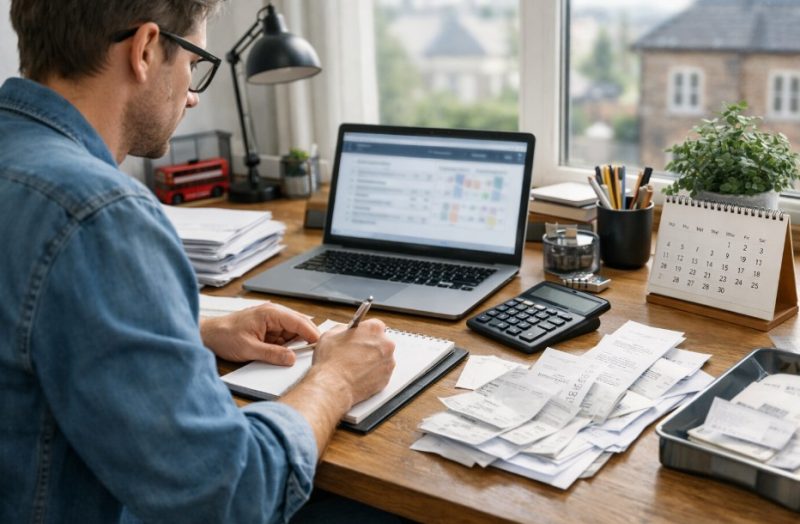
The end of the tax year on April 5th is a significant date for any freelancer or sole trader in the UK. It marks the deadline for many allowances and the point where you need to have your financial records in order. If you don’t prepare early, you might miss out on ways to reduce your overall tax bill.
By looking at your income and outgoing costs now, you’ll be in a much better position when it comes time to file your Self Assessment. You can avoid the stress of a last-minute rush and ensure you’re claiming everything you’re entitled to.
How Can Self-employed Reduce Tax Before Year End UK in 2026?
Maximise Your Allowable Expenses

One of the most effective ways to manage your tax liability is to ensure you’re claiming for all allowable expenses. These are the costs you incur purely for running your business, such as office supplies, business insurance, and marketing.
If you work from home, you can also claim a proportion of your utility bills or use the flat rate simplified expenses provided by HMRC. You should check your records to see if there are any pending purchases you can make before April 5th.
If you need new equipment or software, buying them before the tax year ends will allow you to include those costs in your current tax return. This will reduce your taxable profit for the year.
If you’re new to this, you can find lots of tips for end-of-year tax planning and see which specific reliefs apply to your industry. Keeping every receipt and invoice is vital, as you’ll need these if HMRC ever asks to see proof of your spending. Digital tools can help you organise these documents so they don’t get lost.
Top Up Your Pension Contributions
Investing in a pension is a tax-efficient way to save for your future while reducing your current tax bill. For most people in the UK, you can contribute up to £60,000 or 100% of your earnings (whichever is lower) into a pension each year and receive tax relief. This means the government effectively adds money to your savings.
If you’re a higher-rate taxpayer, you can often claim back even more tax through your Self Assessment tax return. This makes pension contributions one of the most powerful tools for the self-employed. You’ll want to check how much of your annual allowance you’ve used so far this year to see if you can add more.
Don’t forget that you can also carry forward unused allowances from the previous three tax years. This is useful if your income has increased significantly this year and you want to make a larger contribution. It’s a good idea to speak with a financial adviser if you’re unsure how much you can safely contribute.
Review Your ISA Allowances
Every UK resident has an ISA allowance, which currently stands at £20,000 per tax year. Any interest or investment growth you earn inside an ISA is tax-free. Since the self-employed often have fluctuating incomes, using your ISA allowance is a smart way to build a tax-efficient safety net or long-term investment.
You can choose between different types of ISAs depending on your goals:
- Cash ISAs for easy access to your savings.
- Stocks and Shares ISAs for potential long-term growth.
- Lifetime ISAs if you’re saving for your first home or retirement.
- Innovative Finance ISAs for peer-to-peer lending.
If you don’t use your full allowance by midnight on 5 April, you’ll lose it for that year. It doesn’t roll over to the next year. Even if you can’t put in the full amount, contributing what you can spare will help you protect more of your wealth from tax over time.
Final Message
Taking a few hours to review your finances before April will save you time and money in the long run. By focusing on pensions, ISAs, and allowable expenses, you’ll ensure you aren’t paying more tax than necessary. It’s all about being proactive with your financial management.
The self-employed have more responsibility for their taxes, but they also have more flexibility. Use these weeks to double-check your figures and make any last-minute contributions. You’ll feel much more confident when the new tax year begins.
The value of your investments and the income from them may go down as well as up, and you could get back less than you invested. Past performance should not be seen as an indication of future performance.