

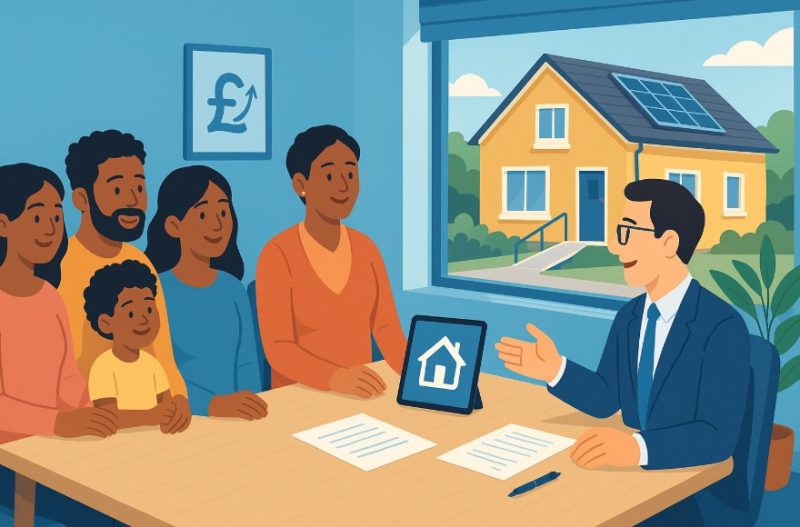
Getting a mortgage while receiving benefits in the UK can seem daunting, but it’s not impossible. Many lenders now consider benefit income, particularly when combined with employment or pensions.
The process might involve more documentation and a higher standard of proof regarding affordability. However, with the right preparation and understanding of lender requirements, individuals on benefits can move toward owning a home.
It’s essential to know what types of income are accepted, how affordability is assessed, and which schemes can assist. This guide breaks down everything you need to know to navigate the mortgage market while on benefits.
How Do Lenders View Benefits as Income for a Mortgage?
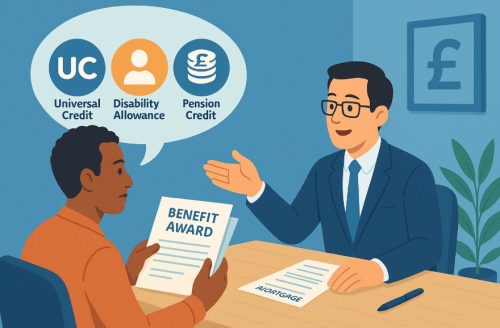
Mortgage lenders assess all income sources to determine affordability. Benefits are increasingly recognised as legitimate income, especially when they are long-term or stable in nature.
For example, disability-related benefits such as Personal Independence Payment (PIP) and Disability Living Allowance (DLA) are often seen as reliable income streams.
Lenders will look at the consistency and longevity of the benefit, how it’s awarded, and whether it is likely to continue. If the benefit is temporary or conditional, it may not be fully considered.
Alongside this, lenders consider credit history, financial commitments, and expenditure. Applicants receiving benefits are not discriminated against under the Equality Act, which ensures fair treatment in financial services.
Each lender’s criteria vary, so it’s vital to approach those with experience in dealing with benefit-based applications.
What Types of Benefits Count as Mortgage Income in the UK?
Lenders vary in what benefits they accept, but many include a wide range of state support payments when assessing income. Some may count the full benefit, while others only a portion.
Common benefits accepted by mortgage lenders include:
- Universal Credit
- Disability Living Allowance (DLA)
- Personal Independence Payment (PIP)
- Carer’s Allowance
- Child Benefit
- Attendance Allowance
- Maternity Allowance
- Pension Credit
- Severe Disablement Allowance
- Widow’s Pension
- Incapacity Benefit (IB)
- Industrial Injuries Benefit (IIB)
Additionally, components within Universal Credit, such as:
- Child Tax Credit
- Working Tax Credit
- Housing Benefit
- Income Support
- Income-based Jobseeker’s Allowance (JSA)
- Income-related Employment and Support Allowance (ESA)
These benefit types are typically treated as supplementary income and can help boost total affordability when combined with employment or pension income.
Can You Get a Mortgage on Benefits and Employed Income Combined?
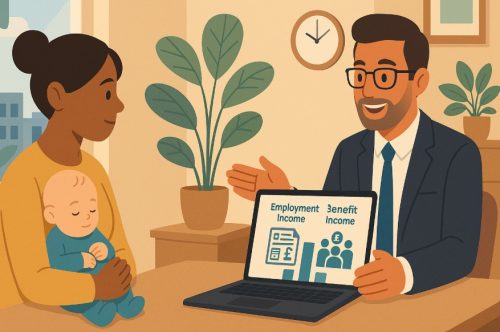
Yes, combining benefit income with employment income often strengthens your mortgage application. This is known as blended income and provides lenders with additional assurance about your ability to meet repayments.
In fact, many lenders prefer applicants who can show both a stable job (even part-time) and long-term benefit income.
For instance, an applicant earning £14,000 from part-time employment and receiving £6,000 in benefits may be assessed on a combined annual income of £20,000.
This amount can be multiplied by a lender’s standard income factor, usually between 3 and 4.5 times, to determine your potential mortgage limit.
Including both sources of income demonstrates that you have financial stability and reduces reliance on any one income stream. This can be especially advantageous for single parents, carers, or individuals working flexible or zero-hours contracts.
How Can You Get a Mortgage on Benefits?
Getting a mortgage while on benefits involves preparation and seeking the right advice. Lenders want proof of stable income, manageable debt, and a good repayment track record.
Steps to Get Started
- Assess Your Total Income: Include benefits, pensions, child support, and employment.
- Check Your Credit Score: Make improvements before applying by paying bills on time and reducing debt.
- Save for a Deposit: A larger deposit (10% or more) significantly increases your chances.
- Use Online Tools: Mortgage affordability calculators help estimate borrowing power.
- Find the Right Lenders: Focus on those who explicitly accept benefits as part of their criteria.
- Gather Documentation: Provide proof of benefits, bank statements, payslips (if employed), and photo ID.
- Get Advice from a Broker: Especially one experienced in benefit-based applications.
By proactively managing your finances and choosing the right support, you can significantly improve your chances of mortgage approval.
How Much Can You Borrow on Benefits?
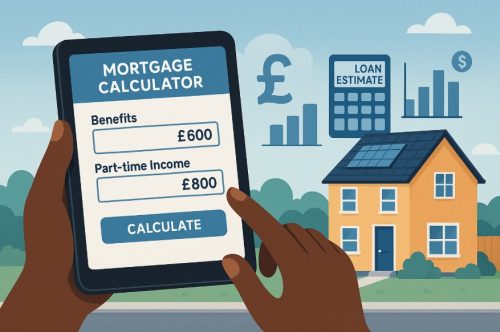
Mortgage lenders usually calculate borrowing limits by multiplying your annual income by a factor between 3 and 4.5. This means that the more income you can prove, whether from benefits, employment, or both, the higher the potential loan amount.
As an example, someone receiving £12,000 from benefits and £6,000 from part-time employment might be assessed on £18,000 total income. Using a multiplier of 4.5, this would give an estimated borrowing capacity of £81,000.
However, this figure may be adjusted downward depending on your:
- Outgoings and financial commitments
- Credit history and score
- Number of dependents
- Deposit amount
Use lender affordability calculators to get a personalised estimate. Working with a mortgage broker can also help you explore borrowing options based on your actual financial situation.
What Types of Mortgages Are Available for Benefit Claimants?
People on benefits are eligible for a range of mortgage products, although availability depends on income structure, deposit size, and credit profile.
Popular Mortgages Options
- Fixed-Rate Mortgage: Consistent monthly payments for a set term, ideal for budgeting.
- Variable Rate Mortgage: Payments may change with the Bank of England base rate.
- Repayment Mortgage: Monthly payments reduce both the loan and the interest.
- Interest-Only Mortgage: Lower payments now, but full capital owed at term-end.
- Shared Ownership: Buy a portion (25%–75%) and rent the rest from a housing provider.
- Buy-to-Let Mortgage: For purchasing rental properties, subject to rental income assessment.
- Remortgaging: Change your current deal to a better rate, even while on benefits.
Some lenders might limit maximum loan-to-value (LTV) ratios for applicants relying on benefits. Therefore, the larger your deposit, the broader your mortgage options become.
Are There Government Schemes That Help with Mortgages While on Benefits?
What is the Support for Mortgage Interest (SMI) Scheme?
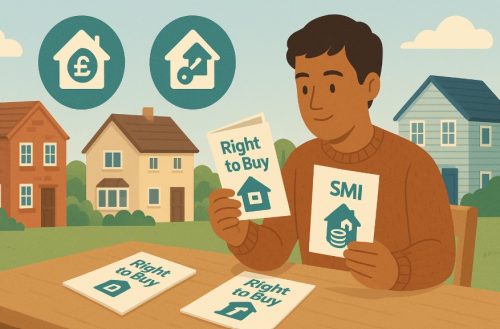
The SMI is a government-backed loan scheme for people receiving certain benefits, including Universal Credit and Pension Credit. It covers the interest portion of your mortgage and is paid directly to your lender. You’ll need to repay it, with interest, when the property is sold or ownership changes.
From April 2023, SMI became more accessible, available after just three months on Universal Credit. This eases financial pressure and keeps people in their homes while they find employment or stability.
What Are the Affordable Home Ownership Schemes?
Benefit recipients may also qualify for:
- Shared Ownership: Buy a portion of a home (25%–75%) and rent the rest from a housing association.
- HOLD Scheme: Designed for people with long-term disabilities needing specialised housing.
- Right to Buy: Buy your council home at a discounted price.
- First Homes Scheme: Buy at 30%–50% below market value if you’re a first-time buyer.
- Mortgage Guarantee Scheme: Helps buyers with small deposits by securing part of the loan.
Each scheme has unique eligibility criteria and offers support for lower-income or benefit-reliant applicants.
What Challenges Do Applicants on Benefits Face?
Although it’s possible to get a mortgage while on benefits, applicants may encounter several challenges that need to be addressed early in the process.
Typical obstacles include:
- Lenders Not Accepting Benefits: Some restrict or exclude certain types of benefit income.
- Credit Score Issues: Poor credit limits borrowing options and interest rates.
- Low Savings: A small deposit can reduce lender confidence.
- Short-Term Benefits: Payments not guaranteed long-term may be excluded from income assessments.
- Complex Applications: Proving income from multiple benefit sources requires detailed documentation.
- Limited Lender Transparency: Many lenders don’t publish benefit acceptance criteria clearly.
- Higher Interest Rates: Some benefit-based applications face higher risk premiums.
Being aware of these potential barriers allows you to take steps, such as improving your credit and saving more for a deposit, to overcome them effectively.
How to Improve Your Chances of Getting a Mortgage While on Benefits?
With a few practical steps, applicants on benefits can significantly enhance their mortgage prospects.
Here’s how to increase your odds:
- Improve Your Credit Profile: Pay off small debts, register to vote, and monitor your credit score monthly.
- Save a Larger Deposit: Aim for 10% or more to reduce LTV and attract better deals.
- Use Specialist Mortgage Brokers: They understand benefit-related complexities and can access niche lenders.
- Research Mortgage Schemes: Take advantage of SMI, Shared Ownership, or HOLD if applicable.
- Avoid New Debt: Lenders check your current debt-to-income ratio.
- Provide Complete Documentation: Submit benefit award letters, recent bank statements, and ID.
- Know Your Affordability: Use online tools or calculators before applying to avoid rejection.
Taking these actions will help you demonstrate financial responsibility and align with lender expectations.
Conclusion
While securing a mortgage on benefits may present additional challenges, it is entirely possible with the right planning and support.
Lenders are increasingly recognising various benefit types as valid income, and with the assistance of government schemes and specialist advisors, many people have successfully achieved homeownership.
By improving your credit score, saving a decent deposit, and choosing lenders open to benefit income, you can make your dream of buying a home a reality. Take proactive steps, seek expert help, and explore your options, owning a home while on benefits is within reach.
FAQs About Can You Get a Mortgage on Benefits
Can I get a mortgage if I’m only receiving disability-related benefits?
Yes, many lenders accept disability benefits as part of your income if they are long-term and meet affordability criteria.
What if I have bad credit but want a mortgage on benefits?
You may still qualify through specialist lenders, though you might face higher interest rates and stricter requirements.
Will getting a mortgage affect the benefits I currently receive?
Yes, some means-tested benefits may reduce if your capital increases through property ownership, so it’s best to seek advice.
Can I switch lenders or remortgage while on benefits?
Yes, but you’ll need to demonstrate continued affordability and may benefit from using a broker to find flexible lenders.
Is it better to rent or buy if I receive long-term benefits?
Buying may offer more stability and equity-building over time, especially with fixed-rate mortgages that control payment changes.
Can I still get life insurance if I’m applying for a mortgage on benefits?
Yes, but you may need to shop around for policies that don’t link premiums strictly to employment-based income.
What support is available if I struggle to keep up with mortgage repayments?
You could access SMI, payment holidays, or hardship grants, always speak to your lender early to explore your options.