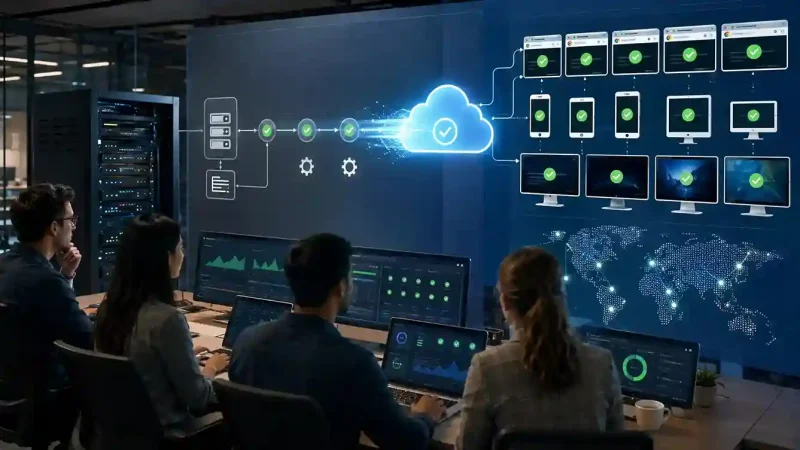
The fear of migrating an established test suite is mostly fear of the unknown, and the cure for that fear is a specific, week-by-week account of what migration actually involves. What follows is a composite diary drawn from real migrations, written to replace dread with expectation.
The platform known as TestMu AI (Formerly LambdaTest) is the destination in this account, but the structure of the journey generalizes, and the most reassuring discovery in nearly every migration is how little of the suite actually has to change.
Why Moving a Selenium Suite to the Cloud Is Easier Than Teams Fear?
Week One: The Audit Nobody Wants to Do

The first week is not technical; it is archaeological. Every long-lived suite contains tests nobody remembers writing, tests that have not passed in months, and tests that duplicate each other. The temptation is to migrate everything; the discipline is to migrate what earns its place.
A week spent deciding what to bring is a week that pays for itself, because migrating dead tests just moves dead weight to a new home and obscures the value of the move.
Week Two: The Configuration Change That Ends the Dread
The second week is when the central fear dies. Pointing LambdaTest Selenium Testing at remote infrastructure is a configuration change, the test logic, the assertions, the page objects all stay exactly as written, and execution simply happens on the cloud grid instead of a local one.
The team that spent months dreading a rewrite discovers there is no rewrite; there is an endpoint and a credential, and the tests they have maintained for years run unmodified. This is the moment the migration stops feeling like a risk and starts feeling like a settings update.
Week Three: The Breadth That Was Always Missing
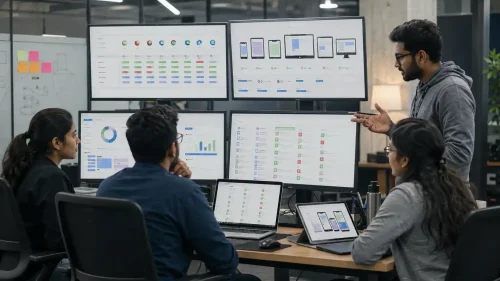
With execution on the cloud, the third week brings the first real upside: running the existing suite across environments the team could never afford to maintain locally.
The same tests, unchanged, now run across many browser and device combinations at once, and the first cross-environment run almost always surfaces a handful of bugs that were present all along and invisible because the old pipeline only ever saw one configuration. The suite did not get better; the team finally got to see what it was already capable of revealing.
Week Four: The Parallelism Dividend
By the fourth week, the team notices the clock. A suite that took an hour serially now finishes in minutes because it runs in parallel, and that compression changes behaviour: tests that were run nightly because they were slow start running on every change because they are now fast.
Faster feedback is not just a convenience; it shifts when bugs are found, which shifts how much they cost. The parallelism dividend is the gift that keeps paying after the migration is technically done.
Week Five: The New Habits

The fifth week is cultural rather than technical. Having seen cross-environment breadth and fast feedback, the team begins to design tests differently, assuming breadth is cheap and feedback is fast rather than rationing both.
New tests are written with the cloud’s capabilities in mind, and the suite starts evolving toward what the new infrastructure makes possible rather than what the old infrastructure permitted. Migration is complete not when the tests run elsewhere but when the team thinks differently.
What Does the Diary Teach?
Read end to end, the diary’s lesson is that the scary part is the imagined rewrite, which does not happen, and the valuable part is the breadth and speed that arrive once execution moves.
TestMu AI’s continuity with existing frameworks is what makes the migration a configuration change rather than a project management one, and that continuity is precisely what lets a cautious team take the step they have been postponing for years. The suite they have been protecting comes with them, intact.
The Objection That Keeps Teams Stuck

If the migration is as smooth as the diary suggests, why do so many teams postpone it for years? The honest answer is that the imagined cost is concentrated and vivid, while the ongoing cost of not migrating is diffuse and invisible.
A rewrite is a scary, nameable event; the slow drip of narrow coverage and slow feedback is just the texture of daily life, easy to stop noticing.
Loss aversion does the rest. The team can vividly imagine the disruption of a migration going wrong, and cannot vividly imagine the steady accumulation of bugs escaping into untested environments, so they weigh the imagined disruption far more heavily than the real ongoing loss.
The diary’s purpose is to deflate the imagined disruption by showing what migration actually involves, which is far less than the fear suggests.
The unlock is usually a small, bounded experiment rather than a grand decision. Migrate one suite, see that the test logic is untouched and the cutover is a configuration change, and the fear that justified years of postponement evaporates in an afternoon.
Teams that take the small step almost always wish they had taken it sooner, which is the characteristic regret of any decision dominated by an imagined cost that turned out to be a phantom.
The Deferred Migration as Accumulated Interest
Teams that have been deferring this migration for years are paying interest on the deferral every quarter, and the interest is the bugs escaped on work environments they cannot afford to test, the slower releases caused by serial pipelines, and the engineering hours spent maintaining infrastructure that does not earn its keep.
None of this lands on the migration budget, which is why the deferral feels free and is not. The true cost is on every other budget except the one whose owner gets to decide whether to migrate.
When the migration finally happens, the surprise is rarely that it was hard. The surprise is that it was easy, and that the years of deferral were spent paying interest on a debt the team could have retired in a week. This is the regret pattern almost every migrating team reports: not that the move was painful, but that they did not make it sooner.
The lesson for any team still deferring is to ask not what the migration will cost but what the deferral is already costing, and to notice that the second number, honestly assembled, is much larger than the first.
If your team has been deferring this migration, the diary suggests the deferral is costing more than the move would. The rewrite you fear is a phantom; the breadth you lack is real. Five weeks is a generous estimate, and most of it is the optional archaeology team of week one. The technical heart of it is a quieter afternoon than the months of dread that preceded it.