
Commercial buildings often undergo lighting upgrades during refurbishment projects. Sometimes, businesses remove the complete fixtures, even when the main structure remains usable.
This increases costs, creates unnecessary waste, and adds disruption across active commercial environments. Lighting restoration provides a more practical alternative. It improves existing systems instead of replacing them completely. Modern restoration processes focus on reuse, repair, remanufacturing, and targeted upgrades.
Existing fittings can often integrate with LED technology and smart controls. The condition of the fitting, the level of damage, and the ability to upgrade components all influence whether restoration is practical.
What Types of Lighting Can Be Restored And What Can’t in Commercial Buildings?
Commercial Fixtures with Durable Structures
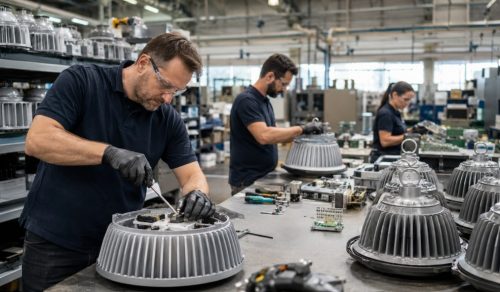
Many commercial and industrial fixtures are designed for long-term use. When internal components become outdated, the outer housing and structure may remain functional. These types of fittings are often suitable for restoration.
The process usually includes assessment, disassembly, cleaning, repair, LED integration, reassembly and rigorous testing. Businesses upgrade only the required internal components using lighting restoration.
This approach is becoming more common across commercial spaces to avoid increasing both project costs and operational disruption and to help businesses hit environmental quotas.
Restored Warehouse Lighting in Commercial Projects
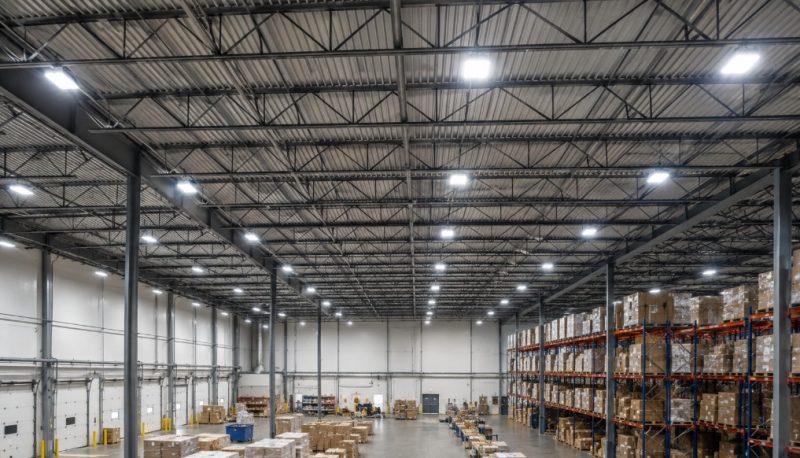
A practical commercial example is the restoration of industrial warehouse lighting during refurbishment projects. Existing fittings can be cleaned, repaired, and integrated with efficient LED components instead of being removed completely.
This allows businesses to improve energy efficiency while preserving the original fixture structure. In large facilities, restoring existing systems can also reduce installation disruption across active operational areas.
One important advantage of lighting restoration is that businesses can modernise systems gradually. This makes phased upgrades easier to manage across commercial environments.
Older Systems Suitable for LED and Smart Upgrades
Many older lighting systems no longer meet modern efficiency standards, but the fittings themselves may remain structurally sound. These systems are often suitable for LED upgrades and smart lighting integration.
Smart lighting features help businesses improve energy management across offices, retail environments, and industrial facilities. Existing systems can continue operating while performance improves through targeted upgrades.
Some remanufacturing specialists also use large ultrasonic cleaning systems during restoration. These systems help remove grime, oxidation, and corrosion from fittings before repairs and upgrades are completed. This improves the condition of older fixtures and prepares them for long-term reuse.
Fixtures That Often Cannot Be Restored
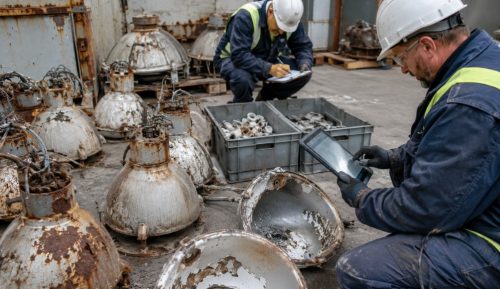
Not every lighting system is suitable for restoration. Some fixtures may have severe structural deterioration. Also, extensive corrosion or damage prevents safe repair or upgrading.
If a fitting can no longer support upgraded components safely, replacement may become a more practical option. In some cases, systems may also be too damaged for disassembly or remanufacturing processes.
When complete restoration is not possible, usable components may still be recovered through salvage processes. This helps reduce unnecessary waste while supporting circular economy principles.
Why Lighting Audits Matter Before Replacement?
One common issue during commercial refurbishment projects is assuming older fixtures automatically require total replacement. In reality, many systems still contain long-term value when properly assessed. Professional restoration projects usually begin with a lighting audit.
Existing systems are reviewed to identify which fittings can be restored, which require upgrades, and which are beyond practical repair. This process helps businesses avoid unnecessary replacement costs while creating a more structured refurbishment strategy. In many commercial spaces, restoration becomes the more practical decision when the fixture structure still remains usable.
The Many Benefits of Lighting Restoration
Commercial lighting systems should not always be replaced simply because they become outdated. Many fixtures still contain usable structures that can be repaired, upgraded, and modernised through lighting restoration.
Industrial warehouse fittings and older systems suitable for LED integration often work well for restoration. Modern remanufacturing processes now include phased implementation planning, ultrasonic cleaning, LED upgrades, smart technology integration, and component recovery.
Commercial businesses are now focusing on sustainability, cost control, and long-term efficiency. This is why restoration is becoming a more practical alternative to unnecessary full-system replacement.