
Parking at night involves more than just turning off your car and leaving. Whether you’re in a city or on a quieter road, understanding the correct night-time parking practices is essential for every UK driver.
Reduced visibility and increased risks make it important to follow the rules set out in the Highway Code. These rules vary depending on the type of road and its speed limit. Knowing and applying them helps prevent accidents and avoid fines.
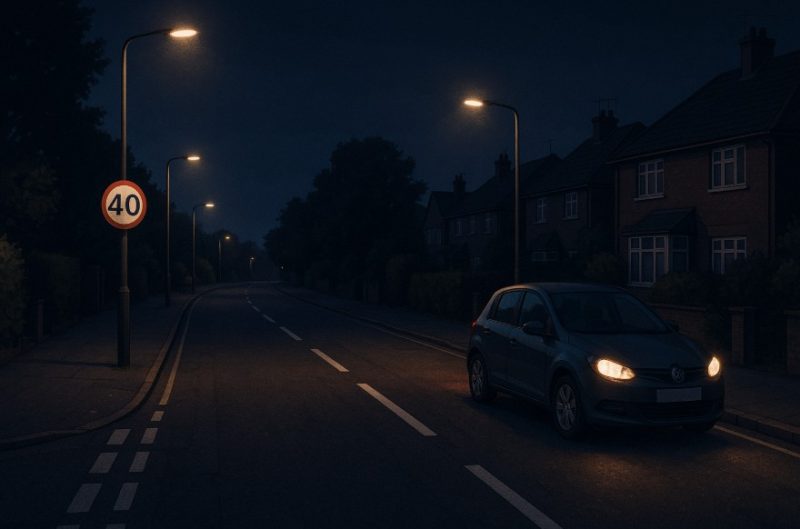
In this blog, we’ll explore what UK drivers need to know when parking overnight, particularly on roads with specific speed regulations like 40 MPH.
Why Is Night Parking on Roads with Over 30 MPH Limits Treated Differently?
Parking on roads with speed limits above 30 MPH, such as those marked at 40 MPH, poses greater safety challenges than slower roads.
Higher speeds reduce drivers’ reaction times and make it more difficult to see obstacles, especially during night hours when visibility is limited.
A parked car on a faster road becomes a potential hazard if it isn’t clearly visible. This is why such roads demand stricter precautions, like leaving parking lights on.
At night, the risk of collision increases as approaching vehicles may not spot your parked car in time. This is especially true in rural or unlit areas where there are no street lamps. Drivers travelling at 40 MPH or more need extra visual cues to detect stationary vehicles in advance.
Because of this, the Highway Code treats night parking on faster roads differently. The law acknowledges that reduced visibility, increased speed, and narrow road layouts create a more dangerous environment for both parked vehicles and moving traffic.
What Are the Legal Night Parking Rules in the UK?
The UK Highway Code provides strict guidance for parking your vehicle at night. These laws exist to minimise risks and improve visibility in low-light conditions.
Drivers are legally required to follow these rules, especially when parking on roads with speed limits over 30 MPH.
Legal Night Parking Rules Include
- If parking on a road with a speed limit above 30 MPH, you must leave your parking lights (sidelights) switched on.
- You should always park in the direction of traffic flow unless a traffic sign or road layout dictates otherwise.
- It is illegal to park at night on a road without leaving the correct vehicle lights on when required.
- Avoid parking facing oncoming traffic unless in a recognised parking bay or lay-by.
- Do not park in dangerous locations such as on bends, near junctions, or on hills where visibility is compromised.
These rules are in place to prevent accidents and ensure your car is visible to other road users. Failing to comply could result in fixed penalty notices or more serious legal consequences.
What Should You Do When You Park at Night on a Road That Has a 40 MPH Speed Limit?
When parking overnight on a 40 MPH road, you need to follow a specific set of actions that are both legally required and designed to keep you safe.
Leave Your Parking Lights on – It’s Not Optional
The Highway Code states that when a vehicle is parked at night on a road with a speed limit higher than 30 MPH, the parking lights or sidelights must remain switched on.
This ensures your vehicle is visible to other drivers in low-light or dark conditions. These small lights consume minimal battery power and are essential for preventing accidents.
Park With Traffic – Never Against It
You must park your vehicle in the same direction as the traffic flow, unless signs or road markings specifically allow otherwise. Facing oncoming traffic can make your vehicle more vulnerable and harder to spot in the dark.
Position Your Vehicle Correctly
- Make sure your vehicle is close to the kerb, not sticking out into the road.
- Avoid parking near bends, junctions, or sharp inclines where your car could be missed by oncoming vehicles.
Taking these steps ensures your parked vehicle is legally compliant and reduces the risk of it becoming a roadside hazard.
What Type of Lights Should Be Left on When Parked Overnight?
Not all lights are suitable or necessary to use when parked overnight. The right lighting setup ensures safety without draining your battery or blinding other drivers.
Use Sidelights or Parking Lights
These are the small white lights at the front and red lights at the rear of your vehicle. They are specifically designed for night parking.
Avoid Using Headlights or Full Beams
- Headlights are too bright and may dazzle other drivers.
- They are not legally required when your vehicle is stationary and can drain your battery quickly.
When are Sidelights Mandatory?
- On roads with speed limits over 30 MPH
- In unlit or poorly lit areas
- If parked on a road and not in a marked bay or lay-by
Always check your vehicle’s manual for how to activate sidelights. Remember, failure to use the correct lighting can result in penalties and endanger other drivers.
What Are the Risks of Improper Night Parking on Faster Roads?
Parking improperly at night on faster roads like those with a 40 MPH speed limit can have serious consequences. From safety hazards to legal trouble, it’s essential to understand the risks involved.
Higher Collision Risk
Faster speeds give other drivers less time to react. Without proper lighting, your parked car becomes a sudden obstacle, increasing the chance of side or rear-end collisions.
Legal Trouble
Failing to follow the Highway Code can lead to fixed penalty notices or even prosecution. Police often patrol these roads at night to ensure compliance.
Poor Visibility
In dark or foggy conditions, a vehicle without parking lights can blend into its surroundings. This poses a serious threat to cyclists, motorcyclists, and pedestrians.
By ensuring your car is properly lit and positioned, you significantly reduce the chance of accidents and stay within the law, helping make the roads safer for everyone.
What Should You Do If No Off-Street Parking Is Available?
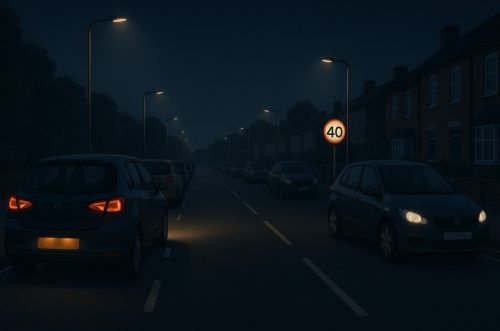
In many UK areas, off-street parking isn’t always an option. When you’re left with no choice but to park on a 40 MPH road, you need to apply extra caution and strictly follow regulations.
Steps to Follow When No Off-street Parking is Available
- Choose a safe and straight section of road where your vehicle will be visible to oncoming traffic.
- Avoid bends, hills, or junctions where visibility is reduced.
- Ensure your parking lights are on throughout the night.
- Park in the direction of the traffic flow.
- Leave enough space from the kerb to avoid causing obstruction but stay close enough to not jut into the road.
Other Considerations
- Look for nearby lay-bys or designated parking zones.
- If in a residential area, ask a homeowner or business for permission to use part of their frontage temporarily.
- Reassess your journey route if no safe parking options are present.
These precautions ensure you are following the law and staying safe, even without off-street alternatives.
Can Parking at Night Lead to Penalties or Fines?
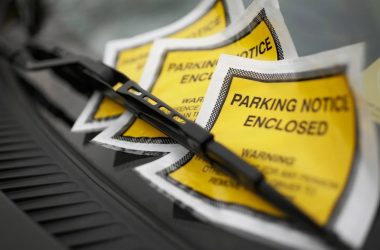
Yes, parking at night without following the Highway Code, particularly on a road with a 40 MPH speed limit, can lead to financial penalties and legal consequences.
If your vehicle does not have its parking lights switched on or is parked against the flow of traffic, it becomes a hazard. Police officers or traffic wardens can issue a Fixed Penalty Notice (FPN), which may include fines or even points on your driving licence in serious cases.
Ignoring these laws not only affects your finances but could also invalidate your car insurance if an accident occurs.
To stay compliant and avoid fines, always ensure you are visible, legal, and safe when parking overnight on higher-speed roads.
Penalty for Not Using Parking Lights at Night
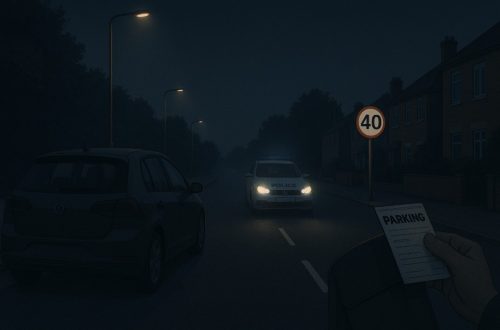
Parking your vehicle at night on a road with a speed limit above 30 mph, such as a 40 MPH zone, comes with specific legal requirements.
According to the Road Vehicles Lighting Regulations 1989, you must display parking lights when parked on these roads during the hours of darkness.
Failing to follow this rule can lead to:
- Penalty Charge Notice (PCN): Issued by police or traffic wardens for non-compliance.
- Fines: Typically range from £35 to £75, with discounts often available if paid within 14 days.
- Non-Endorsable Offence: While it results in a perking fine, it won’t add points to your driving licence.
These rules are in place to reduce night-time accidents and ensure your vehicle is clearly visible to other road users. Always make sure your vehicle is properly lit and positioned to avoid unnecessary penalties and stay within the law.
Conclusion
Night parking on 40 MPH roads isn’t just about finding an empty space, it’s about making thoughtful, legally sound decisions that protect you and others.
Whether you’re leaving your car overnight or stepping away briefly, using parking lights, choosing the right direction, and positioning your vehicle safely are all crucial steps.
The Highway Code exists to prevent accidents, and when followed, these rules reduce your risk of penalties or insurance issues. Always assume that other drivers might not see you unless you make your car clearly visible.
Practising these habits regularly will make you a more responsible and safer driver. By following the right guidelines, you contribute positively to the safety of everyone on the road.
Frequently Asked Questions
What’s the difference between sidelights and headlights when parked at night?
Sidelights are dim lights used for visibility when parked, while headlights are stronger and used for driving. Sidelights should be used at night when parked on faster roads.
Do all parked cars need reflectors in the UK?
Yes, UK vehicles must be fitted with red rear reflectors to remain visible when parked at night. This is especially important on unlit roads.
Are there any exceptions to the 40 mph night parking rule?
You may be exempt if parked in a designated lay-by or marked bay with adequate lighting. Otherwise, sidelights are always required.
Can you park on a hill at night without leaving lights on?
No, if the speed limit is over 30 MPH, parking lights must remain on, even on hills. Visibility is key regardless of elevation.
Does weather affect night parking safety on 40 mph roads?
Yes, fog, rain, or snow can further reduce visibility, making sidelights even more crucial for safety. Poor weather increases accident risks.
How close can you park to a junction at night?
Avoid parking within 10 metres of a junction. This improves visibility for all road users and complies with Highway Code recommendations.
Are there specific night parking rules for rural roads in the UK?
Yes, rural roads often lack lighting, so leaving sidelights on is mandatory. You must also ensure you’re not obstructing traffic or driveways.