

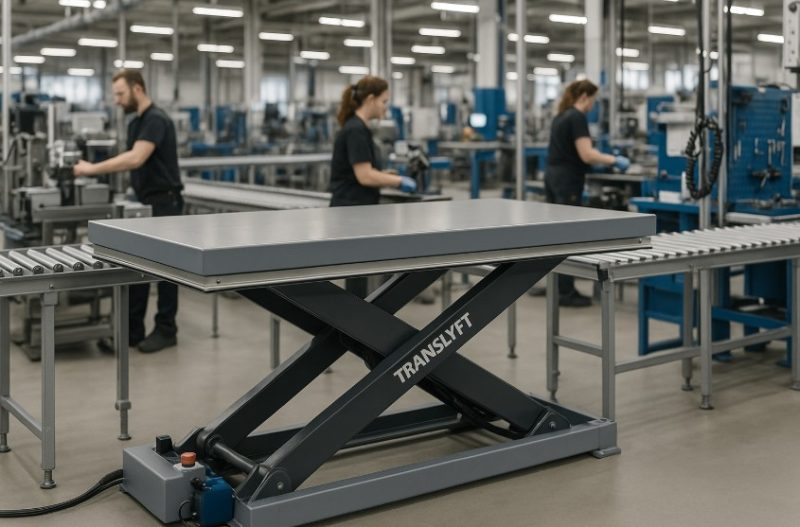
In today’s industrial landscape, efficiency, safety, and operational continuity are non-negotiable. As UK businesses navigate increasing production demands, growing health and safety expectations, and the need for streamlined workflows, lifting tables have become an essential component of modern material-handling systems.
Once viewed as simple height-adjustment platforms, lifting tables are now engineered solutions that contribute directly to workplace ergonomics, productivity, and long-term cost savings.
Why Ergonomic Lifting Solutions Are Becoming Essential for UK Businesses?
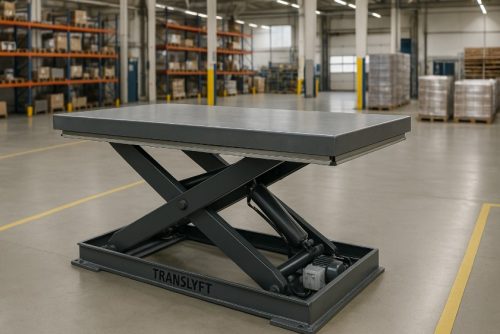
Lifting tables are used across a wide range of sectors, including manufacturing, warehousing, logistics, automotive, food processing, and pharmaceuticals, to raise, lower, tilt, or position heavy loads with precision.
Their primary purpose is to eliminate manual lifting, repetitive bending, and awkward postures, all of which are key contributors to musculoskeletal disorders (MSDs) in industrial environments. By enabling equipment, goods, or components to be positioned at optimal working height, lifting tables reduce physical strain on employees and dramatically improve workflow efficiency.
Modern lifting tables are available in various configurations, from hydraulic scissor lift tables and low-profile platforms to high-capacity industrial lifting systems capable of handling substantial loads.
These solutions support tasks such as pallet handling, assembly line operations, vehicle loading, mezzanine access, packaging, and integration with automated machinery. In environments where precision and consistency matter, such as electronics assembly or food production, lifting tables help standardise processes and improve the quality and repeatability of work.
Ergonomics is one of the strongest arguments for investing in lifting tables. With workplace injuries costing UK businesses millions each year in lost productivity and compensation claims, companies are increasingly prioritising engineering controls that proactively reduce risk.
The Broad Operational and Long-Term Benefits of Modern Lifting Tables
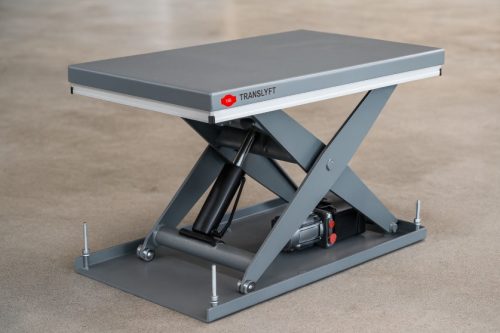
Lifting tables help employers meet their obligations under the Manual Handling Operations Regulations (MHOR) by reducing or eliminating the need for employees to lift, reach, twist, or carry heavy loads. When integrated into production lines, they also minimise downtime by keeping work at an accessible and safe height, allowing employees to maintain consistent output.
Beyond safety, lifting tables contribute directly to operational efficiency. By adjusting to the needs of different operators and tasks, they support faster throughput, smoother production flows, and reduced handling times.
In sectors where customisation and flexibility are essential, lifting tables can be configured to align with specific process requirements, whether that’s accommodating unusual load dimensions, integrating conveyor systems, or supporting automated workflows.
Businesses are also recognising the long-term value of durable, precision-engineered lifting solutions. A well-designed lifting table not only improves day-to-day efficiency but also reduces maintenance costs, downtime, and equipment strain.
Brands such as TRANSLYFT, which specialises in ergonomic and industrial lifting tables, have contributed to the market by focusing on workflow-driven design, reliability, and the ability to tailor equipment to complex environments.
As UK industries continue to modernise, lifting tables are evolving from optional enhancements to strategic investments. Whether supporting lean manufacturing initiatives, improving warehouse safety, or enhancing production line ergonomics, these systems provide measurable operational benefits.
For businesses committed to protecting their workforce while strengthening productivity, lifting tables represent an intelligent step toward a more efficient and sustainable future.