
As a landlord, you constantly balance priorities: maintaining your property, keeping tenants happy, and ensuring a healthy return on your investment. However, a new factor ties all these elements together: energy efficiency.
With rising energy costs and stringent new regulations, a proactive approach to retrofitting is a strategic necessity. Retrofitting your rental property can future-proof your asset, make it more attractive to tenants, and significantly reduce your maintenance headaches. Let’s explore the retrofit options you need to know about.
What Are the Best Retrofit Options for Landlord to Improve Property Efficiency?
Start with Insulation
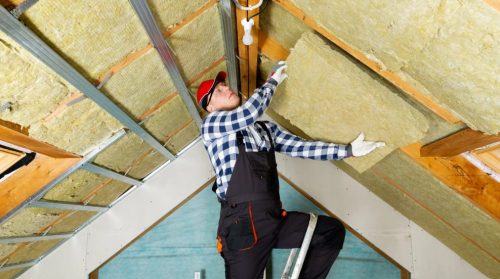
Before investing in new HVAC systems, the most cost-effective strategy for enhancing building performance begins with proper insulation. It acts as a thermal blanket, retaining heat in winter and staying cooler in summer for a more comfortable environment.
For decision-makers planning retrofitting schemes, a building performance assessment or energy auditing is the critical first step to identify the most impactful upgrades.
The primary goal of any building energy retrofitting project should be to optimize the building envelope. This often involves implementing passive retrofit solutions involving the following structural components:
1. Loft and Roof Insulation
Ensuring your loft has at least 270mm of thermal insulation is one of the most effective passive retrofit solutions to reduce heat loss through the roof, a major part of the building envelope.
2. Cavity Wall Insulation
For properties with cavity walls (typically built after the 1920s), filling this gap with insulating material is a highly effective measure to improve the thermal performance of the building fabric.
3. Solid Wall Insulation
For older properties with solid walls, either internal or external wall insulation represents a more significant building energy retrofitting project. It is, however, one of the most impactful ways to upgrade the structural components for long-term efficiency.
4. Draught-Proofing
Sealing gaps around windows, doors, and floorboards is a low-cost but essential step in completing the building envelope. This prevents uncontrolled air leakage, making other insulation measures more effective and reducing the load on HVAC systems.
These upgrades can be funded through government-backed schemes, meaning the upfront cost to you could be minimal or even zero. It’s worth exploring what grants you might be eligible for, as they can fast-track your property’s efficiency.
For instance, companies like Fairway Energy specialize in exploring this option and installing energy-saving solutions for UK residents who qualify for free home energy grants.
Upgrade Your Heating System
An old, inefficient boiler is a money pit for both you and your tenant. Replacing an old G-rated boiler with a new A-rated condensing model can slash your tenant’s energy bills and reduce the property’s carbon footprint. It’s also a strong selling point.
Installing a smart thermostat gives tenants greater control over their heating, preventing wasted energy and potentially reducing void period costs for you. Many tenants now expect this level of control. For a long-term, future-proof solution, consider an air-source or ground-source heat pump.
Don’t Overlook Windows and Doors
Single-glazed windows are a main source of heat loss, leading to higher energy use and condensation. Addressing these elements is a highly effective strategy for achieving significant emissions reductions and improving tenant comfort.
Upgrading to modern double or even triple-glazed windows is a fundamental step in retrofit projects. This improvement is now a standard expectation for most tenants, as it dramatically improves thermal comfort, reduces external noise, and enhances security.
For properties in conservation areas where replacing original windows isn’t permitted, secondary glazing offers an excellent compromise. This approach allows you to upgrade essential building components without altering the building’s character, while still securing substantial emissions reductions.
To complete the building’s thermal envelope, ensure all external doors are modern, well-fitted, and thermally efficient. Focus on these key building components to create a cohesive, efficient, and comfortable property.
Ventilate Right to Avoid Mold
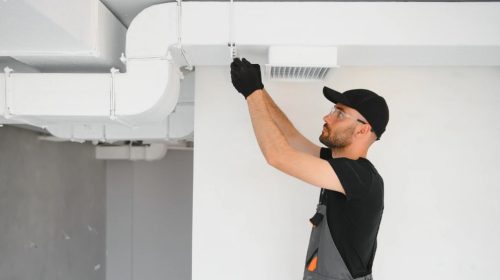
A common concern after improving insulation and airtightness is poor indoor air quality and dampness. This is where the use of Mechanical Ventilation with Heat Recovery (MVHR) systems comes in.
An MVHR unit extracts stale, moist air from wet rooms like kitchens and bathrooms and uses the heat to warm fresh air coming in from outside. This provides excellent ventilation without the massive heat loss associated with simply opening a window, helping to maintain a healthy environment for tenants.
Generate Your Own Power
Renewable energy can lower your energy consumption and reliance on the grid. This approach helps reduce greenhouse gas emissions for superior building efficiency. For the ultimate upgrade, consider generating clean energy on-site through a strategic integrative design process.
- Solar PV Panels: Installing solar photovoltaic (PV) panels on your roof generates free electricity for your tenants, making the property incredibly cheap to run. Integrate energy production into your initial design to create a highly efficient system where excess energy can be sold back to the grid.
- Solar Thermal Systems: To simplify the transition, many providers now offer tailored solution packages. These often combine solar PV with other technologies for maximum impact. For instance, solar thermal uses the sun’s energy to heat water directly, further reducing reliance on conventional boilers.
Government grants for solar panel installations are available. These grants improve building efficiency, minimize carbon emissions, and lower electricity bills. Inquire with a reputable energy company that can guide you through the available solution packages for your property.
Bottom Line
Retrofitting is a strategic investment that provides energy cost savings and carbon reduction. It also ensures regulatory compliance, enhances your property’s appeal to reduce void periods, and can increase its overall market value.
You should proactively improve energy efficiency to future-proof your asset, protect your rental income, and create a modern, desirable home for your tenants.