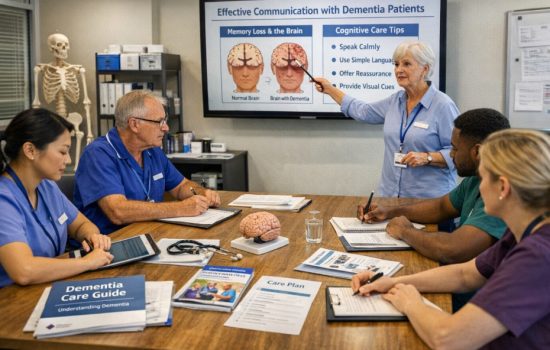
Conversations about dementia care can become emotional, especially when decisions involve independence, safety, and dignity. As a care provider, you may find yourself explaining complex ideas in a way that reassures families and helps them make informed choices.
One of the most important concepts you will discuss is person-centred care. This approach focuses on seeing the individual beyond their diagnosis. Instead of treating the condition alone, you help families understand how personalised support can maintain the quality of life for the person with dementia.
When families understand how these approaches work in real settings, they become more confident partners in the care process. Here’s how to create effective conversations around them.
What Does Person Centred Care for Dementia Mean for Families and Care Providers?
Helping Families Understand the Shift From Task-Based to Personalised Care
Many families equate good dementia care with medication, meals, and supervision. Usual care models often focus on completing tasks efficiently, bathing, feeding, administering medications.
While those elements matter, they’re only part of the picture. A personalised approach is important because people living with cognitive impairment have emotional, social, and psychological needs that can’t be addressed through routines alone. Healthcare professionals can create support strategies that respect individuality by focusing on life history, personal preferences, and emotional wellbeing.
When you talk with families, explain that two people who both live with Alzheimer’s disease need customised care because they have different personalities, hobbies, and daily rhythms. Treating them the same way would overlook what makes them unique. This perspective helps families see that good care is about managing illness and supporting the person’s identity.
Using Practical Resources to Guide Conversations

Families often struggle because they don’t know what tools or information exist to support decision-making. There’s uncertainty about what effective support actually looks like within a complex care system.
Helpful resources for dementia care, including frequencyprecision.com, can help bridge this gap. These sites give families practical insight into the essential tools, structured care planning, and evidence-based practices used across social care and health care settings.
For example, frameworks like dementia care mapping allow care staff to observe emotional responses and daily engagement. These observations can highlight unmet needs and guide adjustments in routine, environment, or communication. When families see that care decisions are based on observation and understanding, not guesswork, they often feel more confident about the process.
Explaining the Real Burden Families Carry
Caregiving can be physically, emotionally, and financially demanding. The UK estimates that one in three people will take care of a dementia patient in their lifetime, half of whom are employed. Many of them either have shortened work hours or have resigned from their jobs. There are currently 540,00 dementia carers in England.
These numbers highlight the immense responsibilities placed on family caregivers. Many juggle employment, parenting, and caregiving responsibilities simultaneously. Some struggle with stress, exhaustion, and declining mental health.
Acknowledging this burden during conversations builds trust. It shows that you recognise caregiving as a major life challenge rather than simply a duty. Families are often more open to guidance once they feel understood.
Clarifying What Personalised Care Looks Like in Practice
Families may hear the phrase person-centred care but still wonder how it works day to day. Concrete examples help translate theory into real life.
You might describe how support teams develop a long-term care plan that adapts as dementia severity changes. Care strategies often involve a multi-disciplinary approach, bringing together geriatric psychiatry, nursing, therapy specialists, and trained care workers.
In many long-term care facilities or residential sites, the goal is to create a dementia-friendly environment where routines, lighting, sound, and design reduce confusion.
Common personalised strategies may include:
- Therapeutic recreational activities that connect with past hobbies such as gardening, music, or art
- Home-based care routines that replicate familiar daily habits
- Non-drug treatments to manage stress, anxiety, and agitation
- Structured behaviour management skills that help staff respond calmly to distress
These approaches often improve clinical outcomes, reduce distress, and strengthen emotional wellbeing. Explaining these benefits helps families see that custom support can influence both comfort and health.
Addressing Behavioural and Emotional Changes
Behavioural and psychological symptoms can be difficult to handle. Agitation, sleep disturbances, anxiety, or mood swings can be frightening for families who do not understand what’s happening. So are neuropsychiatric symptoms.
Professionals may use the Geriatric Depression Scale or other tools to identify signs of depression that may otherwise go unnoticed. Evaluations consider a person’s neuropsychological status and the progression of cognitive impairment.
It helps to explain that these changes are not intentional behaviour. Instead, they reflect how the disease affects the brain. With appropriate training and support, care workers and families can learn techniques that reduce distress and maintain stability. Structured staff education programs also improve staff engagement, helping teams respond more confidently when issues arise.
Encouraging Strong Support Systems

Families should never feel that they must manage everything alone. A strong network of assistance can make a significant difference in long-term wellness. Encourage them to build support networks that include local authorities, community groups, clinical teams, and trusted advisers.
Important support options may include:
- Guidance from healthcare professionals such as neurologists or specialists in geriatric psychiatry
- Assistance from community care staff or visiting care workers
- Support groups designed for family caregivers
- Safeguarding services that help detect risks such as financial abuse
A collaborative model ensures that decisions are not made in isolation. These resources promote community connectedness, helping families stay engaged rather than feeling isolated by caregiving responsibilities.
Discussing Difficult Topics With Compassion
At some point, families may need to consider options such as nursing homes, assisted living communities, or specialised long-term care facilities. These conversations can be sensitive because they involve questions about independence, safety, and future planning.
Framing these discussions around wellness often helps. Emphasise that the goal is not to remove independence but to maintain safety, stability, and dignity.
Some families may also wish to explore emerging ideas or alternative approaches to brain health. Conversations about unconventional treatments to protect the brain can arise in these situations. While evidence varies, discussing options openly allows families to weigh potential benefits alongside medical advice.
Later stages of dementia may require planning for end-of-life care, which focuses on comfort, dignity, and emotional support. Approaching these topics gently, with honesty and empathy, helps families prepare while preserving trust.
Conclusion
Talking to families about dementia care is never just a clinical conversation. It is a deeply human discussion about identity, memory, and the future.
When you explain personalised approaches with empathy and practical examples, families gain clarity and confidence. They begin to understand that supporting a loved one with dementia is not simply about managing symptoms but about protecting dignity, preserving connection, and creating meaningful moments at every stage of the journey.