Trade shows are expensive. There’s no getting around it. You’ve got the stand fee, the travel costs, the accommodation if it’s not in your city, and then all the printed materials, the pop-up banners, the business cards you’ll hand out to people, the lunches with potential clients and partners.
For a startup that might be operating just on fumes and optimism, committing a chunk of cash to a three-day exhibition feels like quite a gamble.
But done right, trade shows can be one of the most effective ways to get your business in front of people who matter, people who might make a real difference in the long run. The trick is making sure you’re memorable without burning all your cash in the process.
How UK Startups Maximise Trade Show Impact Without Overspending?
Looking the Part Without the Corporate Budget

You know what people notice before they even reach your stand? Your team. Specifically, whether your team looks like they belong to the same company or like they’ve just met in the queue for coffee.
When you’re a three-person startup competing for attention against companies with stands the size of small houses, cohesion matters. It’s the difference between looking like you’re playing at business and looking like you mean it.
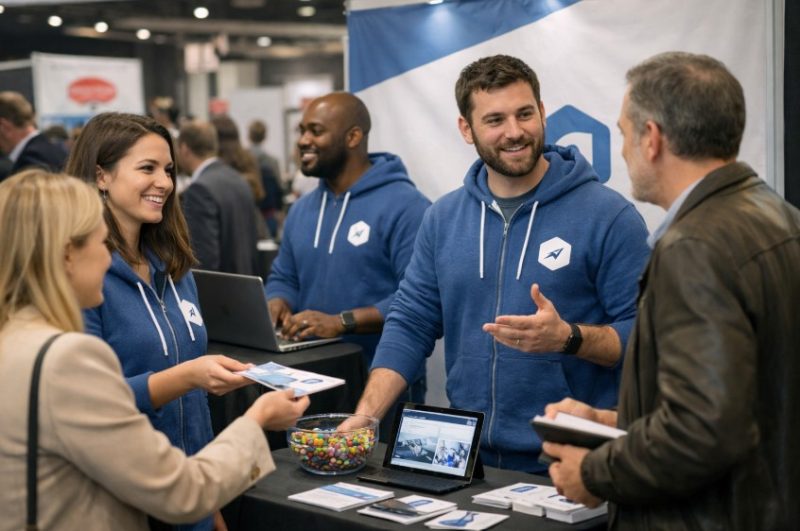
This is where matching apparel from custom tees to personalised hoodies, become genuinely useful rather than just looking like corporate window dressing. With the right pieces, you’re creating an instant visual identity that makes you stand out, look more professional and helps your team seem more approachable.
Think about it from a visitor’s perspective. They’re walking through endless rows of stands, bombarded with information, probably nursing sore feet and a slight headache from the exhibition hall lighting. A team that looks coordinated and professional, registers differently. Put simply, it’s all about looking like you’ve got your act together.
The Pre-Show Groundwork Nobody Talks About
Most startups rock up to exhibitions hoping for the best. The successful ones treat the show itself as the middle chapter, not the whole story.
Six weeks before the event, you should be on LinkedIn identifying who’s likely to attend. Not just attendees generally, but specific people. The buyers, the investors, the potential partners you actually want to meet. Send them a message. Nothing elaborate.
Just “We’ll be at [event name] on stand X, would be great to catch up for five minutes if you’re around.” Half won’t reply. A quarter will say maybe. But you only need a few confirmed meetings to make the whole thing worthwhile.
This is how you turn a passive “fingers crossed someone stops by” approach into an active strategy. You’re not just hoping the right people wander past. You’re making sure they know where to find you.
Stand Design When You’ve Got No Budget

Forget the fancy stand builders. Seriously. You can create something perfectly decent with clever thinking and about £200.
A decent tablecloth in your brand colours. A laptop showing your product or a simple slideshow. A bowl of nice sweets (not the cheap strawberry ones nobody wants, get the Haribo). Some printed materials that don’t look like you designed them in WordArt. That’s your foundation.
The backdrop is where people get creative. One startup might use a tension banner they bought for £80 and got three years of use from. Another might print their logo on a large foam board from a trade printer for about £30. It doesn’t need to be elaborate. It just needs to be visible and clearly state who you are and what you do.
Your team’s presence matters more than your stand dressing anyway. A cramped, basic stand with enthusiastic people who know their stuff will always beat a flashy empty stand with bored staff scrolling through their phones.
The Five-Minute Pitch That Actually Works
You’ve got seconds to hook someone walking past. Maybe ten if they’re moving slowly. This is not the time for your full company origin story or a detailed technical breakdown.
You need one sentence that makes them stop walking. Ideally, it’s a question or a statement that creates curiosity. “Have you ever wondered why [common problem]?” or “We’ve found a way to [interesting solution].” Something that makes them go “hang on, what?” rather than “oh, another software company.”
Then you’ve got your follow-up. If they bite, you’ve got maybe two minutes before they start getting fidgety. This is where you ask questions instead of launching into your rehearsed speech.
What’s their biggest headache right now? What solutions have they tried? Get them talking about their problems. If what you do genuinely solves one of those problems, the conversation flows naturally. If it doesn’t, you’ve both saved time.
The card exchange happens when there’s mutual interest, not as a reflex action with everyone who makes eye contact. Quality over quantity. Always.
Making the Most of Dead Time
Trade shows have natural lulls. Mid-afternoon on day two, for instance, when everyone’s energy is flagging and half the attendees have snuck off early. Instead of standing around looking forlorn, use that time strategically.
Walk the floor. See what your competitors are doing. More importantly, see what companies in adjacent spaces are doing. Strike up conversations with other exhibitors. Some of the best partnerships and collaborations I’ve seen started because two startup founders got chatting during a quiet spell at an exhibition.
Take photos of your stand when it’s busy. Document the event. This stuff is gold for social media and your website later. “Great to meet so many potential partners at [event]” with a photo of actual people at your stand is far more convincing than any promotional copy you could write.
The Follow-Up That Separates Success from Failure

This is where most people drop the ball completely. They collect a stack of business cards, get back to the office exhausted, and those cards sit in a drawer until they eventually get thrown away.
You need to follow up within three days. Ideally within 24 hours while you’re still fresh in their memory. A personal email referencing your specific conversation. Not a generic “lovely to meet you” template. Something that proves you were actually listening.
“You mentioned you were struggling with X, I’ve found a couple of articles that might be useful” is infinitely more effective than “As discussed, here’s our brochure.” You’re being helpful rather than pushy. You’re starting a relationship rather than just chasing a sale.
For the really promising leads, suggest a proper follow-up call or meeting. Give them specific dates and times rather than a vague “let’s catch up sometime.” Make it easy for them to say yes.
Measuring What Actually Matters
Forget counting how many people visited your stand or how many business cards you collected. Those numbers are meaningless vanity metrics.
What matters is: how many genuine leads did you generate? How many follow-up meetings did you book? Did anyone commit to a trial, a demo, an introduction to someone senior?
One trade show that generates three solid leads who turn into customers is infinitely more successful than one that gives you 200 business cards from people who were just after your free sweets.
Track your numbers properly. Cost per lead, cost per meeting booked, eventual conversion rate. This is how you work out whether that exhibition was worth the investment and whether you should go back next year.
The Reality Check
Not every trade show is worth attending. Sometimes you’d be better off spending that money on Google Ads or taking ten potential clients out for coffee one-on-one. The exhibitions that work are the ones where your specific target customers actually show up in numbers.
Do your research. Ask other companies in your space which shows they’ve found worthwhile. Look at the previous year’s attendee lists if they’re published. Talk to the organisers and ask hard questions about who actually comes and whether they’re decision-makers or just people who enjoy a free day out of the office.
And if you do commit, commit properly. A half-hearted presence with one tired person holding the fort while checking their emails is worse than not going at all. You’re not just wasting money, you’re actively damaging your brand.
Done right though, with proper preparation and realistic expectations, trade shows can give startups access to opportunities that would take months to create through other channels. You just need to be smart about it.