

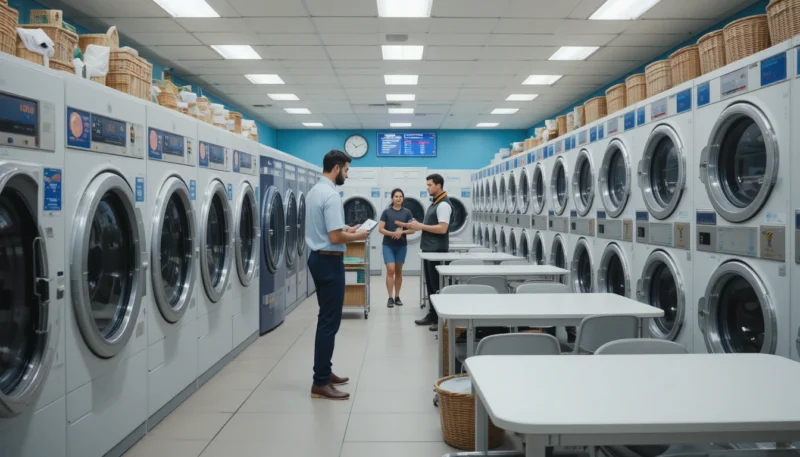
A launderette looks like one of the simplest businesses you can own. Machines run, coins go in, and money comes out. The reality is that plenty of sites barely break even while others on the same street turn a healthy profit. The difference is rarely the equipment. The key factors are where you set up, how you price, and how tightly you control your costs.
Why Launderettes Still Make Money in the UK?
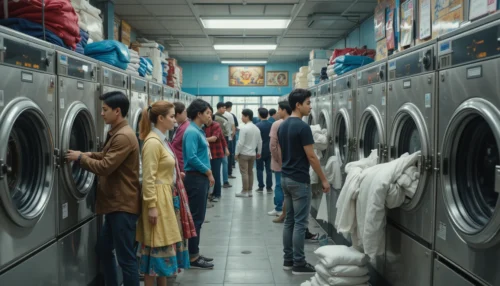
Demand for self-service laundry has not gone anywhere. Millions of people live in flats and shared houses with no room or plumbing for a washer-dryer, and replacing a broken machine is an expense many renters would rather avoid.
According to the English Housing Survey, the private rented sector now covers 4.7 million households, around 19% of all homes in England. Tenants move often, and many landlords do not provide laundry appliances, which keeps a steady stream of customers walking through the door.
Students, busy professionals, and anyone dealing with bulky items like duvets all add to that base. A launderette also earns in cash and card every single day, so unlike businesses built on large invoices and 30-day terms, you are not waiting weeks to get paid. That daily income is what makes the model resilient when you run it well.
Getting Paid Without Losing Time to the Till
Set prices for your local market, not just a number you saw online. Check what nearby launderettes charge, then set wash and dry prices that cover your energy, rent, and a margin on top. Many sites lift income with a simple service wash, where staff wash, dry, and fold for a per-kilo fee, which carries a far better margin than self-service alone.
Cash still suits a launderette better than almost any other retail business, but it brings real admin. Emptying machines, counting takings, and rolling coins by hand eats into hours you could spend keeping the place clean and serviced.
Many launderette owners lean on Cassida coin counters to reconcile a day’s takings in minutes and cut the errors that creep in when counting by hand. Whatever method you use, reconcile daily so a faulty machine or a shortfall shows up at once rather than weeks later.
It pays to take cards alongside coins, too. UK Finance data reports that cash now makes up fewer than one in ten payments nationally, and younger customers in particular expect to tap a card or phone. Your machines capture customers who never carry change, and the running cost is a small price to pay for the trade you would otherwise turn away.
Choosing a Site That Does Half the Work for You
Location decides more about your profit than any other single factor. A launderette lives or dies by the passing footfall and the type of housing around it.
The best pitches sit among dense rented accommodation, near bus routes, student areas, or high streets where people already run their errands.
Before you sign anything, weigh up:
- Resident mix: many flats, HMOs, and short-term tenancies mean more people without their own machines.
- Parking and visibility: customers carry heavy loads, so easy access matters more than a prime retail frontage.
- Rent and business rates: a cheaper unit on a busy side street often beats an expensive one on the main thoroughfare.
- Competition: one nearby rival can be healthy; three usually means the area is saturated.
Take time on the lease terms, too. A long lease gives you stability, but build in break clauses so you are not trapped if the area changes. Commercial rent and rates are fixed costs you pay whether two machines run or twenty, so getting them right protects you through the quieter months.
Energy and Water: Your Biggest Running Cost

Energy is the cost that decides whether a launderette is profitable or just busy. Industrial washers, and especially dryers, draw a lot of power, and you are heating water all day. Unlike households, businesses are not protected by the domestic energy price cap, so launderette owners pay whatever their commercial contract sets.
Fixing a competitive business energy deal is one of the most important things you will negotiate. Because rates move with the wider market, it pays to understand when energy prices change and time your renewal rather than rolling onto an expensive default tariff.
A few habits protect your margin:
- Run high-efficiency machines and keep them serviced, since a worn dryer can take far longer to finish a load.
- Fit timers or sensors so lighting and heating are not running in an empty shop overnight.
- Track your water use, as leaks and inefficient machines quietly add to the bill.
Small savings on each cycle add up fast across thousands of washes a year.
Add services that raise the average spend
The strongest launderettes do not rely on self-service washes alone. Extra services use the same floor space and staff time but lift the average spend per customer.
Worth considering:
- Service washes and ironing, charged per kilo or per basket.
- Dry cleaning drop-off, run through a local partner so you take a cut without buying equipment.
- Vending: detergent, softener, snacks, and drinks for people waiting out a cycle.
- Larger machines for duvets, curtains, and bulky bedding that home appliances cannot handle.
Many of these add-ons run more smoothly with the right payment setup behind them. App top-ups, contactless vending, and prepaid laundry cards are increasingly the norm, and the payment technology trends reshaping retail make these systems easier and cheaper to fit than they once were.
You can also build commercial accounts with nearby gyms, salons, short-let hosts, and small restaurants that need regular laundry. A handful of business contracts brings predictable weekly income that smooths out the quieter retail days and fills machine time you would otherwise lose.
Keep People Coming Back

A launderette only works if the same faces return week after week, so the basics matter more than any promotion. Keep the place clean, well-lit, and safe, with machines that actually work. A broken dryer with an out-of-order note taped to it tells customers to try the place down the road.
Reliable opening hours help, and many sites do well with early and late slots that suit shift workers. Free wifi, comfortable seating, and even background radio make the wait less of a chore and keep people on-site rather than leaving mid-cycle.
Simple touches, like clear instructions on the machines and an easy way to report a fault, build the kind of trust that turns a one-off visitor into a regular.
Running a profitable launderette is less about the machines and more about the decisions around them. Pick a site with genuine demand and a price for your area, keep a firm grip on energy and cash, and add services that earn more from the same space.
Get those right and a launderette becomes exactly what it looks like from the outside: a steady, low-drama business that pays you every day.