


Air traffic controllers play a vital role in ensuring the safety and efficiency of air travel. They manage aircraft movement in the sky and on the ground, preventing collisions and maintaining order in the airspace.
With the UK being home to some of the world’s busiest airports, air traffic controllers are in high demand.
This career offers an exciting and challenging work environment, along with competitive salaries and career growth opportunities.
However, becoming an air traffic controller requires extensive training, rigorous assessments, and the ability to handle high-pressure situations.
If you are interested in pursuing this career, understanding the qualifications, application process, and training is essential.
In this guide, we will explore everything you need to know about how to become an air traffic controller in the UK.
What Does an Air Traffic Controller Do?
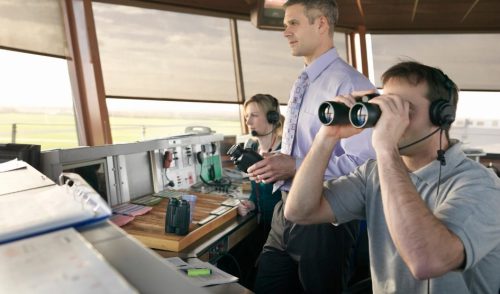
Air traffic controllers are responsible for managing the safe and efficient movement of aircraft within UK airspace.
They guide pilots during takeoff, landing, and en-route flights, ensuring aircraft maintain a safe distance from each other. This role requires excellent communication skills, as controllers provide real-time instructions to pilots and coordinate with airport staff.
There are different types of air traffic controllers, each with specific duties. Tower controllers oversee aircraft movements on the ground and in the immediate airspace around an airport.
Approach controllers manage flights arriving and departing from airports, ensuring smooth transitions between different airspaces. Area controllers monitor high-altitude flights, directing aircraft safely across the country.
Air traffic controllers use radar, radio communication, and advanced software to track aircraft movements.
They must respond quickly to emergencies and unexpected weather changes, making fast decisions to avoid disruptions. This role demands intense focus, situational awareness, and the ability to work under pressure.
Why Choose a Career in Air Traffic Control?
A career in air traffic control is highly respected and offers excellent job security. Air traffic controllers play a crucial role in aviation, ensuring safe and efficient aircraft movement.
With a constant demand for skilled professionals, it is a stable and rewarding career choice.
What Are the Key Benefits?
- High Salary & Benefits: Controllers earn well above the UK average, with opportunities for salary increases. The job includes pension schemes, healthcare, and paid holidays.
- Exciting Work Environment: Every day brings new challenges, requiring quick thinking and problem-solving skills. Managing multiple aircraft makes the job dynamic and engaging.
- Career Progression: Experienced controllers can advance to supervisory, training, or specialised roles within air traffic management.
If you thrive under pressure and enjoy a fast-paced, rewarding career, air traffic control offers an exciting and well-paid opportunity in the aviation industry.
What Are the Requirements to Become an Air Traffic Controller in the UK?
Becoming an air traffic controller in the UK does not require a university degree, but candidates must meet certain educational and personal requirements.
Educational Qualifications
- At least five GCSEs (or equivalent), including English and Mathematics.
- A-levels or a relevant college diploma can be beneficial but are not mandatory.
- No specific degree is required, but subjects such as mathematics, physics, and geography may provide an advantage.
Skills and Attributes Required
- Strong communication skills to provide clear instructions to pilots.
- Excellent problem-solving and decision-making abilities.
- The ability to stay calm under pressure and work in a fast-paced environment.
- Strong concentration and situational awareness.
Medical and Fitness Requirements
- Candidates must pass a CAA Class 3 Medical Examination, which assesses vision, hearing, and general health.
- Good mental and physical health is essential, as the job requires intense concentration.
Nationality and Age Requirements
- Applicants must have the right to work in the UK.
- Most training programmes require candidates to be at least 18 years old at the time of application.
A career as an air traffic controller is both challenging and rewarding. If you have the right skills and determination, it can offer a stable and well-paying future.
How to Become an Air Traffic Controller in the UK?
Becoming an air traffic controller in the UK requires a combination of education, training, and assessments.
There are multiple routes into this career, including apprenticeships, trainee schemes, and direct applications.
The role requires strong problem-solving skills, concentration, and the ability to work under pressure. Here’s the step-by-step process:
1. Check Eligibility Requirements
- You need at least 5 GCSEs (grades 9 to 4 / A to C), including English and Maths, to apply for entry-level training programmes.
- For higher-level apprenticeships, you may need A-levels or equivalent qualifications to meet the academic requirements.
- You must pass a medical examination to ensure you meet fitness standards, including good eyesight, hearing, and overall health.
2. Choose Your Entry Route
Apprenticeship
- You can apply for a Level 3 Aviation Flight Operations Co-ordinator Apprenticeship or a Level 5 Air Traffic Controller Higher Apprenticeship.
- These apprenticeships provide structured training while allowing you to earn a salary as you gain hands-on experience.
- The Royal Air Force (RAF) and Royal Navy also offer air traffic control apprenticeships for those interested in military aviation.
Trainee Scheme with NATS (National Air Traffic Services)
- This programme requires relocating to Fareham, Hampshire, for classroom and simulator-based training.
- It is open to applicants from various backgrounds, including those with prior aviation experience like pilots or military air traffic controllers.
- The training is intensive and prepares you for real-world ATC operations at control centres or airports.
3. Apply for an ATC Training Programme
- Submit an application through NATS or other accredited training providers that offer air traffic control courses.
- Ensure your application highlights relevant skills such as problem-solving, communication, and the ability to work under pressure.
- Be prepared for a competitive selection process, as ATC training programmes receive a high number of applicants each year.
4. Pass the Selection Process
- Aptitude Tests: You will be tested on problem-solving, multitasking, and spatial awareness to assess your suitability for the role.
- Interviews: Expect questions that evaluate your communication skills, decision-making ability, and ability to remain calm under pressure.
- Medical Examination: You must meet the CAA Class 3 Medical standards, ensuring you have good vision, hearing, and general fitness.
5. Complete ATC Training
- Classroom Learning: Covers essential subjects like aviation regulations, meteorology, radar operations, and airspace management.
- Simulator Training: You will use advanced simulation technology to practice real-life air traffic control scenarios in a controlled environment.
- On-the-Job Training: Under the supervision of experienced controllers, you will gain hands-on experience at an airport tower or control centre.
6. Obtain an ATC Licence
- To work as an air traffic controller, you must pass final assessments conducted by the Civil Aviation Authority (CAA).
- These assessments ensure you meet industry standards and are capable of handling live air traffic independently.
- Once you pass, you will receive an ATC licence, allowing you to work in control towers, area control centres, or military air traffic services.
7. Start Working as a Trainee Controller
- Initially, you will work under supervision, gradually taking on responsibilities as you gain experience.
- Over time, you will develop the confidence and skills needed to manage air traffic independently in high-pressure situations.
- Air traffic controllers earn competitive salaries, with experienced professionals at major UK airports making £70,000 to £100,000+ per year.
This career offers stability, growth, and exciting challenges, making it an excellent choice for those passionate about aviation and airspace management.
What Is the Training Process for Air Traffic Controllers?

Becoming an air traffic controller in the UK requires intensive training to ensure safety and efficiency in the skies.
The process includes classroom learning, simulations, and hands-on experience.
What Are the Training Stages?
- Classroom Training: Trainees study aviation regulations, navigation, meteorology, and radar operations. They also learn emergency procedures and communication protocols.
- Simulator Training: Advanced simulations allow candidates to practice real-life scenarios. This helps develop decision-making skills and experience in managing air traffic.
- On-the-Job Training: Under supervision, trainees gain practical experience at ATC centres or airport towers. They gradually take on responsibilities while being closely assessed.
- Final Assessment: A practical exam conducted by the CAA determines if trainees meet industry standards. Passing this is essential to obtain an ATC licence.
This structured training ensures controllers are fully prepared for the challenges of air traffic management. Only those who complete the process can safely guide aircraft in UK airspace.
What Exams and Assessments Do You Need to Pass?
Becoming an air traffic controller requires candidates to pass a series of rigorous exams and assessments. These tests evaluate cognitive abilities, technical knowledge, and overall fitness to perform the role.
Each stage is designed to ensure candidates can handle stress, make quick decisions, and maintain focus in high-pressure environments. Here are the key assessments:
ATC Aptitude Tests
These evaluate a candidate’s ability to multitask, solve problems, and make decisions under pressure. Tests include memory retention, spatial awareness, and reaction time exercises.
Medical Assessment
All candidates must pass the CAA Class 3 Medical Examination, which assesses vision, hearing, cardiovascular health, and overall physical fitness. Candidates with severe medical conditions may not qualify.
Final Licensing Exam
This practical exam tests a trainee’s ability to manage live air traffic situations. Controllers must demonstrate their skills in providing clear instructions, handling emergencies, and ensuring safe airspace operations.
Passing these assessments is crucial for obtaining an ATC licence, which is required to work as an air traffic controller in the UK.
How Long Does It Take to Become an Air Traffic Controller?

The time required to become an air traffic controller depends on the training provider, the trainee’s performance, and job availability.
On average, it takes around three years from the start of training to becoming a fully licensed controller.
The process begins with the ATC training programme, which lasts between 12 to 18 months. This includes classroom-based learning, simulator training, and supervised on-the-job experience. After completing training, candidates undergo additional assessments before receiving an ATC licence from the CAA.
Once licensed, new controllers must work under supervision for several months before handling air traffic independently.
The final stage includes ongoing evaluations to ensure controllers meet the required safety and efficiency standards. Some candidates may take longer to qualify if they need extra time to pass assessments or secure a job placement.
However, those who successfully complete the process can expect a rewarding and stable career in the aviation industry.
What Are the Different Types of Air Traffic Controllers?
Air traffic control is divided into different specialisations, with each type of controller managing a specific part of air traffic operations.
The UK’s airspace is complex, requiring a well-coordinated system of controllers to ensure aircraft move safely and efficiently. Here’s the types of Air Traffic Controllers:
Tower Controllers
These controllers manage aircraft movements on the ground and within the immediate airspace of an airport.
They handle takeoffs, landings, taxiing, and runway operations, ensuring safe separation between aircraft.
Approach Controllers
These controllers guide aircraft during takeoff and landing within a designated zone around an airport.
They coordinate with tower and en-route controllers to ensure smooth transitions between airspaces.
Area Controllers
Also known as en-route controllers, they manage aircraft flying at high altitudes across the country.
They monitor aircraft using radar and radio communication, providing instructions for maintaining safe distances and directing traffic flows.
Each type of controller plays a crucial role in maintaining safe, orderly, and efficient air traffic operations.
Controllers may start in one role and later specialise in other areas as they gain experience.
What Is the Salary of an Air Traffic Controller in the UK?

Air traffic controllers play a crucial role in ensuring the safe and efficient movement of aircraft in UK airspace.
Their job requires high levels of concentration, quick decision-making, and the ability to manage multiple flights simultaneously. Due to the demanding nature of the job, air traffic controllers are well compensated.
Average Salary of an Air Traffic Controller in the UK
- Starting Salary: £46,000 per year
- Experienced Salary: Up to £100,000 per year
Salaries vary based on experience, location, and the specific area of air traffic control (e.g., airport, en-route, or military).
Controllers working in busy airports or high-pressure environments tend to earn higher wages.
Working Hours and Shift Patterns
Air traffic control is a 24/7 operation, meaning controllers must be available to work at various times.
- Typical Weekly Hours: 35 to 45 hours
- Shift Work: Includes evenings, weekends, and bank holidays
Due to the nature of the job, shift patterns can be irregular, but they often include scheduled breaks to manage stress and maintain concentration.
Becoming an air traffic controller is a challenging yet rewarding career, offering excellent pay and long-term stability for those who meet the rigorous training and qualification requirements.
Conclusion
Becoming an air traffic controller in the UK is a challenging but rewarding career path. It requires intensive training, rigorous assessments, and the ability to work under pressure.
Candidates must meet educational, medical, and aptitude requirements before being accepted into a training programme.
The process typically takes around three years, with trainees undergoing classroom instruction, simulator training, and on-the-job experience.
Air traffic control offers competitive salaries, excellent job security, and opportunities for career growth.
Controllers can specialise in tower, approach, or area control, depending on their skills and interests. With the aviation industry constantly evolving, the demand for skilled air traffic controllers remains strong.
If you have the determination, focus, and problem-solving abilities required for this role, pursuing a career in air traffic control could be an excellent choice.
FAQs About How to Become an Air Traffic Controller
Do I need a university degree to become an air traffic controller?
No, a university degree is not required. You only need GCSEs, ATC training, and certification from the Civil Aviation Authority. Yes, you can wear glasses or contact lenses, but you must meet the CAA vision standards for air traffic controllers.
Can I apply for ATC training if I wear glasses?
Yes, you can wear glasses or contact lenses, but you must meet the CAA vision standards for air traffic controllers.
What happens if I fail the ATC training?
If you fail, you may get a chance to retake assessments. However, multiple failures can disqualify you from becoming an air traffic controller.
Can I transfer my ATC licence from another country to the UK?
Yes, but you must meet UK Civil Aviation Authority (CAA) regulations and complete any necessary assessments for licence conversion.
Are there part-time air traffic control jobs?
Most air traffic control positions are full-time due to the nature of the job, but some roles offer flexible shift patterns.
What is the retirement age for air traffic controllers?
Most controllers retire between 55 and 60, but this depends on employer policies and individual fitness levels.
Does the UK have enough air traffic controllers?
There is a shortage of air traffic controllers in the UK, increasing job opportunities and demand for trained professionals.