

Very narrow aisle, or VNA, warehousing allows businesses to store more stock within the same building footprint. By reducing aisle widths and using specialist trucks, operators can increase storage density without immediately needing an extension or off-site space.
However, tighter aisles and higher racking also place greater demands on the warehouse floor.
A small bump, dip or uneven section that causes little concern in a conventional warehouse can affect truck stability and performance in a VNA environment. This is where accurate assessment and targeted floor improvement become essential.
Why Floor Condition Matters in VNA Warehouses?
VNA trucks operate in restricted spaces and often lift loads to significant heights. They need to travel smoothly and remain stable throughout each journey. If the floor surface varies too much, the vehicle can experience vibration, mast sway and uneven wheel contact.
This can affect daily operations in several ways:
- Slower truck travel and picking times
- Greater wear on wheels, suspension and lifting components
- Increased risk of damaged stock
- Reduced operator comfort
- Potential contact with racking or guidance systems
- Disruption to planned warehouse throughput
A high-tolerance floor helps create a more predictable environment for equipment and people. It supports the wider goal of using every available metre of warehouse space efficiently without compromising safety.
What Is VNA Floor Grinding?
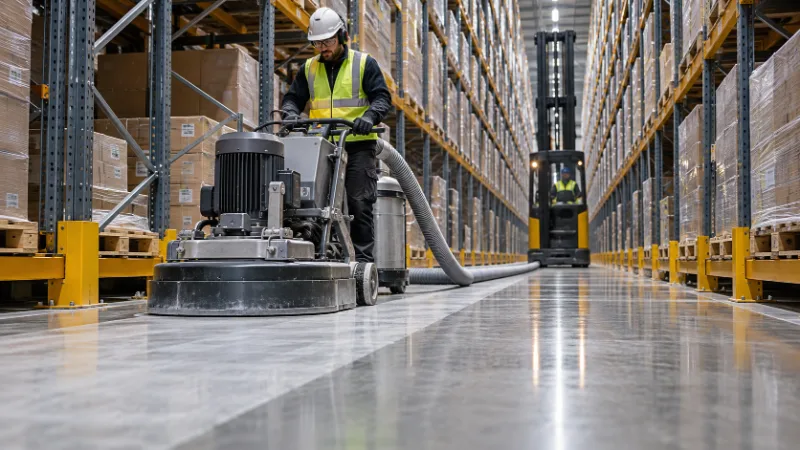
VNA floor grinding is a specialist process used to improve the flatness of a warehouse floor along very narrow aisle travel routes. Rather than treating the floor as one general surface, the work focuses on the areas where VNA trucks operate.
Specialist grinding equipment removes carefully measured amounts of concrete from high areas. This can reduce localised irregularities and help the floor meet the tolerance required for the warehouse layout and materials-handling equipment.
Why whole-aisle grinding may be needed?
A local repair may be suitable for an isolated defect. However, when measurements show more extensive variation along an aisle, whole-aisle grinding can provide a more consistent result.
Treating the full travel path helps avoid creating a smooth area beside another section that continues to affect truck movement. It is particularly useful when a facility is upgrading to VNA operations, installing taller racking or responding to recurring handling problems.
Start With a Floor Survey
Grinding should be based on data, not assumptions. A professional floor flatness survey measures the existing surface and identifies high and low points across the areas that matter most.
The survey should also consider how the warehouse will be used, including:
- Aisle width and length
- Type of VNA truck and guidance system
- Maximum lift height
- Racking layout
- Load weights
- Existing traffic patterns
- Future automation plans
This information helps determine whether grinding, repair work or another approach is appropriate. It also provides a clear record of the floor’s condition before major changes are made.
VNA Operations Need More Than a Smooth-Looking Floor
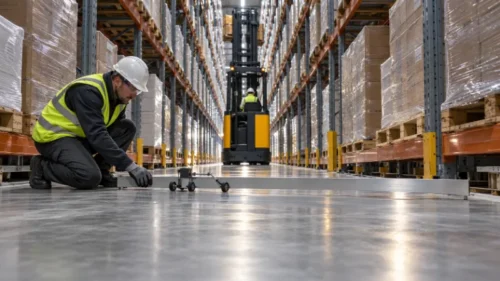
A floor can look clean and well maintained while still falling short of the precision required for VNA equipment. Visual inspections can identify visible cracks, damaged joints and surface wear, but they cannot confirm floor flatness to a defined tolerance.
The difference becomes more noticeable at height. When a truck lifts a pallet several metres into the air, minor floor variation can be amplified through the mast. This can cause load movement, slower positioning and reduced confidence for the operator.
For this reason, floor planning should be part of the warehouse design process, not an afterthought once racking and trucks are already in place.
Planning Work Around Warehouse Operations
Downtime is a major concern for logistics facilities. Before work begins, a flooring specialist should understand the site’s operating hours, critical routes and future requirements.
Practical ways to minimise disruption
Work may be planned in stages, such as completing one aisle at a time or scheduling activities during quieter periods. Clear communication between the flooring contractor, warehouse manager and equipment provider is essential.
It is also sensible to inspect joints, cracks and damaged areas during the same project. Addressing related defects at the right time can help prevent repeated disruption later.
Conclusion
VNA warehousing can improve capacity and productivity, but it relies on a floor that supports precise, stable travel.
By surveying the floor, understanding operational requirements and applying targeted grinding where needed, warehouse operators can create a stronger foundation for safer handling and long-term efficiency.
Frequently Asked Questions
What does VNA mean in warehousing?
VNA stands for very narrow aisle. It describes a warehouse layout with reduced aisle widths, usually served by specialist trucks designed to work safely in confined spaces.
Why does a VNA floor need high flatness?
VNA trucks travel close to racking and often lift loads to height. A flatter floor helps reduce vibration and instability, supporting safer and more efficient equipment movement.
Can any warehouse floor be used for VNA trucks?
Not always. The existing floor should be assessed against the needs of the planned equipment, racking height and guidance method before VNA operations begin.
Is floor grinding only for new warehouses?
No. It can also be used in existing facilities that are converting to VNA operations, upgrading equipment or experiencing problems with truck movement.