
The smart home has a credibility problem, and it’s earned. Fridges that tweet, kettles that need an app, doorbells that go offline when the broadband does, and a great many products whose main function is to collect data about the people who bought them.
Beneath all that, though, a handful of smart-home upgrades do something genuinely useful, save money or make a home safer or more comfortable, and don’t stop working when the manufacturer loses interest. Here’s the short list.
Heating Control
The single smart-home purchase with the clearest payback.
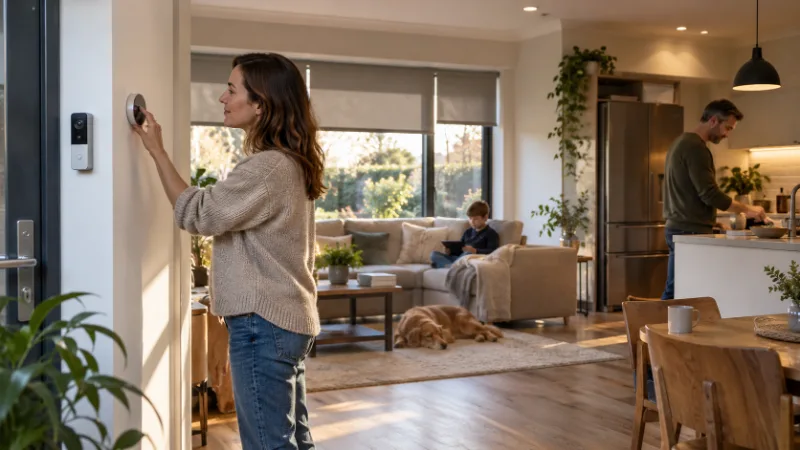
A smart thermostat that learns the household’s schedule, turns the heating down when nobody’s in and lets it be adjusted from a phone typically cuts heating bills by a meaningful percentage, and pays for itself within a couple of winters.
Smart radiator valves, which control rooms individually, go further: the bedroom can be cool overnight while the living room’s warm in the evening, which is what sleep science recommends and what a single thermostat can’t do.
It works, it’s boring, and it’s the one to buy first.
Lighting That Follows The Day
Smart bulbs are cheap enough now to be a reasonable purchase for the rooms where light matters: the bedroom, the living room and the hallway. The useful function isn’t colour-changing; it’s the schedule.
Bright, cool light in the morning, dimming and warming through the evening, off at a set time.
That’s the pattern the body clock wants, and having it happen automatically removes the willpower from it. A bedside lamp that fades up gently before the alarm is a better way to wake than a noise.
Blinds And Curtains
Motorised blinds are expensive and, in the bedroom, worth considering. Closing at sunset and opening at wake time is the cheapest possible improvement to sleep and to mornings, particularly in summer.
They’re the one smart-home item that should be wired rather than battery-powered, and the one where a cheaper solution, a blackout blind and a light alarm, gets most of the benefit for a tenth of the price.
Safety Devices
Smart smoke and carbon monoxide alarms that alert a phone when nobody’s home, and that tell the household which room the alarm’s in, are a straightforward safety improvement.
Water leak sensors under sinks, behind the washing machine and near the boiler cost a few pounds each and prevent the kind of damage that costs thousands. Neither needs a hub or a subscription to be useful.
Sound
A speaker in the kitchen for radio and podcasts, and a small one in the bedroom for white noise or a wind-down programme, are the modest end of the smart home and the most used.
The bedroom speaker doubles as an alarm that doesn’t involve a phone on the bedside table, which is a good habit on its own.
The Bedroom, Specifically
Sleep is where a lot of the smart-home marketing points, and most of it misses. A bed with sensors that score the night is a tracker; a mattress with an app is a mattress.
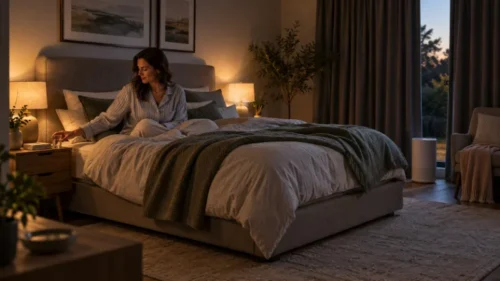
What the bedroom needs from technology is the temperature, light and sound control above, applied to the room where they matter most, and then a bed that’s good enough not to need an app.
This is why mattress and bedding specialists like Simba have put their engineering into springs, foam and airflow rather than into sensors.
Energy monitoring is the other unglamorous winner.
A smart meter display, or a plug that reports what a device draws, shows the household which appliances cost what, and the discovery that the tumble dryer or an old fridge is a large slice of the bill changes behaviour in a way no advice does.
It’s not a control device. It’s information, and it pays for itself.
Plugs And Schedules
Smart plugs turn ordinary devices into scheduled ones: a lamp in the hall on at dusk, a heater on for twenty minutes before waking, a phone charger that cuts off at 11pm. They’re cheap, they work with anything, and they don’t care what brand the device is.
What To Skip?
Anything that requires a subscription to work at all. Anything that only works with one brand’s ecosystem. Locks that fail open or closed when the battery dies.
Appliances with screens. Cameras pointed into the house rather than out of it. And any device whose main feature is talking, which is most of them.
The Principle
A smart-home upgrade is worth it if it does something automatically that a person would otherwise have to remember, and if it keeps doing that without the internet, an app update or a monthly fee.
Heating, lighting, blinds, safety, sound and plugs all pass. The rest is mostly gimmicks with a wifi chip.
Key Takeaways
The smart-home upgrades that aren’t gimmicks control heating, light and sound on a schedule, alert the household to fire, gas and water, and automate the things people forget.
In the bedroom, they cool the room, dim the lights and close the blinds, which is what sleep needs, and then leave the bed to be a bed. Buy the thermostat first, the bulbs second, and ignore the fridge.