
The UK Andy Burnham hospitality tax relief plan will give eligible pubs, social clubs and live music venues in England an additional 20% reduction in business rates from April 2027. The package is expected to cost about £100 million a year, benefit nearly 32,000 venues and save a typical pub an estimated £1,100 during 2027–28.
However, it is targeted business rates support rather than a tax reduction for the entire hospitality industry. Restaurants, cafés, hotels, nightclubs and the largest live music venues are not currently included, while businesses in Scotland, Wales and Northern Ireland are outside the measure because business rates are devolved.
Key Takeaways
- The new 20% rates reduction is due to start in April 2027.
- Nearly 32,000 eligible venues in England could benefit.
- A typical pub is expected to save approximately £1,100.
- The package is worth around £100 million annually.
- Final eligibility details are expected at the Autumn Budget.
What Is the UK Andy Burnham Hospitality Tax Relief Plan?
The plan is an additional reduction in business rates bills for selected hospitality and community venues. It is not a cash grant, a reduction in corporation tax or a general cut to hospitality VAT.
Andy Burnham announced the measure on 23 July 2026, describing it as “just the start” of wider government action to support high streets and local communities. The government argues that pubs, social clubs and live music venues create jobs, attract visitors and provide important community spaces.
The package forms part of a broader programme that has also included a temporary reduction in VAT on electricity bills and a £2 bus fare cap outside London. Burnham said pubs needed to know that “the cavalry is coming”, while acknowledging that the rates measure might not provide everything the industry had requested.
The phrase “hospitality tax relief” is therefore useful for searchers, but “business rates relief” is more accurate. The policy reduces one property-based business cost rather than all taxes paid by hospitality operators.
How Will the New 20% Cut Work With Existing Rates Support?
The additional reduction follows a 15% cut announced for eligible pubs and grassroots live music venues for the 2026–27 financial year. That earlier package was expected to save an average pub another £1,650, with around 75% of pubs forecast to see bills fall or remain unchanged during the year.
The government also introduced a permanent five-pence reduction in business rates multipliers for more than 750,000 retail, hospitality and leisure properties. It funded that change partly through a higher multiplier for the most expensive 1% of business properties.
A separate £4.3 billion support package limits revaluation-related bill increases. Most affected businesses have increases capped at 15%, while the smallest eligible businesses have increases limited to £800.
The new 20% reduction is described as coming on top of existing support, but businesses should not automatically call it a combined 35% discount. The 15% and 20% measures apply to different financial years, and final bills will also depend on rateable values, multipliers, transitional relief and detailed implementation rules.
Which Hospitality Businesses Will Qualify for the Relief?
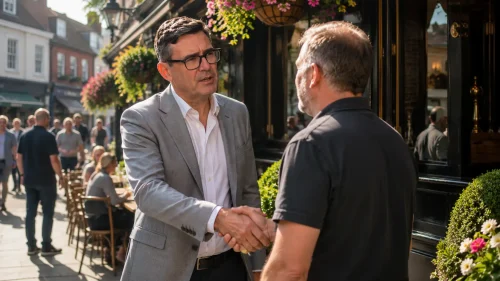
Eligible Pubs, Clubs and Music Venues
The official hospitality rates announcement identifies three main groups expected to benefit from April 2027:
- Trading pubs in England
- Social clubs, including working men’s clubs
- Eligible live music venues
The government estimates that nearly 32,000 properties across these categories will qualify. It has not published a separate number for pubs alone, and a venue’s trading description may not be enough to establish eligibility.
Which Hospitality Businesses Are Excluded?
Restaurants, hotels and cafés that do not meet the final eligible-property definition are not covered by the announcement. The “very largest” live music venues will also be excluded, although the size threshold and detailed criteria are expected at the Budget.
Nightclubs are not included in the current announcement. Existing guidance has treated nightclubs separately from social clubs, although night-time industry representatives have asked ministers to recognise their economic and community role.
Eligibility Snapshot
| Business Type | Current Position |
| Pubs in England | Expected to qualify |
| Social clubs | Expected to qualify |
| Eligible live music venues | Expected to qualify |
| Largest music venues | Excluded pending detailed definition |
| Restaurants and cafés | Not currently included |
| Hotels | Not currently included |
| Nightclubs | Not covered by the announcement |
Final entitlement will depend on the formal rules applied to each property rather than the broad sector in which an operator works.
England-Only Scope
Although the announcement came from the UK Government, this business rates reduction applies to England. Scotland, Wales and Northern Ireland operate their own non-domestic rates systems and may choose different support measures.
How Much Could Pubs And Music Venues Save?
The government’s headline estimate is that a typical pub will save about £1,100 during the 2027–28 financial year. That figure is an average estimate, not a guaranteed payment or fixed discount for every eligible property.
Illustrative Savings
| Annual Bill Before New Cut | Illustrative 20% Reduction | Illustrative Remaining Bill |
| £3,000 | £600 | £2,400 |
| £5,000 | £1,000 | £4,000 |
| £8,000 | £1,600 | £6,400 |
| £12,000 | £2,400 | £9,600 |
The examples assume that the 20% reduction applies directly to the stated bill. Actual calculations could differ because rates bills are based on the property’s rateable value, the relevant multiplier and any other relief or transitional protection.
One industry example estimated that a business with annual turnover of £1 million might pay around £5,000 in business rates, producing a saving of about £1,000. The same example included £166,667 in VAT, £333,333 in purchases, £203,333 in other costs and only £16,667 in operating profit, illustrating why some operators regard the rates saving as helpful but limited.
How Will The £100m Hospitality Relief Package Be Funded?

The government says the package will be fully funded. One proposed source is a review of relief received by businesses such as vape shops and gambling arcades, which ministers argue may not make the same contribution to local communities as pubs, clubs and cultural venues.
A second element involves stronger VAT compliance for businesses selling through online marketplaces. The government is consulting on extending marketplace liability to sales by UK-based businesses when goods are located in the UK at the time of sale.
The consultation runs from 23 June to 18 August 2026. Officials say VAT non-compliance on online platforms costs hundreds of millions of pounds and can disadvantage compliant high-street businesses.
Revenue from the proposed reforms would be reinvested in the business rates system. However, full costings have not yet been published, so the review of existing reliefs and marketplace enforcement should be treated as the government’s funding approach rather than guaranteed receipts of exactly £100 million.
Why Has the Government Targeted Pubs, Clubs and Music Venues?
Protecting Community and High-Street Venues
The government says these venues provide local jobs, support town centres and give communities places to meet. The current business rates relief rules already recognise that some businesses in England may qualify for reductions because of their size, property use or contribution to the local economy.
Official figures published earlier in 2026 showed that pub numbers had fallen by nearly 7,000 since 2010, a reduction of roughly 15%. The same support package included £10 million for a three-year hospitality fund intended to help more than 1,000 pubs provide services such as community cafés, village shops and play areas.
Chancellor John Healey said: “Pubs, clubs and live music venues are at the heart of communities.” The policy therefore prioritises venues the government considers particularly important to local identity and high-street activity.
Why Are Restaurants and Hotels Not Included?
Restaurant and hotel operators argue that they face many of the same wage, energy, food, insurance and property costs as pubs. One industry representative described the announcement as a “good start” but said restaurants and hotels still required a broader solution.
Specialist analysis reported that hotels were expected to face average business rates increases of around 110%, although individual bills will vary. Restaurant owners have also pointed to rising ingredient costs, with one operator reporting a 20% increase in the price of beef.
The exclusions make the package more targeted and less expensive, but they also create a sharper divide between businesses serving similar customers. Ministers have not confirmed that restaurants or hotels will receive equivalent relief later.
What Could the Tax Relief Mean for London Hospitality Businesses?
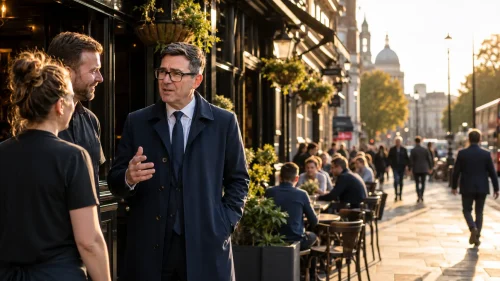
Qualifying London pubs, social clubs and music venues could receive the same 20% reduction as eligible properties elsewhere in England. The potential cash saving may be valuable in a city where rent, wages, utilities and commercial property costs are often high.
However, London businesses should not assume that every venue will save £1,100. Business rates are calculated property by property, and pub valuations can take account of fair maintainable turnover rather than simply floor area.
The exclusion of restaurants and hotels is particularly significant for London because those sectors form a large part of the capital’s visitor economy. Larger concert halls and music venues must also wait for the government’s final definition of the venues that will be excluded.
The relief may support staffing, refurbishment, debt repayment or investment, but it will not necessarily reduce food, drink or ticket prices. Operators will decide how to use any saving according to their own costs and trading position.
Will the Rates Cut Be Enough to Ease Hospitality Costs?
The measure gives targeted businesses more breathing space, but business rates are only one part of the cost base. Some pub operators have said the expected £1,000 to £1,100 saving will not materially affect the price of a pint, while others believe it could help businesses operating on narrow margins.
Main Cost Pressures
- VAT on food and drink sales
- Wages and employer National Insurance
- Commercial rent and property maintenance
- Electricity, gas and water bills
- Food, alcohol and other supplies
- Alcohol duty and licensing expenses
- Insurance, borrowing and debt repayments
One pub operator estimated that business rates accounted for about 16p of a pie-and-pint purchase, compared with £3.42 in VAT. Industry campaigners continue to seek a reduction in hospitality VAT from 20% to 10%, although one estimate suggested such a policy could cost the Treasury about £10 billion.
The relief may therefore prevent some costs from rising as quickly, rather than transforming profitability. Its practical value will be greater for businesses with significant rates liabilities and weaker for operators whose largest pressures come from labour, supplies, rent or VAT.
When Will The Relief Start, And What Happens Before Then?

Autumn Budget Decisions
The new reduction is scheduled to begin in April 2027, covering the 2027–28 financial year. Before then, the Autumn Budget is expected to clarify eligibility, define the largest music venues that will be excluded and provide more detail on wider business rates reform.
The government has also promised to return to the treatment of Small Business Rates Relief. Until those documents are published, businesses should distinguish between confirmed headline policy and rules that remain under development.
What Should Businesses Check Now?
Operators can prepare by reviewing their present position:
- Confirm the property’s current rateable value.
- Compare the valuation with similar local properties.
- Identify existing relief shown on the rates bill.
- Check whether the premises match an eligible category.
- Monitor Budget and local-authority guidance.
- Avoid treating estimated savings as guaranteed income.
Businesses can check their rateable value, review the property information used in the calculation and raise a challenge when they believe the valuation is wrong. Local councils remain responsible for billing, collecting rates and deciding eligibility for many forms of relief.
These checks can help businesses build more realistic forecasts before the new discount appears on a rates bill.
Expected Implementation Timeline
The July 2026 announcement is the first stage. Budget clarification should be followed by detailed eligibility guidance, local-authority system changes and revised billing arrangements before the planned April 2027 start.
The timetable leaves several months for implementation, but operators should not assume that the reduction will be applied in a particular way until councils receive formal instructions.
Conclusion
The UK Andy Burnham hospitality tax relief plan offers meaningful but narrowly targeted support. From April 2027, eligible pubs, social clubs and live music venues in England are expected to receive an additional 20% business rates reduction, with nearly 32,000 venues benefiting and a typical pub saving around £1,100.
The package does not cover the whole hospitality industry or the whole UK. Restaurants, hotels, nightclubs and the largest music venues remain outside the current announcement, while final eligibility and funding details still require clarification.
For qualifying operators, the relief could improve cash flow, but it is unlikely to remove the wider pressures created by wages, VAT, rent, energy and supply costs.
Frequently Asked Questions
Is the Hospitality Relief a Cash Grant?
No, the measure is a reduction in an eligible property’s business rates bill. It will not normally be paid as unrestricted cash to the operator.
Does the Plan Reduce Hospitality VAT?
No, the announcement does not change the standard VAT treatment of ordinary hospitality sales. Campaigners are separately calling for the hospitality VAT rate to fall from 20% to 10%.
Will Businesses Receive the Discount Automatically?
The administrative process has not yet been confirmed. Some relief may be applied by councils using existing records, while unclear cases may require additional evidence.
Can a Pub in a National Chain Qualify?
Chain ownership has not been announced as an automatic exclusion. Qualification will depend on the final property, eligibility and relief rules.
Will Customers Pay Less for Drinks or Tickets?
There is no requirement for businesses to pass the saving directly to customers. Operators may instead use it for wages, energy, supplies, investment or debt.
Can Businesses Challenge Their Rateable Value?
Yes, businesses can review the information used to value their premises and use the official check-and-challenge process. A challenge can result in the value increasing, decreasing or remaining unchanged.
Where Will the Final Rules Be Published?
Detailed eligibility is expected to be set out around the Autumn Budget and through subsequent official guidance. Businesses should also monitor information from the local authority that issues their rates bill.
Note: The 15% support for 2026–27 and the additional 20% reduction from 2027–28 should not be presented as a confirmed 35% discount. Final calculations, eligibility definitions and billing arrangements remain subject to Budget and implementation guidance.