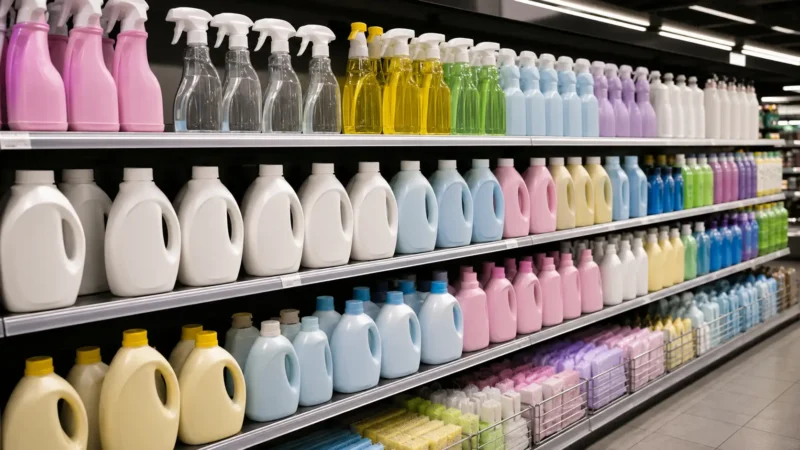
The most common reason retail stores consider private-label cleaning products is to improve their margins. However, the commercial arguments for own-label household cleaning are not just about the margin line; they are about customer loyalty, category control, and competitive positioning that branded resale cannot offer. Chemical specialists like McKLords work with retailers of all sizes at various levels.
The Margin Argument in Full

A retail trading company that resells a branded product operates within a margin set by the brand owner. The retailer can only make a profit on each item sold based on the wholesale price, the suggested retail price, and the competition they face from other stockists of the same product.
An own-label product with the retailer’s brand name, priced at a level the retailer chooses, does eliminate all those restrictions. The margin improvement is not incremental, but rather a step change in the commercial relationship with the product category.
Customer Loyalty and the Exclusivity Effect
A brand is available from several retailers, and if a person is a brand loyalist and not retailer loyal, they will purchase the product from the retailer where it is most convenient and affordable. An own-label product is available only from the retailer that created it, so the customer who chooses it will be loyal to the retailer.
With time, a variety of own-label cleaning products that customers are loyal to and return to frequently becomes a loyalty tool that grows in value with the number of customers. This exclusivity is not available with any branded resale at any margin.
Category Control and Ranging Decisions
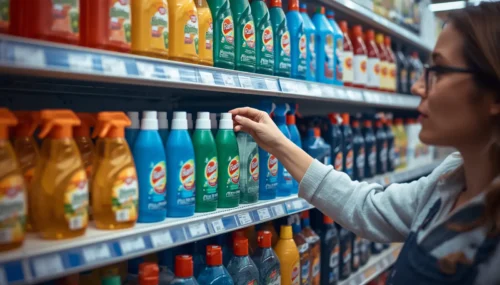
A retail operation that sells only branded cleaners relies on the availability, pricing, and promotional support of those brands. Supply disruptions, brand price increases, or the withdrawal of a promotional programme all impact the retailer’s category performance without any meaningful contribution from the retailer.
An own-label range allows the retailer to control availability, pricing, and promotion based on the retailer’s commercial priorities rather than those of a third-party brand owner.
Shelf Positioning and Visual Impact
Own-label products enable the retailer to create the visual image of the category in a way that the brand range can’t. A consistent packaging architecture across a range (common colour, typography, brand identity) makes the range more visible on the shelf.
It gives the impression of range, depth and the retailer’s commitment to the category, rather than a selection of third-party brands fighting for shelf space.
If the retailer’s own-brand positioning is an important component of the shopper proposition, then a coherent own-label cleaning range is part of the positioning at every visit.
The Scale Argument for Independent Retailers
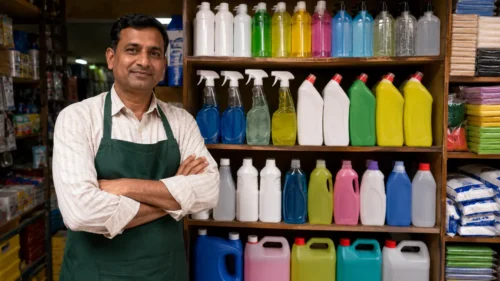
Private label cleaning products can be a business opportunity for national chains. Independent retailers and smaller regional operators who create their own label range (even a niche one for top sellers) enjoy the same structural margin and loyalty benefits, and sometimes a faster route to market and a tighter connection with their customers.
The minimum order volume for contract-manufactured own-label products has significantly decreased, making the category more accessible to businesses that may have thought it was too difficult to enter.
Responding to Shopper Trends Without Brand Dependency
A shopper trend, such as consumers being focused on concentrated formats, sustainability credentials, and fragrance-free products for sensitive households, can be met by a retail outlet’s own-label range, without waiting for a branded supplier to develop a product to meet the need.
That agility is important in a category where shoppers are shifting their preferences, and the ability to show those preferences within the range in advance of the competition really gives them a first-mover advantage. Branded dependency takes away that agility; own label brings it back.
Building Long-Term Category Value
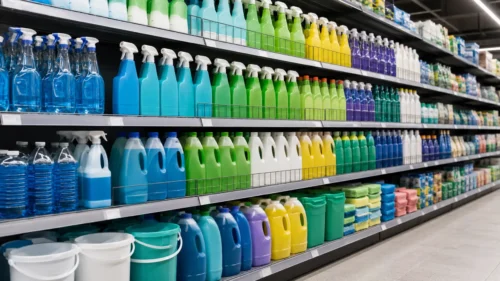
A sustained own-label programme will produce a category asset with real long-term commercial value through margin improvement, customer loyalty, category control, and competitive agility.
A proven range of own brands, backed by a loyal customer base, adds to the overall equity of the retail business in ways that are not achievable by any collection of third-party brands.
That asset value is one of the strongest reasons for the retail company to make an own-label investment for businesses looking beyond the current trading term.