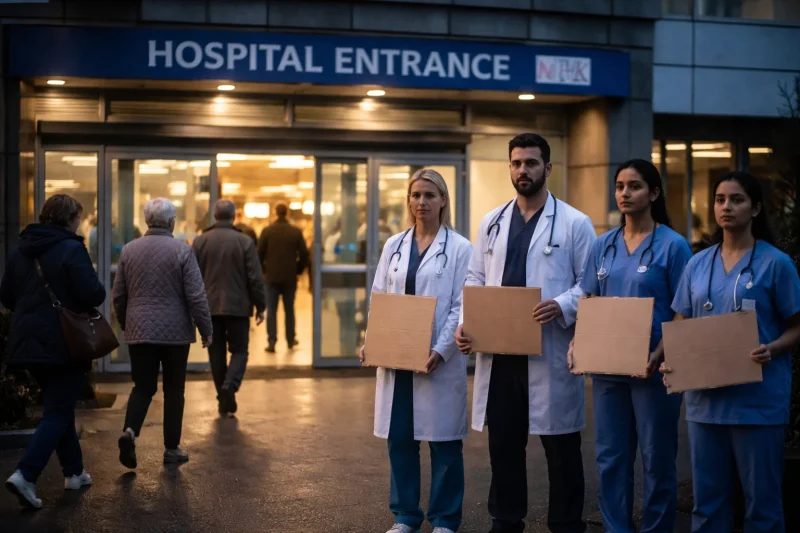
If you’re wondering when the next doctors’ strike is, the latest confirmed NHS update provides a clear and timely answer.
Resident doctors in England are set to take industrial action from 7:00 am on 7 April 2026 until 6:59 am on 13 April 2026, making it one of the longest walkouts in the ongoing dispute.
Here’s what you need to know at a glance:
- Strike dates: 7 – 13 April 2026
- Who is striking: Resident doctors (formerly junior doctors)
- Main reason: Pay dispute and job-related concerns
- Impact: Likely delays to appointments, treatments, and surgeries
This latest NHS strike update follows a breakdown in negotiations between the government and the British Medical Association (BMA).
As a result, both patients and healthcare providers are now preparing for potential disruption across NHS services
When Is the Next Doctors Strike in England in 2026?
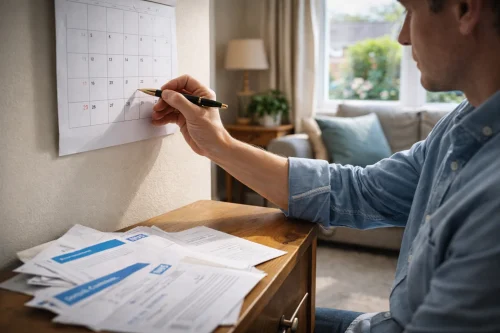
The next doctors’ strike in England is officially scheduled to begin on Tuesday, 7 April 2026, at 7:00 am and will run continuously until Monday, 13 April 2026, at 6:59 am.
This six-day walkout follows the Easter bank holiday and is expected to significantly impact NHS services across the country.
This marks the 15th round of industrial action since March 2023, highlighting how prolonged and unresolved the dispute has become.
The April strike is also among the longest, signalling increasing tensions between doctors and the government.
For those searching for when the next doctors’ strike is, this is currently the most up-to-date confirmed period, although further action later in 2026 remains possible depending on negotiations.
Who Are the Resident Doctors Taking Part in the Strike?
Resident doctors, previously known as junior doctors, are qualified medical professionals undergoing specialist training within the NHS. They form a substantial part of the healthcare workforce, making up nearly half of all doctors in hospitals.
These doctors work across multiple departments, including emergency care, wards, and outpatient services. Their absence during strike action has a widespread effect on NHS operations.
The terminology change from “junior doctors” to “resident doctors” reflects their level of responsibility and experience, as many have several years of clinical practice.
Why Are Doctors Striking Again in 2026?
The 2026 strike is driven by ongoing concerns about pay erosion, working conditions, and career progression. The BMA argues that, despite recent pay increases, doctors’ real-term earnings have declined significantly since 2008 when adjusted for inflation.
A major sticking point in this dispute is the demand for “full pay restoration”, which aims to bring salaries back in line with historical value.
Dr Jack Fletcher, chair of the BMA’s resident doctors committee, stated:
“We have been negotiating in good faith for weeks, but we are simply not going to accept an offer that risks locking in further erosion of pay.”
In addition to pay, doctors have raised several other concerns that contribute to dissatisfaction within the profession:
- Limited access to training and progression opportunities
- Job shortages in specialist training pathways
- Increasing workload pressures and burnout
Real Example: Doctor Perspective
A resident doctor working in Manchester recently shared their experience in a public discussion, highlighting the difficulty of balancing long working hours with rising living costs. They spoke about the growing pressure many doctors feel, despite recent pay adjustments.
They explained:
“Even with small pay increases, it doesn’t feel like we’re getting ahead. With rising costs, it’s becoming harder to plan for the future or feel financially secure in this job.”
This perspective reflects a wider sentiment across the NHS workforce, where many doctors feel that current pay changes have not kept pace with inflation.
As a result, support for ongoing industrial action continues to grow among healthcare professionals.
What Did the Government Offer to Prevent the Strike?
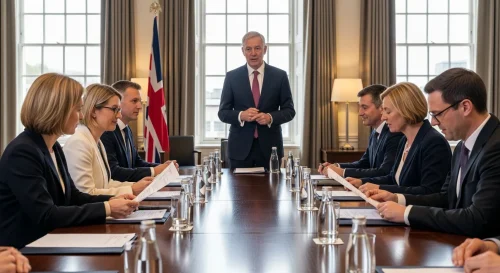
In an effort to resolve the dispute, the government put forward a comprehensive package aimed at improving both pay and career progression for resident doctors. The proposal was designed to address some of the structural issues within the NHS pay system.
Key elements of the offer included:
- Reform of pay progression, often referred to as “nodal point” changes
- Financial support for professional expenses, including exam fees
- Expansion of training posts to tackle bottlenecks in career progression
- A structured plan for pay improvements spread over several years
Despite these measures, the BMA rejected the proposal. The main concern was that the financial benefits were spread over three years, which doctors argued diluted their impact and delayed meaningful pay restoration.
Health Secretary Wes Streeting responded:
“This government has pulled every available lever to put forward a generous package that would have transformed working lives.”
Ultimately, the disagreement over how and when pay improvements should be delivered led to the collapse of talks and the announcement of strike action
What Is the Latest NHS Pay Rise for Doctors in 2026?
The 2026/27 pay award plays a central role in the current dispute. The government accepted recommendations from the Doctors’ and Dentists’ Review Body (DDRB), confirming a pay increase across NHS medical staff.
NHS Doctors Pay Award 2026 Overview
| Category | Details |
| Pay increase | 3.5% rise |
| Effective date | 1 April 2026 |
| Applies to | Resident doctors, consultants, SAS doctors, GPs |
| Payment timeline | Expected in June 2026 (backdated) |
| Key issue | Below inflation (3.6% RPI) |
Why This Matters?
While a 3.5% pay increase may appear positive on the surface, it falls slightly below the rate of inflation, meaning that in real terms, doctors may still experience a decrease in purchasing power. This is a key reason why the BMA has described the award as insufficient.
The pay award also applies broadly across NHS roles, not just resident doctors, which has added to concerns that it does not adequately address the specific issues faced by those in training.
Why Did Talks Between the BMA and Government Break Down?

Negotiations between the BMA and the government initially showed signs of progress in early 2026. However, talks ultimately collapsed due to disagreements over how financial improvements would be implemented.
The central issue was whether additional pay funding should be delivered immediately or spread over several years. The government favoured a gradual approach, while the BMA insisted on quicker restoration.
Dr Jack Fletcher commented:
“As talks progressed, the government began to shift the goalposts, particularly on how pay improvements would be delivered.”
This breakdown led directly to the announcement of the April 2026 strike.
How Will the Doctors’ Strike Affect NHS Services and Patients?
The impact of the doctors’ strike is expected to be significant, particularly for non-emergency services. NHS leaders have warned of widespread disruption during the six-day walkout.
Table: Expected NHS Impact During Strike
| Service Area | Likely Impact |
| Routine appointments | Delays or cancellations |
| Elective surgery | Postponements |
| Emergency care | Prioritised but under pressure |
| Waiting times | Increased across services |
| NHS costs | Estimated £300 million impact |
Real Example: Patient Experience
I came across a patient from Birmingham who shared how repeated NHS strikes affected their planned surgery, with the procedure being postponed multiple times and creating ongoing uncertainty.
They said, “Each time my surgery was scheduled, it got delayed again, which was really frustrating.”
While emergency care remained available, this example shows how strikes can lead to longer waiting times and added stress for patients awaiting treatment.
What Should You Do If You Have an Appointment During the Strike?
If you have an NHS appointment scheduled during the strike period, it is essential to stay updated and follow official NHS guidance.
While disruption is expected, not all services will be cancelled, and many appointments may still go ahead as planned.
To avoid confusion or missed care, you should:
- Attend your appointment unless you are directly contacted and told otherwise
- Regularly check messages, emails, or calls from your hospital or GP
- Use NHS 111 for urgent medical advice if your situation is not life-threatening
- Call 999 immediately in case of a medical emergency
Taking these steps can help ensure you continue to receive care where possible and avoid unnecessary delays.
Should You Still Attend Your NHS Appointment During Strike Action?
Yes, in most cases, you should attend your appointment as scheduled unless your healthcare provider notifies you of a cancellation or rescheduling. NHS services often prioritise maintaining essential and urgent care, even during strike action.
Failing to attend without confirmation could result in missed treatment or longer waiting times, so it is always best to follow official communication rather than assume your appointment has been cancelled.
Where Can You Get Medical Help During the Doctors’ Strike?
If you need medical assistance during the doctors’ strike, several alternatives remain available. NHS 111 is a key service for urgent advice and can guide you to the most appropriate care option.
Local pharmacies can also help with minor illnesses and medication advice, while urgent treatment centres and walk-in clinics provide additional support. Emergency departments (A&E) will continue to operate, although patients should be prepared for longer waiting times due to increased demand.
Are Emergency Services Still Running During the Doctors’ Strike?

Emergency services will continue to operate throughout the strike period. The NHS prioritises urgent and life-threatening cases, ensuring critical care remains available.
However, patients should be prepared for:
- Longer waiting times in A&E
- Increased pressure on staff
- Delays in non-urgent treatment
The NHS typically deploys contingency plans, including senior doctors and temporary staffing, to maintain essential services.
Could There Be More Doctors’ Strikes in the UK After April 2026?
There is a strong possibility of further strike action later in 2026. Resident doctors have already voted to extend their mandate for industrial action until August 2026, allowing the BMA to organise additional strikes if necessary.
The likelihood of further disruption will depend largely on whether negotiations between the government and the BMA improve. While both sides have indicated a willingness to continue discussions, significant differences remain unresolved.
As a result, patients and NHS staff should remain prepared for potential future strike announcements in the months ahead. Top of FormBottom of Form
Conclusion
Understanding when the next doctors’ strike is essential for patients, healthcare professionals, and anyone relying on NHS services.
The confirmed strike from 7 to 13 April 2026 reflects ongoing tensions around pay, working conditions, and long-term workforce sustainability.
While emergency services will remain operational, disruption to routine care is expected. With further strikes possible later in the year, staying informed through official NHS updates is crucial.
FAQs
Will GP surgeries close during the doctors’ strike?
GP services may experience disruption, but many surgeries remain open with reduced capacity. Availability can vary by location.
How long will the April 2026 doctors’ strike last?
The strike will last six days, from 7 April to 13 April 2026, making it one of the longest walkouts in the dispute.
Are consultants and nurses involved in this strike?
No, this specific strike involves resident doctors only. However, other NHS staff groups have taken action separately in the past.
Why do doctors say their pay has fallen in real terms?
Doctors argue that inflation has outpaced pay increases over time, reducing the overall value of their earnings since 2008.
Can hospitals cancel operations because of strikes?
Yes, elective procedures are often postponed to prioritise urgent and emergency care during strike periods.
How can you check if your hospital appointment is cancelled?
You should check NHS apps, emails, text messages, or contact your hospital directly for updates.
What is the role of the BMA in NHS strikes?
The British Medical Association represents doctors in negotiations with the government and organises industrial action when disputes arise.