


As someone who’s observed the constant challenges caused by vehicles parked across pavements, from parents with pushchairs navigating onto busy roads to disabled people facing daily accessibility barriers, I’ve been closely following the government’s stance on this issue.
The UK Government’s latest response, released in 2026, offers clarity, legislative changes, and devolved powers that aim to reshape how pavement parking is regulated in England.
Here’s a concise summary of the key developments:
- Local authorities will now have new powers to prohibit pavement parking.
- National ban not introduced, powers are decentralised.
- Secondary legislation coming in 2026 for enforcement.
- Widespread support from campaigners, but concerns remain over consistency.
Let’s explore these changes and their implications in more detail.
Why Did the Government Respond to Pavement Parking Now?

The government’s decision to act on pavement parking stems from mounting public frustration, safety concerns, and a long-delayed consultation dating back to 2020.
Over five years, advocacy groups, local councils, and residents demanded clearer legislation and stronger enforcement powers to stop drivers from blocking pavements with parked vehicles.
Public Pressure and Consultation Results
The public consultation on pavement parking received more than 15,000 responses. The findings were stark:
- 81% of individuals and 96% of organisations said pavement parking was a problem in their area.
- 40% of respondents reported they would go out more often if pavement parking were resolved locally.
This overwhelming feedback compelled the government to move forward with changes in early 2026. However, instead of enforcing a blanket ban, the government chose a more localised approach, empowering councils to enforce and regulate as needed.
What Powers Are Local Councils Being Given?
The government’s 2026 update introduces a devolved framework, allowing local transport authorities across England to prohibit and enforce pavement parking bans within their jurisdictions. These new powers will be legally supported by secondary legislation set to be introduced in 2026.
Under this legislation:
- Local authorities will be able to fine drivers for unnecessary obstruction of pavements.
- Civil enforcement officers, in uniform, will be authorised to act on violations.
- This power is independent of existing Traffic Regulation Orders (TROs), giving councils more flexibility.
Local authorities in Strategic Authority (SA) areas outside London will assume these powers. In non-SA areas, it will fall to unitary authorities or county councils.
Practical Enforcement Measures
These measures are intended to balance practical enforcement with community needs. Councils will be guided by statutory advice from the Department for Transport on:
- Where to allow exemptions (e.g., narrow streets)
- How to prioritise vulnerable road users
- Consistency in signage and notices
“Taken together, these steps will give local authorities the powers they need to address pavement parking effectively and fairly in their areas.” – Local Transport Minister
Why Was a Nationwide Ban on Pavement Parking Rejected?
The government has decided not to introduce a nationwide ban on pavement parking across England, arguing that a single rule would not work for every area.
Officials say local councils understand their street layouts better, especially in places with narrow residential roads where banning pavement parking could block traffic entirely. Instead, councils are being encouraged to consult residents and apply restrictions where needed.
However, disability groups and road safety charities have criticised this approach, warning it will create confusion and inequality. They argue that without a clear national rule, vulnerable pedestrians remain at risk.
Key concerns raised include:
- Different rules between neighbouring councils
- Drivers being unsure what is allowed
- Reduced safety for disabled people, older residents, and parents with prams
Campaigners say inconsistency will continue to put people in danger.
How Does This Compare to Scotland and London?
Pavement parking regulation varies significantly across the UK. While London has had longstanding legislation in place banning pavement parking, Scotland passed the Transport (Scotland) Act in 2019, enforcing it nationwide by 2023.
Table: Pavement Parking Rules Across the UK
| Region | Pavement Parking Status | Enforcement Authority | Year Enforced |
| London | Banned | Borough Councils | Ongoing |
| Scotland | Nationwide Ban | Local Councils | 2023 |
| England | Local Authority Powers | SAs, Unitary Authorities, Counties | 2026 (planned) |
In Scotland, local residents have already noticed positive change. For example, Susanne and her son Joseph, a wheelchair user, saw an immediate improvement in accessibility when their local council began enforcing the ban.
“Overnight the pavements were emptied of cars – the change really was quite dramatic.” – A mother from Scotland
England’s approach, while taking a cue from Scotland, stops short of a universal solution, relying on council-by-council action.
Who Supports the New Powers, And Who Thinks It’s Not Enough?
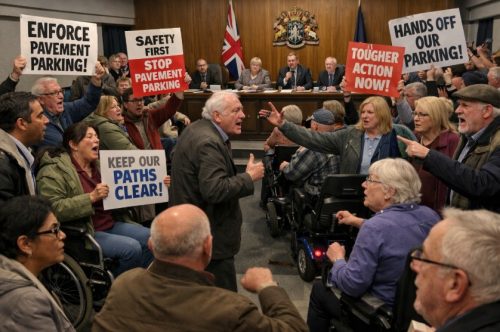
The new enforcement powers have sparked a sharp divide between those who see them as a breakthrough and those who believe they fall short.
Supporters and Their Viewpoint
The update has been widely supported by organisations advocating for safer streets and better urban design. Key backing came from:
- Road safety charities
- Disability rights organisations
- The RAC, citing driver support for enforcement
- Local Government Associations, who called for these powers for years
Their support centres around enabling councils to act faster and more efficiently, with fewer administrative delays compared to current TRO processes.
“Our research shows a clear majority of drivers agree that no pavement user should be made to walk or wheel into the road.” – Transport Policy Officer
Critics and Cautions
However, many critics say the new powers don’t go far enough. Common concerns include:
- Inconsistent application across local councils
- Limited budgets and staff to enforce rules
- Increased responsibility without national coordination
Blind individuals, wheelchair users, and elderly residents are still likely to face variable levels of safety depending on where they live.
“The pavement is for people. These new powers don’t go far enough to protect the most vulnerable.” – Accessibility Advocate
What Are the Main Concerns About Implementation?
The powers may look good on paper, but the practical challenges for local authorities remain significant. These include enforcement logistics, staff training, budget constraints, and effective public communication.
Key Barriers to Smooth Implementation:
- Many councils are already stretched thin financially
- Guidance on use of powers has not yet been published
- Enforcement officers will need training and support
- Public awareness campaigns will be critical to avoid confusion
Implementation Readiness Across Council Types:
| Council Type | Budget Flexibility | Existing TRO Capacity | Enforcement Resources |
| London Boroughs | Moderate | High | Existing force |
| Scottish Councils | Proven | Implemented | Established |
| English Unitary Authorities | Limited | Low | Developing |
| English County Councils | Variable | Low | Limited |
Without national enforcement funding or consistent standards, some councils may struggle to turn policy into real-world change.
What Does This Mean for Drivers and Pedestrians?
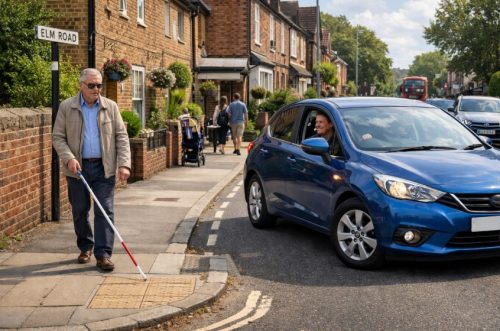
The new pavement parking powers mean drivers will need to pay much closer attention to local rules, as what is permitted in one borough could result in a fine just a few streets away. Councils will be responsible for setting and enforcing their own restrictions, so checking local guidance before parking will become increasingly important.
For pedestrians, particularly people with disabilities, visual impairments, or parents with prams, the changes bring cautious hope. However, real improvements will depend on how actively each council uses its new authority.
Enforcement is expected to begin from late 2026, with fines likely to match London’s existing levels of £60 to £130. Exemptions may apply on narrow streets or in designated zones, while clear signage and road markings should show where parking is restricted.
What Should Local Authorities and Residents Do Next? For Councils?
Local authorities and residents both have a part to play as the new pavement parking rules approach. Councils should prepare for the 2026 legislation by training staff, planning enforcement, and identifying high-risk areas through local consultation.
Residents should stay updated on council decisions, avoid pavement parking unless clearly allowed, and report unsafe or obstructive vehicles through official channels.
Key actions
- Councils should prepare enforcement teams and consult residents
- Residents should follow local rules and report unsafe parking
Penalty Charges and Guidance (Indicative)
| Area type | Enforcement start | Penalty range | Guidance document expected |
| High-priority councils | 2026 | £60–£130 | Late 2026 |
| Rural councils | 2026–2027 | Varies | Late 2026 |
| Non-compliant councils | TBD | TBD | TBD |
Clear communication will be vital to ensure these changes lead to safer, more accessible streets for everyone.
Conclusion
The UK Government’s response to pavement parking represents significant progress after years of delay. The decision to devolve powers rather than enforce a national ban is both practical and controversial.
While local councils are better placed to assess and act on community needs, the absence of unified regulation could result in inconsistencies and gaps in pedestrian protection.
The coming years will be critical. Successful implementation depends on council readiness, public cooperation, and sustained government support. For now, the message is clear: the pavement is for people, and action must follow that principle.
Frequently Asked Questions
What is pavement parking and why is it a concern in the UK?
Pavement parking involves vehicles partially or fully blocking pedestrian walkways. This practice affects accessibility and safety, especially for wheelchair users, blind individuals, and parents with young children.
When will enforcement of pavement parking begin in England?
Secondary legislation will come into effect in 2026, allowing councils to act on pavement obstruction without complex legal processes.
Will I be fined if I park partially on the pavement?
If your local council enforces a ban or identifies your vehicle as causing unnecessary obstruction, you may be fined between £60 and £130, depending on the council’s policy.
Why didn’t the government implement a national ban?
The government believes that local authorities are best placed to assess their own infrastructure needs. A national ban was considered too rigid and potentially impractical in some areas.
How does pavement parking affect disabled individuals?
Pavement obstructions force wheelchair users and visually impaired individuals onto the road, increasing the risk of injury and restricting independence.
Are exemptions allowed under the new rules?
Yes. On narrow residential streets, exemptions may allow partial pavement parking to prevent traffic congestion, if marked and signed appropriately.
How can I check if pavement parking is banned in my area?
Visit your local council’s website or contact their transport or parking department to confirm any new rules or enforcement zones.