

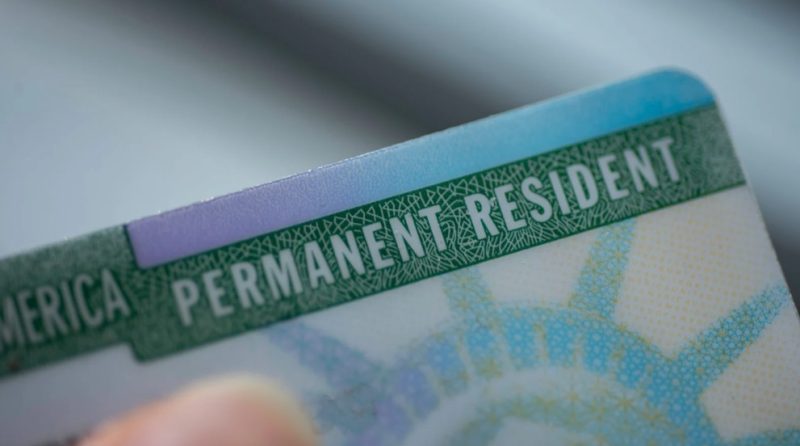
A Green Card is a permit for permanent residence in the United States, granting the right to legally live, work, study, and, in the future, apply for U.S. citizenship.
Despite its obvious advantages, obtaining a Green Card is not easy, but it is achievable. Below is an overview of the main pathways.
What Are the Ways to Get a Green Card?
Through Family

If your close relative is a U.S. citizen or a Green Card holder, you may qualify for permanent residence. Eligible relatives include spouses, children, parents, and siblings.
The most common path to a Green Card is marriage to a U.S. citizen. However, authorities carefully scrutinize such applications to prevent fraudulent marriages. Expect detailed questions, requests for evidence of cohabitation, and strict deadlines for filing documents.
For those not yet married, there is the fiancé(e) visa (K-1). After entering the U.S., the couple has 90 days to marry, after which they may apply for adjustment of status and a Green Card.
U.S. citizens can also petition for their children, parents, and siblings. The process includes filing Form I-130 and, if already in the U.S., Form I-485. Keep in mind that some relatives are not considered “immediate” and may face waiting times of several years.
Through Employment
Employment-based immigration is possible if an American employer proves they cannot find a qualified U.S. worker. This is a complex and lengthy process, but certain categories are prioritized:
- Individuals with extraordinary ability in science, arts, business, or athletics.
- Outstanding professors and researchers.
- Executives and managers of multinational companies.
To qualify as having “extraordinary ability,” applicants must provide evidence of education, experience, professional achievements, and industry recognition.
There is also the National Interest Waiver (NIW) category for specialists whose work benefits the national interests of the U.S., allowing them to bypass labor certification.
The third category includes professionals with advanced degrees, skilled workers, and unskilled workers with a U.S. job offer. Nurses and physical therapists may also qualify through a simplified process.
Through Education
Enrollment at a U.S. university does not directly grant a Green Card but can be the first step. The typical path is: student visa → work permit → H1B work visa → labor certification → Green Card.
Through the Diversity Visa Lottery
The Diversity Visa Lottery annually grants up to 55,000 Green Cards to citizens of countries with low immigration levels to the U.S. Participation is free, applications are submitted online in the fall, and results are announced in the spring.
Applicants must have a high school diploma and citizenship from an eligible country. Winners attend an interview and submit visa paperwork.
Through Religious Organizations
Employees of religious organizations, priests, monks, teachers, counselors, may obtain a Green Card by filing Form I-360. However, the program is time-limited and subject to presidential administration decisions.
Through Refugee or Asylum Status
Individuals granted asylum in the U.S. can apply for a Green Card one year after entry. Grounds include a well-founded fear of persecution due to race, religion, political opinion, etc. This also applies to close family members.
Through a U Visa
Victims of certain crimes who have suffered abuse and cooperated with law enforcement may qualify for a US visa, which leads to a Green Card. Qualifying crimes include kidnapping, sexual assault, domestic violence, human trafficking, and others. Applications are filed using Form I-918, with supporting documentation from law enforcement.
Trump’s “Golden Visa”
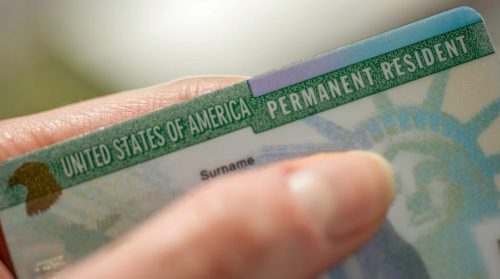
Since 2025, Donald Trump’s administration has promoted the idea of a new $5 million visa, the so-called “Golden Card” for wealthy foreigners. The program promises accelerated citizenship and all Green Card benefits.
However, experts remain skeptical: there is no legal framework, and immigration policy is under congressional authority. Without congressional approval, launching a new visa category is impossible.
Investment-Based Green Card (EB-5 Visa)
One of the most reliable and fastest ways to obtain a Green Card is through investment in the U.S. economy. The EB-5 program requires a minimum investment of $800,000 in an approved project that creates at least 10 jobs. Alternatively, investors may put funds into their own business, expand it, or restructure it.
Advantages of EB-5:
- Unlimited right to live and work anywhere in the U.S.
- Ability to run your own business.
- No need for family or employer sponsorship.
- Eligible to bring spouse and children under 21.
- Citizenship available after 5 years.
Green Card Process
In most cases, the process includes:
- Petition filed by a sponsor (Form I-130 or I-140).
- Receiving a document package from the National Visa Center.
- Interview at a U.S. embassy or consulate.
- Entry into the U.S. with the immigration package.
- Filing Form I-485 and undergoing biometrics.
- Receiving the Green Card by mail.
Processing times vary depending on the category and workload, averaging 10 months to 3 years.
U.S. Citizenship
After 5 years of residence with a Green Card (or 3 years for spouses of U.S. citizens), applicants may apply for citizenship.
Requirements include continuous residence, good moral character, and passing a civics and English test. As you can see, there are numerous ways to obtain a U.S. Green Card, each with its own complexities.
The most reliable option remains investment-based immigration. For more details, you can request a free consultation with Astons immigration specialists.