
Are mortgage rates going down in 2025, and what should UK homebuyers expect? The housing market remains in flux as inflation, interest rate cuts, and market volatility continue to shape borrowing conditions.
After several turbulent years, rates have begun to shift again, creating both uncertainty and opportunities. For many prospective homeowners, the big question is whether now is the right time to lock in a mortgage deal.
This blog will guide you through the latest trends, expert predictions, and actionable advice to help navigate the UK mortgage market in 2025.
What Is the Current Mortgage Rate Trend in the UK?

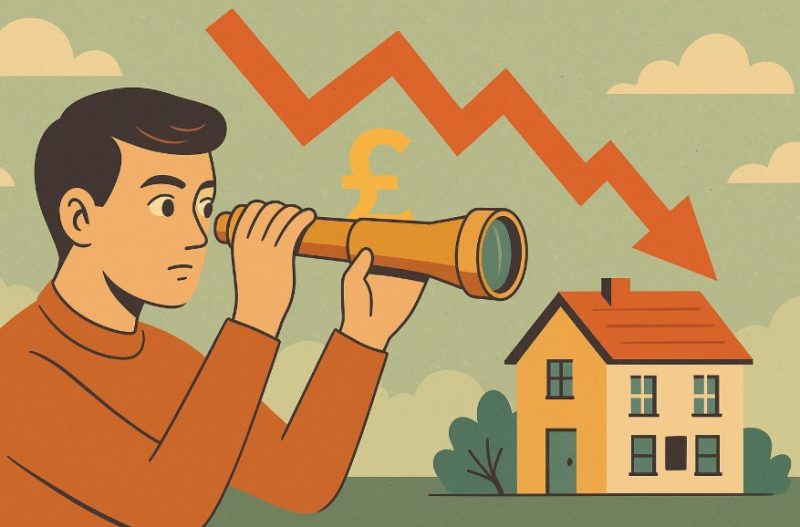
Mortgage rates in the UK have experienced subtle shifts in 2025 – neither surging nor plummeting, but hovering around new baselines.
As of June 2025, the Bank of England base rate stands at 4.25%, following a recent cut intended to control inflation. This move has led to modest declines in mortgage interest rates across several products.
Two-year and five-year fixed-rate mortgages have seen mild reductions compared to previous years, especially during the peak of the inflation surge in 2023.
While national average rates fluctuate between 5.75% and 6.72% depending on the product, the broader trend suggests a stabilisation phase.
Although today’s rates are slightly lower than earlier in the year, they’re still significantly higher than the ultra-low levels seen during the pandemic. Experts caution that this is a period of cautious optimism, not a sharp decline.
Why Are Mortgage Rates Fluctuating in 2025?
Several factors are contributing to the uneven movement in mortgage rates across the UK in 2025. These include both global and domestic economic drivers, policy shifts, and market sentiment.
- Bank of England’s Monetary Policy: The BoE’s interest rate decisions directly influence lender rates. The recent reduction to 4.25% aims to curb inflation, indirectly affecting borrowing costs.
- Inflation Rates: Although inflation is decreasing, it still remains above the ideal target, leading to cautious financial moves by central banks.
- Global Economic Uncertainty: Geopolitical tensions and volatile oil markets are influencing global yields, including the 10-year Treasury bond, which sets the tone for many mortgage products.
- Housing Market Demand: A moderate housing market recovery is pushing lenders to remain competitive, particularly on fixed-rate products.
In summary, mortgage rate fluctuations in 2025 are the result of a fragile balancing act between stabilising inflation and unpredictable global events. While there’s a downward pressure, sharp declines are unlikely in the short term.
How Are UK Homebuyers Affected by These Changes?

The volatility in mortgage rates has several direct and indirect impacts on UK homebuyers. As rates shift, so do affordability and loan product availability.
Key effects include:
- Reduced Affordability: Even with slight drops in rates, monthly repayments remain high for many borrowers, especially on larger loans.
- Variable-Rate Vulnerability: Homeowners with tracker or standard variable rates are more exposed to rising repayments when rates inch upward.
- Improved Remortgaging Opportunities: Those nearing the end of fixed terms may find slightly better deals now compared to early 2024.
- Slower Market Entry for First-Time Buyers: Elevated rates and high deposit demands remain barriers for new entrants.
- More Strategic Purchasing: Buyers are more cautious, often opting for fixed-rate security over potential savings on variable products.
Overall, the 2025 mortgage landscape is prompting homebuyers to adopt a more analytical, timing-based approach to purchasing or refinancing.
Are Mortgage Rates Going Down in 2025?
Yes, but only slightly, and inconsistently across products. While some fixed-rate mortgages have fallen since the start of the year, the reduction is moderate.
For instance, the average 30-year fixed mortgage now stands at 6.72%, slightly down from early 2025 figures but still far from pandemic-era lows.
The trend indicates a levelling out rather than a sharp decline. The recent drop in the Bank of England’s base rate did contribute to small improvements in fixed-rate deals, especially two-year terms. However, most experts agree that rates will likely remain steady, with minimal room for dramatic cuts this year.
Will the Bank of England Lower Interest Rates Further?
The Bank of England could reduce interest rates again in 2025 if inflation continues to fall and economic indicators remain stable. However, the cuts will likely be conservative.
Policymakers are wary of stimulating too much consumer borrowing while inflation remains a concern.
A further drop in the base rate could bring small additional relief to mortgage holders, particularly those with variable products. Still, the BoE is expected to tread carefully, balancing economic growth with inflation control.
How Have Mortgage Rates Moved So Far? – 2025 Timeline
Mortgage rates in 2025 have experienced a gentle decline, particularly in Q2. At the start of the year, rates remained elevated following the tightening in 2024.
However, following the Bank of England’s base rate cut to 4.25% in May, lenders began adjusting their offerings.
This timeline outlines the rate movements so far:
| Month | Average 2-Year Fixed | Average 5-Year Fixed | Base Rate (%) |
| January 2025 | 6.89% | 6.72% | 4.75% |
| February 2025 | 6.80% | 6.60% | 4.75% |
| March 2025 | 6.75% | 6.58% | 4.50% |
| April 2025 | 6.66% | 6.47% | 4.50% |
| May 2025 | 6.52% | 6.36% | 4.25% |
| June 2025 | 6.42% | 6.28% | 4.25% |
This data reflects a slow and cautious downward trend, favourable, but not game-changing.
What’s the Outlook for Fixed vs Variable Mortgage Rates in 2025?
Fixed-rate mortgages are currently more popular among UK borrowers, largely due to uncertainty in economic recovery.
Lenders are offering slightly improved deals for fixed terms, particularly two- and five-year products. Meanwhile, variable-rate products continue to carry risk tied to BoE policy shifts.
Here’s a comparison of the two in mid-2025:
| Product Type | Average Rate (%) | Ideal For | Risk Level |
| 2-Year Fixed | 6.42% | Short-term buyers | Low |
| 5-Year Fixed | 6.28% | Stability-seeking borrowers | Low |
| Standard Variable | 7.13% | Long-term flexible financing | Moderate |
| Tracker Mortgage | 6.90% | Market watchers | High |
Most homebuyers prefer fixed options for now, though variable rates may become attractive if base rates fall again later in the year.
Should You Lock in a Mortgage Now or Wait?
Deciding whether to lock in a mortgage now or wait depends largely on your personal circumstances and risk tolerance.
With rates currently lower than the recent highs but still above pre-pandemic levels, there’s an opportunity to secure a deal before potential increases. Financial markets remain unpredictable, and geopolitical or economic shifts could cause rates to rise again with little warning.
If you find a fixed-rate mortgage that suits your budget and long-term plans, many experts advise locking it in. This approach offers peace of mind and protection against future fluctuations.
While waiting might yield slightly better rates, it also exposes you to the risk of missing out on favourable terms. Timing the market is rarely perfect, and the potential gain from holding off may not outweigh the security of a known, manageable repayment plan.
Ultimately, focusing on what’s affordable and sustainable for your financial situation is more important than chasing the absolute lowest rate.
Conclusion
Mortgage rates in the UK are slowly declining in 2025, but homebuyers should remain realistic. While the BoE has made some cuts, further reductions are likely to be gradual.
The housing market remains sensitive to inflation, political events, and global instability. Fixed-rate mortgages currently offer the best security, especially for those planning to buy soon.
Ultimately, whether you’re remortgaging, buying your first home, or simply exploring your options, staying informed and acting based on personal circumstances rather than speculation is the wisest approach.
FAQs About Mortgage Rates
How do Bank of England decisions impact mortgage rates?
The BoE base rate directly affects mortgage costs, when the rate goes down, lenders often lower their mortgage rates in response.
Is now a good time to remortgage in the UK?
Yes, especially if you’re on a variable rate or nearing the end of a fixed term, current deals are slightly better than earlier this year.
Will inflation continue to affect UK mortgage rates in 2025?
Yes, inflation plays a major role in interest rate decisions, so it will continue to impact mortgage pricing throughout 2025.
Are fixed-rate mortgages safer in 2025?
Fixed-rate mortgages offer more payment stability, making them safer for buyers looking to avoid fluctuations in borrowing costs.
What credit score is needed for the best rates?
Generally, a score above 700 improves your chances, but lenders also consider income, debt, and deposit amount when pricing loans.
Can first-time buyers benefit from current market trends?
Yes, slightly lower rates and stable home prices create better entry conditions, though saving for a deposit remains a challenge.
How do UK mortgage rates compare globally in 2025?
UK mortgage rates are moderate compared to global standards, higher than EU averages but lower than US rates in mid-2025.