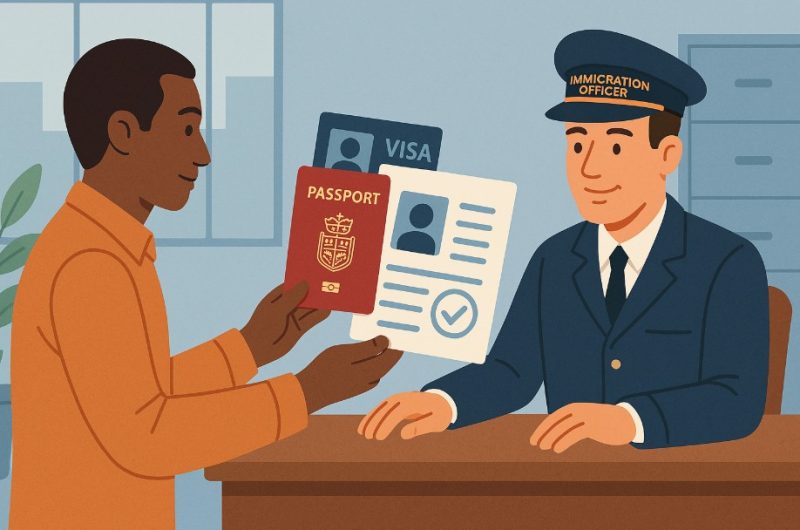
Proving your right to work in the UK is a legal requirement for anyone seeking employment. Whether you’re a British citizen, an EU national, or someone with a visa, it is essential to show that you’re legally permitted to work.
The UK government enforces strict guidelines for both individuals and employers, and failing to meet these can lead to serious penalties.
With changing immigration rules post-Brexit and the rise of digital checks, understanding the process is now more crucial than ever.
In this complete guide, you’ll learn everything you need to know about proving your right to work, including documents, share codes, digital checks, and employer responsibilities.
What Does ‘Right to Work in the UK’ Actually Mean?

The “right to work in the UK” refers to a person’s legal eligibility to be employed within the country. It is a status confirmed through various documents that prove a person is a British citizen, holds settled or pre-settled status, or has a valid visa.
Employers are legally obligated to verify this before offering a position. This process helps ensure that immigration laws are followed and that only those legally permitted are employed.
The government uses this check to prevent illegal working and exploitation in the labour market while protecting jobs for those lawfully entitled to work.
Why Is It Required?
Every employer in the UK is required by law to check a candidate’s right to work before hiring.
- It prevents illegal working and protects the integrity of the labour market.
- It ensures compliance with the Immigration, Asylum and Nationality Act 2006.
- Employers can avoid heavy fines and reputational damage.
- It helps safeguard workers from exploitation.
Failing to conduct proper checks can result in a civil penalty of up to £20,000 per illegal worker.
Therefore, the right to work check is essential to maintain legal employment standards and uphold fair recruitment practices across the UK.
Who Needs to Prove Their Right to Work in the UK?
Every individual seeking employment in the UK must prove their legal right to work, regardless of their nationality or employment type. Employers must be certain that the person has the correct immigration status before hiring.
What are the Requirements?
- British citizens
- Irish citizens
- EU, EEA, or Swiss citizens who arrived before 31 December 2020
- Those with settled or pre-settled status under the EU Settlement Scheme
- Individuals with valid visas such as Skilled Worker, Graduate, or Student visas
- Asylum seekers or those under Humanitarian Protection with permission to work
- Dependants of visa holders with the right to work
- Commonwealth citizens with indefinite leave to remain
- Those on limited leave who must undergo rechecks
Even those born in the UK might be asked to provide proof if their citizenship isn’t immediately verifiable. It is also necessary for freelance workers, temporary staff, and volunteers in regulated industries.
Essentially, anyone who wishes to be paid for work in the UK must present approved documentation or use the online checking service to confirm their right to work.
How Does the Digital Right to Work Check System Work?

The UK government has implemented a digital right to work check system to make the verification process more efficient and secure.
This online service is available for individuals with immigration status that can be verified digitally, including those with biometric residence cards, settled or pre-settled status, or visas.
The process starts with the individual generating a share code via the GOV.UK portal. This code is then given to the employer, who uses it along with the person’s date of birth to check their status online.
The system will then show the employer if the individual has the right to work and whether any restrictions apply.
This online check provides a real-time snapshot of an individual’s eligibility and removes the need for employers to handle and copy sensitive physical documents.
However, individuals whose status cannot be verified online must still use manual document checks, following the Home Office guidance for acceptable documents.
What Is a Share Code and How Do You Get One?
A share code is a unique nine-character code issued by the UK government that allows individuals to digitally share their right to work status with employers.
This code is used to access your details via the Home Office’s online right to work service.
Share codes are primarily used by individuals with biometric residence permits, biometric residence cards or status under the EU Settlement Scheme.
To Get a Share Code
- Visit the GOV.UK “Prove your right to work” service
- Enter your details including date of birth and identity document
- Choose the reason for the code (e.g., showing an employer)
- Generate the code, which remains valid for 90 days
The share code is then given to your employer, who uses it along with your date of birth to verify your immigration status digitally.
How to Prove Right to Work in UK?
Proving your right to work in the UK is essential before starting employment. The process varies depending on your nationality and immigration status. Here’s a breakdown of how you can prove your right to work:
If You’re a British or Irish Citizen
- Passport: You can use a British or Irish passport (current or expired) to prove your right to work.
- Alternative Documents: If you don’t have a passport, use one of the following:
- UK or Irish birth or adoption certificate
- Certificate of registration or naturalisation as a British citizen
- Official letter from HM Revenue and Customs (HMRC), Department for Work and Pensions (DWP), or the Social Security Agency in Northern Ireland showing your National Insurance number.
If You’re Not a British or Irish Citizen
- Share Code: If you’re not a British or Irish citizen, you can generate a share code online through the UK Visas and Immigration (UKVI) system. This code helps your employer verify:
- The types of jobs you can do in the UK
- The duration of your work rights
- Immigration Documents: You can also use eligible immigration documents, such as:
- A biometric residence permit (BRP)
- A UKVI account, or
- A passport with a Home Office ‘endorsement’ (if applicable).
If You Can’t Prove Your Right to Work
If you’re unable to prove your right to work through these means, your employer can check your eligibility using the Employer Checking Service or seek advice from the Home Office.
This process ensures employers comply with UK immigration laws, avoiding penalties for hiring individuals without the proper right to work documentation.
What Documents Are Acceptable to Prove Right to Work?

To prove your right to work in the UK, the Home Office has issued two lists: List A and List B. List A contains documents for those with permanent work rights, while List B covers individuals with temporary permissions.
Accepted Documents Include
- Current or expired British passport: A standard passport from the UK is proof of your right to work indefinitely.
- Birth certificate and National Insurance number: A UK birth certificate with a National Insurance number verifies your identity and right to work.
- Biometric Residence Permit (BRP): This is issued to foreign nationals to confirm their immigration status and work rights.
- Certificate of naturalisation/registration: Proof that you’ve become a British citizen.
- Valid visa: A work visa granted by the Home Office allows you to work for a specified period.
- Immigration status confirmation: An official document from the Home Office confirming your immigration status.
For those who cannot provide physical documents, such as EU nationals or BRP holders, a share code can be generated online for verification.
All documents must be valid, clear, and submitted before the employment start date, with employers required by law to retain copies for auditing purposes.
How Employers Verify Right to Work Status and Avoid Penalties?
Employers are legally obligated to check and verify an individual’s right to work before employment begins. Failure to do so can lead to hefty fines or legal consequences.
What Are the Steps to Ensure Compliance?
- Obtain original documents or use the online service: Employers should either see the physical documents or request a share code to verify online.
- Confirm document authenticity: It’s essential to ensure that the documents are genuine, not altered, and belong to the individual seeking employment.
- Verify matching details: The photograph and date of birth on the documents should match the person presenting them.
- Check expiry dates: Employers must ensure that the right to work has not expired by reviewing visa or permit dates.
- Retain copies or online results: A statutory excuse against penalties requires that employers keep copies or online verification results for audit purposes.
Employers can face penalties up to £20,000 per illegal worker if they fail to carry out the proper checks. Using the Home Office online system provides a statutory excuse and protects employers from penalties.
How Brexit Has Changed the Right to Work for EU and EEA Citizens?
Following the UK’s departure from the European Union, the right to work for EU and EEA citizens has undergone major changes.
Before Brexit, EU citizens could live and work in the UK freely. However, from 1 January 2021, this freedom ended, and new rules came into effect.
EU citizens who were living in the UK before 31 December 2020 may have applied to the EU Settlement Scheme.
Those granted settled or pre-settled status can prove their right to work using a share code from the UK government’s online system.
For EU and EEA citizens arriving after 1 January 2021, a valid visa under the UK’s points-based immigration system is now required. EU passports or ID cards alone are no longer accepted as proof unless accompanied by settled status.
These changes align the UK’s immigration process for EU citizens with that of other non-UK nationals, ensuring equal treatment for all.
What If You’re Waiting on a Visa Decision or Have Temporary Status?

If you’re waiting for a visa decision or have temporary status, you may still be able to work legally under certain conditions.
In these cases, the employer must verify your eligibility through the Home Office Employer Checking Service.
Positive Verification Notice (PVN)
If you’re waiting for a visa decision or have temporary status, the employer must request a PVN from the Home Office.
This document confirms your eligibility to work and can be used as temporary proof until a final decision is made.
EU Settlement Scheme applicants
Those who have applied under the EU Settlement Scheme can continue to work while waiting for a decision, provided the employer receives a positive response. The PVN is valid for up to six months, and the employer must follow up if needed.
Maintaining records of your application and communicating with your employer about your status ensures that the process runs smoothly and helps avoid unnecessary delays.
When and How Should Right to Work Be Rechecked?
In cases where an employee has a time-limited right to work, the employer must perform a recheck to ensure that the individual’s work rights are still valid. Rechecks are crucial for maintaining compliance with immigration regulations.
How and When This Should Be Done
- For time-limited rights: Employers should note the expiry date of the employee’s visa, work permit, or other permissions and schedule a follow-up check before it expires.
- No recheck needed for indefinite leave to remain or British citizens: Employees with indefinite leave to remain or British citizenship do not require further checks once their right to work is established.
- How to recheck: Employers can use the online checking system again or ask for updated physical documents. A timely recheck helps employers ensure compliance with immigration laws and avoid penalties.
- Record the recheck: Employers must keep a dated record of all rechecks to provide evidence of compliance in case of an audit.
For employees with temporary work rights, it is essential that rechecks are conducted on time to avoid any legal issues regarding their right to work status.
What Happens If You Can’t Prove Your Right to Work?
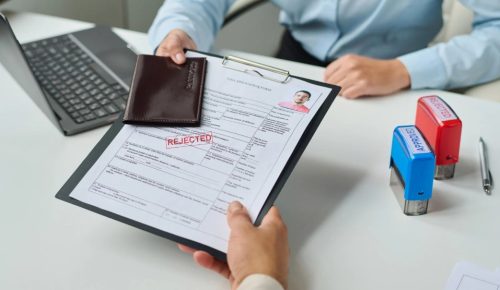
If an individual fails to prove their right to work, there can be significant consequences for both the employee and the employer.
The Potential Outcomes
- Withdrawal of the job offer or termination: If you cannot prove your right to work before or during employment, the employer may withdraw your job offer or terminate your employment.
- Delays or loss of job opportunities: Failing to prove your eligibility could result in a delay before you can start work, or you may lose the opportunity entirely.
- Employer penalties: Employers who hire individuals without proper right to work documentation may face fines or legal action. Penalties can be severe, with fines up to £20,000 per illegal worker.
In cases where the application is still being processed, a Positive Verification Notice (PVN) can be used to continue working temporarily.
It’s essential to keep your documents up to date, respond promptly to requests from your employer, and check your status using the GOV.UK tool before applying for jobs to ensure no issues arise.
Conclusion
Understanding how to prove your right to work in the UK is essential whether you are a citizen, visa holder, or EU national.
The process has become more structured post-Brexit, with an increased reliance on digital checks and share codes.
Ensuring you have the correct documents, staying informed on your immigration status, and communicating with your employer are key to a smooth verification process.
By following the correct procedures, you protect yourself and your employer from legal issues and make your transition into the workforce much easier. Always refer to official sources like GOV.UK for the most up-to-date guidance.
FAQs About How to Prove Right to Work in UK
Can someone prove their right to work without a passport?
Yes, individuals can use alternative documents such as a birth certificate with a National Insurance number or a biometric residence permit.
Are employers required to store proof documents?
Yes, employers must retain copies of right to work documents or digital check results throughout the employee’s time at the company.
What’s the difference between a manual and digital right to work check?
Manual checks involve physical documents, while digital checks use share codes and online verification through the Home Office system.
How long is a share code valid for?
A share code remains valid for 90 days from the date it is issued and can be reused within that time frame.
Can students work full-time during holidays?
Yes, students on a Student Visa may work full-time during official university vacation periods but must follow their visa conditions.
What if my document expires after I start working?
Employers must perform a follow-up check before your current visa or permit expires to confirm continued right to work.
Can employers get fined for not checking documents properly?
Yes, employers can be fined up to £20,000 per illegal worker if they fail to conduct a proper right to work check.