

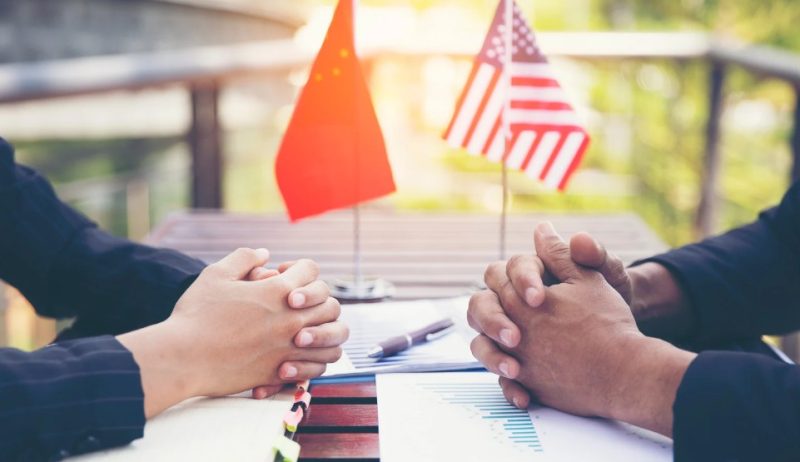
The recent move by China to add 12 American companies to an export control list has sent ripples across global defence and technology sectors.
In a direct response to the heightened tariff tensions initiated by former President Donald Trump, this strategic decision by Beijing is seen as a significant escalation in the ongoing trade and geopolitical friction between the world’s two largest economies.
While the companies in question may have minimal direct commercial involvement with China, the broader implications for global supply chains, bilateral relations, and international business regulations are immense.
In this blog, we’ll unpack the reasons behind this action, the affected firms, and what it means for future business engagements between the United States and China.
Why Did China Add 12 American Companies to an Export Control List?

China’s decision is rooted in national security concerns and retaliatory trade strategies. The Ministry of Commerce (MOFCOM) cited the need to protect sovereignty and development interests as the primary reason.
The move came shortly after the U.S. imposed a sharp 50% tariff increase on Chinese imports, on top of an earlier 34% hike.
The affected firms were identified as entities engaging in activities that threaten China’s security, particularly those involved in arms sales or military-related operations with Taiwan.
According to the resources, these companies were involved in exporting or collaborating on technologies with potential dual-use capabilities, those that can serve both civilian and military purposes.
This act isn’t just punitive, it’s strategic. By restricting high-tech exports to these firms, China aims to pressure the U.S. defence and tech ecosystem, while also making a broader statement against military interference in what it deems its sovereign matters, such as Taiwan.
What Are the Names of the 12 American Companies on China’s Export Control List?
Here is the complete list of the 12 U.S. companies added to China’s export control list, effective from April 10:
- American Photonics
- Novotech, Inc.
- Echodyne
- Marvin Engineering Company, Inc.
- Exovera
- Teledyne Brown Engineering, Inc.
- BRINC Drones, Inc.
- SYNEXXUS, Inc.
- Firestorm Labs, Inc.
- Kratos Unmanned Aerial Systems, Inc.
- Domo Tactical Communications
- Insitu, Inc.
These companies specialize in sectors like aerospace, artificial intelligence, tactical communications, unmanned aerial systems, and defence logistics.
By targeting these firms, China is not only responding to tariff escalations but also sending a message that entities involved in sensitive tech or military collaborations will face consequences if they are perceived as threats to national sovereignty.
How Do These Export Controls Work and What Do They Involve?

China’s export control laws allow the Ministry of Commerce to limit or ban exports of “dual-use” items, products and technologies with both civilian and military applications, to designated companies.
The inclusion of 12 American companies to an export control list implies the following:
- Prohibition on exporting Chinese-origin goods and technologies.
- Immediate halt to any existing contracts or deliveries involving controlled items.
- Requirement for special approval if any exceptions are to be made.
- Potential supply chain disruptions, especially for companies relying on Chinese components or technology.
This mechanism serves as a mirror to similar U.S. policies, such as the Entity List maintained by the U.S. Department of Commerce, used to limit Chinese companies like Huawei and DJI from accessing U.S.-made tech.
Which Other 6 Firms Were Added to the “Unreliable Entities List” and Why?
China also updated its “Unreliable Entities List” with six new American firms:
- Shield AI, Inc.
- Sierra Nevada Corporation
- Cyberlux Corporation
- Edge Autonomy Operations LLC
- Group W
- Hudson Technologies Co
These companies were accused of:
- Participating in arms sales to Taiwan.
- Engaging in military cooperation or tech transfers to Taiwan.
- Disregarding Chinese warnings about violating sovereignty.
Implications of being on this list include:
- Ban on imports and exports with Chinese firms.
- Prohibition on new investments in China.
- Revocation of work and travel permits for executives and staff.
- Legal liabilities under Chinese jurisdiction.
By penalizing such firms, Beijing underscores its stance on the Taiwan issue, showing that geopolitical alignment with Taiwan can carry substantial business penalties.
What Could Be the Business Impacts of These Restrictions?
While some of the companies listed have limited exposure in China, the broader business impacts can be significant.
- Disrupted Supply Chains: Components such as batteries or microchips may be sourced from Chinese suppliers. Restrictions could delay production.
- Loss of Growth Opportunities: China’s vast market for tech and innovation is now inaccessible for these companies.
- Reputational Risk: Being flagged as a national security threat by China can deter future global partnerships.
- Increased Operational Costs: Companies may be forced to find alternative suppliers in more expensive markets.
Notable Example:
Skydio, a U.S. drone maker, faced immediate battery supply issues when previously sanctioned, showing how quickly these restrictions can affect operations.
How Is This Move Linked to Trump’s 50% Tariff on Chinese Imports?
The announcement came just after former U.S. President Donald Trump imposed a 50% additional tariff on Chinese goods, increasing total duties on some products to 84%.
China’s actions are seen as retaliation:
- Punishing firms with links to the U.S. government.
- Showing resilience in the face of economic aggression.
- Signalling it won’t back down in the trade war.
Although President Trump is no longer in office, these tariff frameworks are remnants of his administration’s policies.
China’s retaliatory stance aims to signal strength both to the U.S. government and the global business community.
What Has China Said About Future Foreign Investments?
Despite these sanctions, China’s Commerce Ministry has been careful to reassure the international community. The official statement clarified:
“Foreign entities that are honest and law-abiding have nothing to worry about.”
China’s message to global investors:
- These actions are selective, not broad-based sanctions.
- Law-abiding foreign businesses are still welcome.
- China is committed to a “stable, fair, and predictable” business environment.
By segmenting its response, China hopes to avoid spooking multinational corporations while asserting its right to retaliate against perceived threats.
Conclusion
The decision to add 12 American companies to an export control list marks a critical moment in the intensifying U.S.-China conflict.
While these measures are retaliatory in nature, they carry real consequences for global tech, defence, and aviation sectors.
China’s parallel message to law-abiding businesses shows it still values foreign investment, but it is drawing a firm line on issues tied to sovereignty and security.
As trade wars evolve into tech wars, staying informed and compliant with international regulations becomes more essential than ever for global enterprises.
FAQs About 12 American Companies to an Export Control List
What is China’s export control list?
It’s a government-maintained list restricting exports of sensitive items to entities deemed risky. China added 12 American companies to this list recently.
Why were these 12 U.S. companies targeted?
They were linked to activities involving military tech or arms sales to Taiwan. China cited threats to national sovereignty and security.
What is the unreliable entity list?
It includes foreign firms that harm China’s interests or violate its regulations. Six U.S. firms were added along with the 12 American companies to an export control list.
Can these companies still do business in China?
No, they face bans on trade, investment, and partnerships with Chinese entities. The restrictions apply immediately and indefinitely.
When did the restrictions take effect?
The restrictions took effect from 12:01 a.m. on April 10. All ongoing export activities must stop immediately.
Are these companies major players in China?
Most have minimal business in China, but their supply chains might rely on Chinese tech. This could disrupt operations.
Will more companies be added in the future?
Yes, China may expand the list if U.S. entities continue military ties with Taiwan. The 12 American companies to an export control list could be just the start.