
You’ve worked hard to save. You’ve made sure your money’s safe in a bank account. But as time goes by, you may notice something strange: your balance doesn’t seem to grow much, even though you’re earning interest. In fact, you might even be losing money without realising it.
Let’s break down why this is happening and what you can do about it.
Why Your Savings Account Is Losing the Race Against Inflation and Investments?
The Stealth Tax of Inflation

Inflation is often referred to as a “stealth tax” because it quietly erodes your money’s value. Even if your bank offers an interest rate of 4%, if inflation is running at 3-4%, you’re not getting ahead.
Take £10,000 in an account offering 3% interest. At the end of the year, you might think you’ve earned £300. But if inflation is at 4%, your purchasing power has actually decreased by £100.
This means the £10,000 is worth less in real terms, and the interest you’re earning doesn’t even cover the extra cost of living. While inflation is easing slightly, it’s still a concern for many Brits in 2026, especially with the Bank of England’s base rate around 3.75%. And while some banks adjust their savings rates after interest rate rises, they often delay passing on those changes.
The Psychology of Loss Aversion
You may want to stay with cash because you fear the volatility of the stock market. It’s natural to want to protect your initial capital, but the idea of “return of capital” (keeping your money safe) often prevents people from considering “return on capital” (growing your money).
While the Financial Services Compensation Scheme (FSCS) protects your depositsup to £85,000, it doesn’t protect the real value of your money over time.
Over the long term, the FTSE 100 or S&P 500 have historically outperformed even the best savings accounts. For instance, if you invested £10,000 in the FTSE 100 a decade ago, you’d likely have seen a much higher return than what you’d have earned from a high-interest savings account. The opportunity cost of avoiding investments is the potential wealth you’re missing out on.
Bridging the Gap: Investments
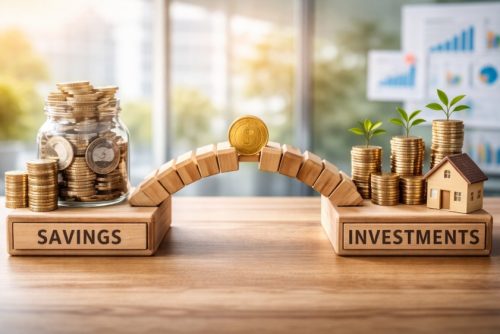
So, what’s the solution? Many people shy away from investing because they don’t feel confident. This is where investment training can help. You don’t have to be a City professional, platforms and courses now make it easy for anyone to get started.
You couldlearn the basics of stocks or crypto, or understand how to balance bonds, equities and property (what’s known as asset allocation) so you’re not putting all your eggs in one basket.
You’ll also understand risk management, which means you can choose investments that match your “sleep at night” factor. With the right training, investing becomes less about guesswork and more about following a disciplined, data-driven strategy. It’s about making your money work harder for you.
The Conclusion: Don’t Just Save, Grow
The truth is, savings accounts aren’t usually the best way to grow your wealth, especially in the current economic climate. Instead of just looking for slightly better interest rates, consider allocating part of your wealth to investments that can actually outpace inflation and provide long-term growth.
Investment training is an excellent place to start, empowering you with the knowledge to confidently make your money work for you.