

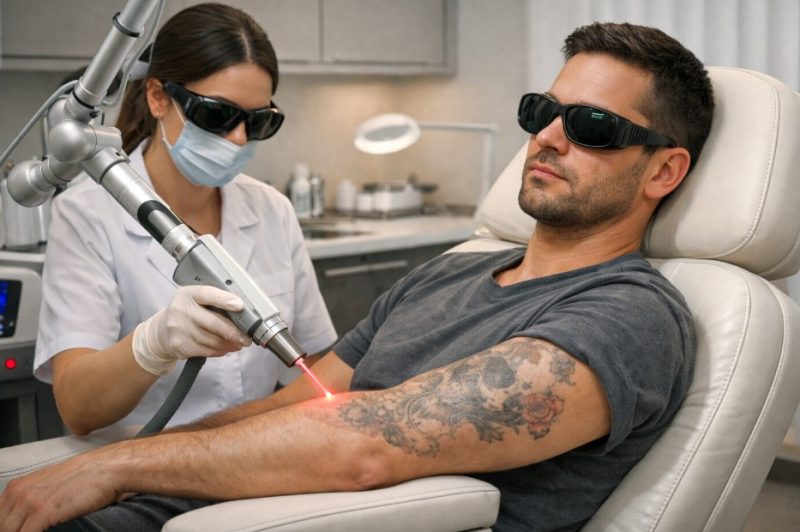
Tattoos that once felt meaningful can lose their appeal over time. Career changes, relationship endings, or evolving personal preferences lead many people each year to consider removal.
What was once intended as a permanent expression can later feel out of step with present identity, and modern medical technology now offers structured options for change.
The process uses concentrated light energy to break down ink particles beneath the skin, so the body can gradually process and clear the pigment.
Several sessions are usually required, with darker inks responding more effectively than lighter shades. Sensations vary between individuals, though many describe the experience as brief and manageable. Recovery periods are typically short, enabling people to continue daily routines between appointments.
Demand for tattoo removal in London has increased steadily, reflecting wider shifts in how body art is viewed. Younger professionals entering formal workplaces, parents reassessing earlier life choices, and individuals seeking a clearer sense of personal alignment all contribute to this pattern.
Decisions to remove tattoos rarely happen suddenly. Most follow extended reflection on cost, timing, and realistic expectations about visible outcomes.
Why Are People Reversing Past Body Art Choices Today?
Shifting Attitudes Towards Permanent Body Art in the UK

Many adults in the UK report some level of regret about at least one tattoo. Rising interest in laser tattoo removal suggests a broader willingness to revisit past decisions linked to appearance and identity. Changing personal priorities often influence how body art is perceived at different life stages.
Individuals considering specialist laser tattoo removal in London often do so after recognising that visible tattoos may affect professional confidence and long-term career presentation.
Workplace culture continues to shape these attitudes. Certain sectors, including finance, law, and healthcare, still expect a conservative appearance in client-facing environments.
Tattoos placed on highly visible areas such as hands or the neck may create professional challenges. In these situations, removal becomes a practical adjustment linked to career progression rather than a purely aesthetic choice.
Online visibility has also influenced decision-making. Images shared across professional networks increase awareness of personal presentation. A design that once felt private can become more exposed through digital interaction, prompting reconsideration of tattoos that no longer reflect current goals or values.
Common Motivations for Seeking Tattoo Removal
Motivations for tattoo removal vary, yet recurring themes are evident. Relationship changes frequently prompt removal requests, particularly when tattoos include names or symbols connected to past partners. For many people, the process represents a step forward rather than an attempt to erase personal history.
Wider awareness of tattoo trend shifts has also shaped how individuals reassess earlier design choices, especially as social expectations and personal priorities continue to evolve.
Concerns about appearance also play a role. Tattoos that have faded unevenly, blurred over time, or were poorly executed can lead to lasting dissatisfaction. Some individuals choose partial fading instead of complete removal, particularly when preparing for a cover-up design that better reflects their current identity.
Fewer sessions are often required in these cases, which can make the overall process more manageable. Major life transitions, including parenthood or career advancement, also influence decisions, as people reassess earlier body art choices in light of changing responsibilities and priorities.
Professional Image Considerations
Appearance standards remain relevant in several UK industries. Legal services, financial organisations, and healthcare settings often expect staff to present a neutral visual image. Client-facing professionals may feel particular pressure to align with these expectations, especially when representing organisations in formal meetings or public-facing roles.
In practice, visible tattoos on areas such as the hands, neck, or forearms can influence first impressions during recruitment processes or career progression discussions. Some individuals therefore view removal as a practical adjustment linked to long-term professional positioning rather than a purely personal preference. This perspective becomes more common as responsibilities increase and workplace expectations become clearer.
As professional roles expand and public visibility grows, aligning external presentation with recognised workplace appearance standards can feel like a strategic decision that supports confidence, credibility, and long-term professional positioning.
In competitive environments where first impressions influence progression opportunities, visible body art may shape how individuals are perceived during recruitment or client-facing interactions.
How Laser Tattoo Removal Technology Works?
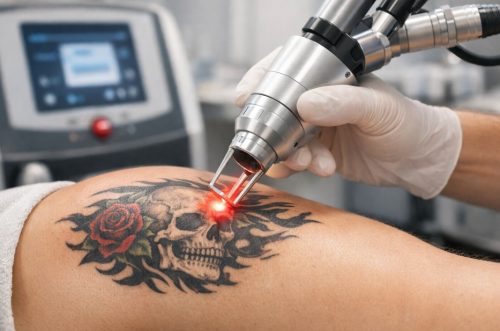
Modern clinics typically use Q-switched or picosecond laser systems to target ink beneath the skin. These technologies deliver focused light energy that fragments pigment particles, supporting gradual pigment clearance through natural immune responses, a process examined in recent clinical research on tattoo ink particles.
Different wavelengths are required to address specific pigments. Dark inks absorb a broader spectrum of light, making them more responsive to treatment. Lighter shades such as yellow or green may require additional sessions or more specialised equipment to achieve satisfactory fading.
Laser procedures are generally considered safer when delivered by trained practitioners in regulated environments. Alternative removal approaches, including dermabrasion or chemical techniques, can carry higher risks of scarring or uneven results.
Controlled clinical settings provide greater predictability across different skin tones and tattoo styles. Treatment timelines depend on factors such as tattoo depth, colour density, and individual skin characteristics.
Practical Considerations for UK Residents
Most treatment plans involve multiple appointments spaced several weeks apart. This interval allows the skin to recover and supports the body’s natural removal of fragmented ink. The overall process may extend over many months, depending on tattoo size and response to treatment.
Costs vary widely across London clinics. Smaller designs may require limited sessions, while larger or more complex tattoos involve higher long-term expenditure. Partial fading for cover-up purposes often sits at the lower end of pricing structures. Aftercare remains important throughout the process.
Protecting treated areas from sun exposure remains essential, as temporary skin light sensitivity after treatment can influence comfort and healing outcomes.
Cost and Time Investment
Financial planning forms an important part of tattoo removal decisions. Smaller tattoos may respond within a handful of sessions, whereas extensive multi-coloured designs can require prolonged treatment schedules.
Consultation with a qualified practitioner helps clarify realistic timelines and expected visual improvement. Clinics operating within the UK must follow regulatory standards set by oversight bodies, providing reassurance regarding practitioner training and treatment safety.
Laser tattoo removal now provides a realistic pathway for people who feel their past body art no longer reflects who they are today. With modern clinical standards and gradual treatment approaches, individuals can make considered decisions about timing, cost, and visible outcomes.
For many, adjusting external appearance to match evolving personal or professional priorities brings a renewed sense of confidence and long-term ease.