
Understanding when and why energy prices change in the UK is crucial for households managing their monthly budgets. With the cost of living remaining a pressing concern, tracking Ofgem’s energy price cap updates can help residents plan better.
The cap, which limits how much energy suppliers can charge per unit of gas and electricity, changes four times a year. This structure ensures that prices reflect the latest wholesale rates and market conditions.
As of July 2025, a 7% decrease has brought the average bill to £1,720 annually for typical users. But what does this mean for the average home? Let’s explore further.
How Often Do Energy Prices Change and Who Decides It?
Energy prices in the UK are reviewed and adjusted every three months under the guidance of Ofgem, the national energy regulator.
The changes are implemented in January, April, July, and October to ensure that energy prices remain aligned with wholesale market rates and operational costs incurred by suppliers.
Ofgem introduced the price cap mechanism in January 2019 to protect customers on standard variable tariffs from paying unfairly high prices.
This system helps avoid sharp fluctuations in energy bills while allowing suppliers to cover essential costs such as network maintenance, customer service and VAT.
The cap applies only to standard and default tariffs, not to fixed-term deals. The rates include both a unit cost for the energy used and a daily standing charge.
Ofgem also retains the right to make emergency adjustments during exceptional market events. These quarterly reviews are critical for balancing affordability with sustainability and operational feasibility in the UK energy sector.
When Do Energy Prices Change in the UK?
Energy prices in the UK are updated every three months, specifically on the first of January, April, July, and October. These quarterly changes coincide with Ofgem’s review periods where they analyse wholesale costs, network charges, supplier costs and market conditions.
Each new price cap comes into effect at the start of the new quarter, directly impacting how much households pay for electricity and gas.
For example, the current cap from 1 July to 30 September 2025 was based on wholesale prices assessed between 18 February and 16 May 2025. The following cap, for October to December 2025, will be published by 27 August 2025.
This timeline ensures suppliers and consumers can anticipate changes and adjust accordingly. Whether prices rise or fall depends largely on the wholesale market, which is influenced by global events, seasonal demand, and policy shifts.
Monitoring these specific dates helps consumers make informed decisions about switching tariffs or suppliers.
What Is the Current Energy Price Cap (July to September 2025)?
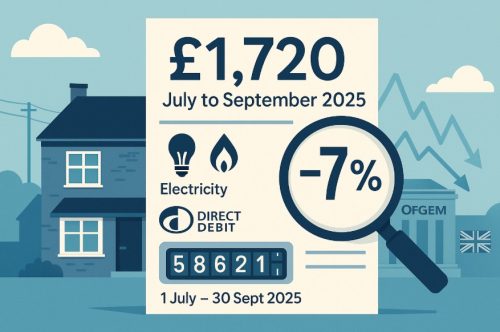
The energy price cap from 1 July to 30 September 2025 has been set at £1,720 per year for a typical household that uses gas and electricity and pays via Direct Debit.
This represents a 7% decrease from the previous quarter’s cap of £1,849. Though lower than the spring cap, it’s still 10% higher than the same period in 2024 when the cap was £1,568.
The cap includes two components, unit rates and standing charges, which vary by payment method and region. These limits determine how much suppliers can charge for standard variable tariffs.
Energy Price Cap – July to September 2025
| Payment Method | Gas (p/kWh) | Gas Standing Charge (p/day) | Electricity (p/kWh) | Electricity Standing Charge (p/day) |
| Direct Debit | 6.33 | 29.82 | 25.73 | 51.37 |
| Prepayment | 6.11 | 29.82 | 24.92 | 51.37 |
| On Bill Receipt | 6.68 | 37.70 | 27.18 | 59.26 |
These rates are averages and include VAT, but exact charges may differ slightly depending on your region.
How Do Standing Charges and Unit Rates Compare?
The standing charge and unit rate are two main components of your energy bill under the price cap. The unit rate reflects the cost per kilowatt hour (kWh) of gas or electricity consumed, while the standing charge is a fixed daily cost for maintaining your connection to the energy network.
For July to September 2025, the average standing charge for electricity on Direct Debit is 51.37p per day, and for gas, it’s 29.82p per day.
These charges can vary based on your payment method. For instance, those paying by receipt of bill face higher standing charges compared to Direct Debit customers.
Standing Charges and Unit Rates (Direct Debit, Jul–Sep 2025)
| Fuel Type | Unit Rate (p/kWh) | Standing Charge (p/day) |
| Gas | 6.33 | 29.82 |
| Electricity | 25.73 | 51.37 |
This structure means even if you use little or no energy, you’ll still pay a daily amount. These charges are currently under review by Ofgem due to growing public concern over their fairness, particularly for low-income households.
What Does This Mean for the Average UK Household?
For a typical household in the UK using 11,500 kWh of gas and 2,700 kWh of electricity per year and paying by Direct Debit, the current price cap means:
- Annual bill: £1,720
- Monthly average: Around £143
- Monthly reduction vs last quarter: Approx. £11
- Comparison with July 2024: £152 higher annually
- Who it applies to: Default and standard variable tariff users
- Does not apply to: Fixed-rate tariffs
This means that while energy prices have dropped this quarter, they remain significantly higher than they were a year ago. Customers still need to monitor usage and review tariff options regularly.
Why Have Energy Prices Fallen in Summer 2025?
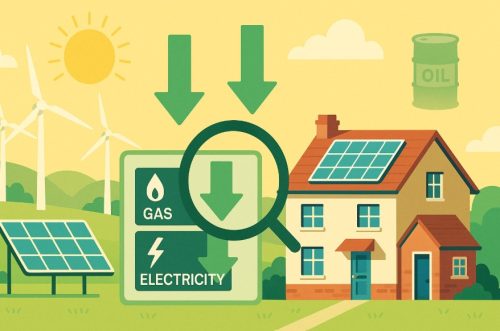
The energy price cap for the July to September 2025 period has fallen by 7% compared to the previous quarter. Several key reasons contributed to this drop, most notably a decline in global wholesale energy prices and reduced business costs for suppliers.
These changes have had a significant impact on the per-unit price of gas and electricity, leading to a lower overall cap.
Lower Wholesale Prices
Energy suppliers purchase gas and electricity in advance on the wholesale market. Over the recent months, global energy costs have dipped due to milder weather conditions, reduced demand, and more stable geopolitical conditions. This decrease directly influenced Ofgem’s calculations.
Reduced Supplier Costs
Apart from wholesale prices, supplier operating costs have also come down. With improved efficiencies, lower debt recovery needs, and more predictable energy usage across the UK, energy suppliers have been able to pass on savings to consumers.
Standing Charges Still in Focus
Despite the drop in unit prices, many households remain concerned about standing charges, which remain relatively high. Ofgem is exploring ways to reform these charges to make them fairer, particularly for low-usage households.
What Are the Future Energy Price Cap Predictions for 2025 and 2026?
Although prices fell for July 2025, forecasts suggest that this relief may be temporary. Energy experts including British Gas, EDF, and Octopus Energy have released estimates for upcoming caps based on wholesale trends, operational data, and geopolitical forecasts.
Ofgem’s next official update will be published by 27 August 2025, and will cover the 1 October to 31 December 2025 period. Projections vary but currently suggest a slight increase or stability through early 2026, followed by another potential rise by April.
Future Price Cap Predictions
| Period | Forecasted Price Cap | Confidence Level |
| Jul–Sep 2025 (current) | £1,720 | Confirmed |
| Oct–Dec 2025 | £1,730 | Low |
| Jan–Mar 2026 | £1,725 | Very Low |
| Apr–Jun 2026 | £1,785 | Very Low |
| Jul–Sep 2026 | £1,755 | Very Low |
Consumers should watch market updates closely and consider fixed tariffs if price stability is important, especially before potential increases in 2026.
How Is the Energy Price Cap Calculated by Ofgem?
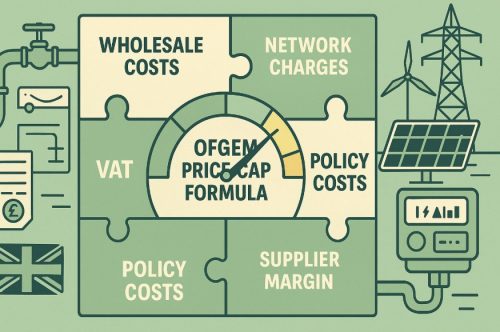
Ofgem uses a detailed methodology to calculate the energy price cap, aiming to reflect the true costs energy suppliers face in providing gas and electricity.
The cap includes both the unit rate (per kWh) and standing charges (daily flat rates). The primary influence on the cap is wholesale energy prices, which account for about 43% of a typical bill.
Other cost components include:
- Network costs (22%): Infrastructure maintenance and upgrades
- Operating costs (15%): Billing, metering, and customer services
- Policy costs (12%): Government environmental and social initiatives
- VAT (5%): Applied to all rates
- Earnings margin (3%): Supplier profit margin
In some cases, Ofgem includes an adjustment allowance for extraordinary expenses, such as debt recovery.
These calculations are reviewed quarterly to ensure the cap reflects current market conditions without overburdening consumers.
How Do Tariff Types Affect the Price You Pay for Energy?
The amount you pay for energy depends largely on the type of tariff you’re on. Ofgem’s energy price cap only applies to standard variable tariffs (SVTs), also known as default tariffs.
These are often the most common types used when a fixed deal ends or when a customer hasn’t actively chosen a plan.
Standard Variable Tariffs
These tariffs change in line with the energy price cap. If you’re on this type of plan, you benefit from price protections but are still exposed to quarterly fluctuations.
Fixed Tariffs
Fixed-rate tariffs lock in a price per unit of energy for a set period, often 12 to 24 months. They offer stability and predictability but won’t benefit from falling prices if wholesale costs decrease.
Tracker and Flexible Tariffs
These follow market rates more dynamically and can be lower than the cap during favourable conditions. Some providers offer smart tariffs that fluctuate daily, ideal for homes with solar or EV systems.
Consumers are encouraged to compare tariffs regularly and switch if a better deal is available. Tools from your supplier or platforms like MSE can help you decide.
When Is the Next Energy Price Cap Review and What Can Households Expect?
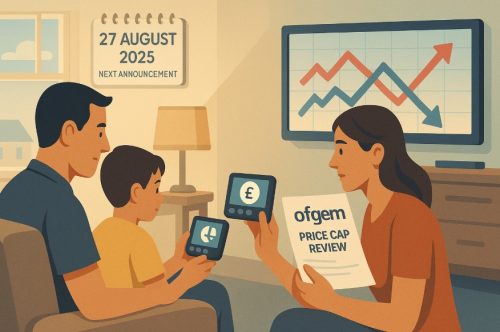
The next energy price cap update will be announced by 27 August 2025, covering the period from 1 October to 31 December 2025.
Ofgem uses a wholesale assessment period of around three months to determine upcoming caps. For the October 2025 update, prices from 19 May to 18 August 2025 are being reviewed.
This is what households can expect:
- Next Cap Date: 1 October 2025
- Announcement Date: 27 August 2025
- Review Period: Mid-May to Mid-August
- Predicted Price: Around £1,730 (low confidence)
- Possible Trend: Slight increase or stability
What You Can Do:
- Track the announcement date
- Use forecast tools from suppliers
- Consider fixing your tariff if you prefer payment certainty
- Reduce consumption or adjust payment methods if rates go up
Knowing these dates helps households prepare for changes and avoid bill shocks.
How Can Consumers Manage or Reduce Energy Costs in 2025?
Energy prices remain volatile, so it’s essential for UK households to take proactive steps in managing their usage and cost. Here’s how consumers can cut down on bills and improve efficiency:
Smart Ways to Save:
- Switch to a Fixed Tariff: Lock in current rates if prices are expected to rise
- Use a Smart Meter: Track real-time consumption and avoid estimates
- Monitor Standing Charges: Consider suppliers with lower daily fees
- Set Direct Debit Payments Smartly: Align them with your actual usage
- Use Less During Peak Hours: Some tariffs reward off-peak usage
- Apply for Support Schemes: Explore help like Octo Assist or Warm Home Discount
- Use Energy-Efficient Appliances: Switch to LED bulbs, insulate your home, and unplug unused electronics
Even simple behavioural changes like shorter showers or lowering thermostat settings by one degree can make a noticeable difference. Regularly reviewing your tariff options and comparing supplier offers is key to long-term savings.
Conclusion
Energy prices in the UK remain a pressing concern for households, but understanding when and how they change empowers consumers to act.
With the current cap set at £1,720 for typical use, July to September 2025 offers some relief following previous hikes. The next review in October could bring a slight rise, making it more important than ever to assess your tariff and usage.
From choosing the right payment method to using smart energy tools, there are ways to reduce your costs even when prices are high. Stay informed, stay flexible, and stay energy aware.
FAQs About When Do Energy Prices Change
Do All Energy Suppliers in the UK Follow the Ofgem Price Cap?
No, only suppliers offering standard and default variable tariffs are legally required to follow the price cap rules.
What Are Standing Charges and Why Are They Controversial?
Standing charges are fixed daily fees that cover network and infrastructure costs, and they’re controversial for penalising low-usage households.
Can I Be on a Capped Tariff Without Knowing It?
Yes, if you haven’t actively chosen a tariff or your fixed deal expired, you may be rolled onto a capped standard variable tariff by default.
How Do Regional Variations Affect Energy Rates in the UK?
Standing charges and unit rates vary by region due to differences in infrastructure and the cost of energy delivery in each area.
Are There Tariffs Without a Standing Charge?
Ofgem is reviewing plans to require suppliers to offer low or zero standing charge tariffs, but they’re not common currently.
Will My Direct Debit Automatically Update with Price Cap Changes?
No, your supplier may review and adjust it based on your usage or account balance, but it won’t automatically update with the cap.
What Happens If I Don’t Top Up My Prepayment Meter After a Price Drop?
You won’t benefit from the new lower rates until you top up and insert your key or card into the meter to activate the update.