


Is Swindon on the brink of a technological revolution? With the opening of a state-of-the-art drone manufacturing facility, the town is welcoming over 100 highly skilled jobs, signalling a major leap in the UK’s defence industry.
This purpose-built site by STARK not only strengthens national security but also revitalises Swindon’s historic manufacturing roots.
As global demand for AI-enabled uncrewed systems rises, Swindon is positioning itself as a key player in future defence technology. But what does this investment really mean for the town and its people?
How is Swindon Becoming a Strategic Hub for Defence Manufacturing?
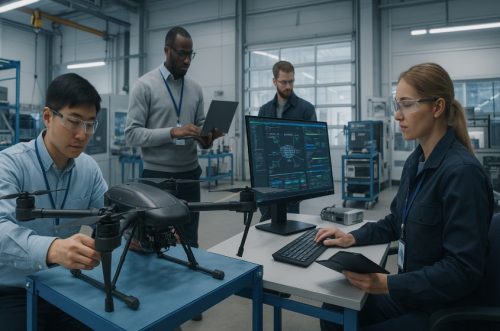
Swindon is undergoing a significant transformation. Once celebrated for its railway heritage and car manufacturing legacy, it now finds itself at the centre of the UK’s defence technology ambitions.
The recent opening of a purpose-built drone manufacturing facility by STARK is poised to place Swindon on the map for cutting-edge military innovation.
This isn’t just about 100 new jobs, it’s a clear signal of the UK’s commitment to reshaping its defence infrastructure, enhancing sovereign capabilities, and driving regional economic growth.
As tensions rise globally, nations are re-evaluating their production chains, and Swindon is emerging as a key player in Britain’s response to modern warfare and autonomous defence.
What is the STARK Drone Factory and Why Was It Built in Swindon?
The STARK Drone Factory in Swindon marks a major step forward in the UK’s advanced manufacturing landscape. Spanning 40,000 square feet, this new facility expands STARK’s production capabilities beyond Germany and is built to develop next-generation uncrewed systems.
The site will also help deliver AI-enabled drone platforms designed for the operational needs of today and tomorrow.
Swindon was selected as the ideal location due to several strategic advantages:
- Strong advanced manufacturing heritage
- Highly skilled and adaptable local workforce
- Proximity to key military hubs, including Army HQ and Air Command
- Excellent transport and logistics connections
- Supportive local government and investment-friendly environment
By anchoring operations here, STARK positions itself in a town ready to move from traditional industry into a new era of digital and autonomous manufacturing.
How Will the New Drone Factory Create Jobs in Swindon?
The opening of the STARK drone factory is expected to create over 100 highly skilled roles within its first operational year.
These positions are not just limited to assembly line workers but span across engineering, software development, electronics, and systems integration, reflecting the factory’s technologically advanced focus.
Key Job Sectors:
- Software & AI Engineering: Designing control systems and autonomous behaviour protocols for uncrewed systems.
- Aerospace Engineering: Overseeing structural, propulsion, and flight dynamics elements of drone development.
- Electronics & Avionics: Integrating sensors, communication systems, and navigation equipment.
The initial wave of hiring is already underway, with 50 positions expected to be filled before Christmas and another 50 by Spring. These jobs are seen as long-term, high-value roles that will provide sustainable income and upskilling opportunities to the local workforce.
What Technologies Are Being Developed at the Swindon Drone Facility?
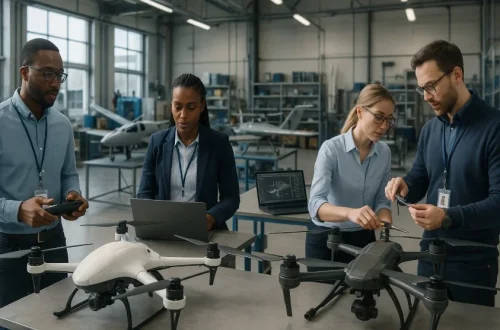
Loitering Munitions and Smart Drones
Among the systems being developed is the Virtus loitering munition, a tactical drone capable of hovering in a designated airspace before striking high-value targets.
The Virtus can be assembled in just 10 minutes and has seen successful deployment in modern conflict scenarios, providing valuable battlefield agility.
Alongside munitions, the facility is tasked with developing AI-enabled drones designed for autonomous surveillance, reconnaissance, and targeted strike missions. These systems reduce the operational burden on human soldiers and increase mission efficiency.
Technological Advancements and Applications
These drones incorporate machine learning, real-time data processing, and swarm intelligence, technologies which were once experimental but are now entering full-scale production.
There is also ongoing development of modular payloads, allowing drones to adapt to different missions with minimal configuration.
Why Is This Investment Crucial for the UK Defence Sector?
The UK’s Strategic Defence Review emphasised the need for rapid capability development in autonomous and AI-powered defence systems. STARK’s factory directly responds to this objective, boosting the country’s domestic production of critical technologies.
By producing uncrewed systems within the UK, there is less reliance on volatile international supply chains and greater assurance that military forces can access essential tools without delay.
This factory symbolises a wider shift toward making defence an engine of economic growth, merging military readiness with industrial regeneration.
It also strengthens NATO’s posture by contributing technologically advanced equipment that aligns with allied standards, giving the UK a stronger voice in cooperative defence strategies.
How Will Swindon’s Economy Benefit from Defence Manufacturing?

The injection of high-value employment and long-term investment will have a knock-on effect across the Swindon economy. Beyond the 100 direct jobs, additional employment will be generated indirectly via the local supply chain, contractors, logistics firms, and professional services.
There’s also the intangible yet powerful impact of Swindon rebranding itself as a centre of excellence for future technologies. The town’s association with world-changing engineering during WWII (e.g., Spitfire production) now finds a modern counterpart in drone manufacturing.
The move aligns with government efforts to ensure defence investment translates into tangible community benefits, offering new income sources, training pipelines, and regional pride.
What Does the Trinity House Agreement Mean for Industrial Collaboration?
The Trinity House Agreement between the UK and Germany is designed to deepen defence cooperation and facilitate joint industrial ventures. The STARK facility is one of the first major outcomes of this alliance, symbolising a new phase of transnational defence production.
Under this framework, the UK and Germany are working together on:
- Long-range strike weapon systems
- Autonomous battlefield technologies
- Shared research and development initiatives
This cooperation is intended to ensure interoperability across NATO forces while driving efficiency and innovation through joint investment.
When Will the Factory Be Fully Operational and What’s Next?

Operations at the Swindon site are being rolled out in phases, with full-scale manufacturing expected to begin in mid-2026. Recruitment will continue steadily as assembly lines and test facilities are brought online.
STARK Factory Timeline and Growth Plan:
| Phase | Activity | Projected Date |
| Initial Setup | Facility completed, team onboarding | Q4 2025 |
| Pilot Production | First drone units in low volumes | Q1 2026 |
| Full Operational Capacity | Mass manufacturing begins | Mid-2026 |
| Expansion Planning | Review of potential scale-up | Late 2026 onwards |
Following this, the company may explore additional UK-based investments, potentially including R&D centres, test facilities, or a secondary production site. If this trajectory continues, Swindon could lead the way in shaping the UK’s future defence innovation cluster.
How Can Jobseekers Apply for Opportunities at the STARK Factory?
The recruitment process is managed through both internal HR platforms and third-party job boards. Applicants are encouraged to have relevant qualifications, but STARK is also supportive of vocational training and upskilling.
Application Advice for Prospective Candidates:
- Ensure your CV reflects hands-on experience with robotics, manufacturing tools, or AI software.
- Emphasise adaptability, precision, and safety awareness, key traits for high-tech defence roles.
- Prepare for background checks and security clearance, particularly for roles involving sensitive technologies.
Common Roles and Entry Requirements:
| Role | Qualifications | Preferred Experience |
| Drone Assembly Technician | NVQ Level 3 / BTEC | 1–2 years in electronics or mech |
| Software Systems Developer | BSc Computer Science / AI | Python, ROS, autonomous systems |
| Aerospace Design Engineer | BEng/MEng Aerospace | CAD, materials, propulsion |
| Logistics & Operations Lead | Degree or Equivalent Experience | Supply chain and inventory |
STARK also plans to roll out graduate placements and apprenticeships to tap into local and national talent pools, encouraging young people to consider defence technology as a viable, rewarding career path.
What Are the Wider Implications of Swindon Becoming a Defence Tech Hub?
Swindon is no longer just a town of manufacturing legacy, it’s becoming a symbol of future-facing innovation. As additional defence-related facilities emerge and STARK’s footprint expands, the town’s economic profile will shift toward high-tech sectors.
Becoming a defence tech hub means more than job creation. It implies long-term resilience, global relevance, and a culture of advanced skills development.
Furthermore, it enhances the UK’s position in an increasingly competitive geopolitical landscape, where speed, autonomy, and technological dominance will define strategic success.
Swindon’s transformation offers a blueprint for other UK towns seeking to modernise their industrial base while contributing meaningfully to national interests.
Conclusion
The opening of STARK’s drone manufacturing facility in Swindon is a pivotal moment not just for the town but for the UK’s defence sector as a whole.
By blending historical manufacturing excellence with cutting-edge technology, Swindon is positioning itself as a linchpin in the global defence supply chain.
For jobseekers, innovators, and investors, the message is clear: the future of defence and advanced manufacturing is being built, right here in Swindon.
Frequently Asked Questions
What qualifications are needed to work at a drone manufacturing facility?
Roles typically require qualifications in engineering, electronics, or computer science. Hands-on experience with robotics, embedded systems, or AI is highly desirable.
How does STARK’s investment affect local small businesses?
Local suppliers, logistics providers, and contractors are likely to benefit from increased demand, creating a wider economic uplift across the Wiltshire region.
Are there apprenticeship or graduate roles available at the Swindon factory?
Yes, STARK is expected to launch entry-level and training programmes in partnership with regional colleges and universities to build a future-ready workforce.
What is the difference between uncrewed systems and drones?
Drones are a type of uncrewed system. The broader term includes various land, sea, and air platforms that operate autonomously or via remote control.
How do AI-enabled drones differ from traditional UAVs?
AI-enabled drones use advanced algorithms to make real-time decisions, navigate complex environments, and reduce human intervention, enhancing tactical efficiency.
Is drone production safe for the environment and local community?
Yes, the facility adheres to strict environmental and safety standards, with minimal emissions and controlled manufacturing processes.
Can civilians benefit from technologies developed for defence?
Absolutely. Many innovations in AI, sensors, and autonomous navigation have applications in emergency response, agriculture, logistics, and environmental monitoring.