

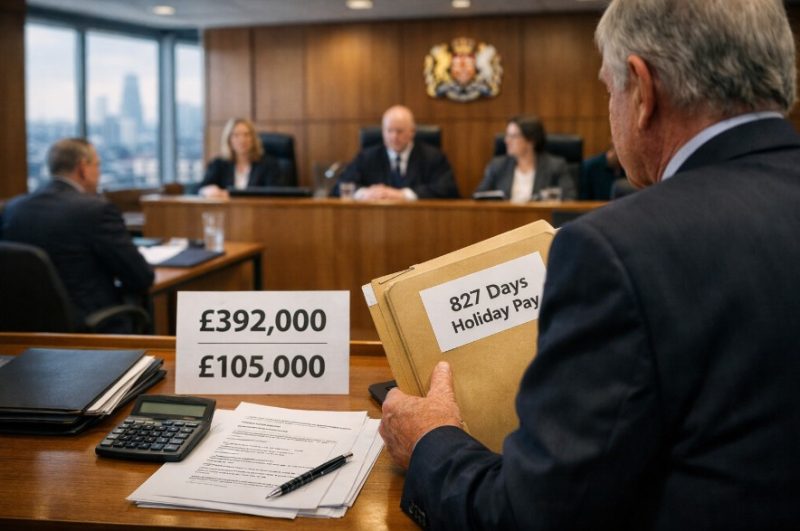
Mossadek Ageli holiday pay has become one of the most talked-about employment tribunal cases in the UK after the long-serving estate manager was awarded nearly £400,000 for 827 untaken holiday days.
The Watford tribunal ruled that Mr Ageli had been prevented from taking annual leave for years because of staff shortages and a long-standing agreement that his unused leave would roll over.
Key points from the case include:
- Mr Ageli built up 827 days of unused holiday over 25 years
- He was awarded £392,000 for untaken annual leave
- He also received more than £105,000 for unfair dismissal
- The tribunal found Sabtina Ltd had failed to follow a fair disciplinary process
- The ruling highlights the importance of accurate holiday records and proper workplace procedures
Why Did Mossadek Ageli Win Nearly £400,000 in Holiday Pay?
Mossadek Ageli, also known as Moss Ageli, worked for Sabtina Ltd, a Libyan-owned property management company, from 1987 until 2024. During that time, he was repeatedly unable to take annual leave because the company was short-staffed.
By the time his employment ended, he had built up 827 untaken holiday days. The tribunal ruled that these days should have been paid because Sabtina had agreed to compensate him for any unused annual leave.
The award of £392,000 for Mossadek Ageli holiday pay was one of the largest seen in a UK employment tribunal for annual leave.
The case became even more significant because the tribunal also found that his dismissal had been unfair.
An employment law specialist speaking after the ruling said:
“This case shows that unpaid annual leave can become a serious financial liability if employers fail to manage it correctly.”
The tribunal accepted that Mr Ageli had not simply chosen to ignore his holidays. Instead, his leave requests had often been refused due to the demands of the business.
Who Is Mossadek Ageli and What Was His Role at Sabtina Ltd?

Mr Ageli joined Sabtina Ltd in 1987 as deputy managing director before later becoming commercial manager. He worked at the company’s London and Milton Keynes offices.
Sabtina Ltd is a wholly owned subsidiary of the Libyan Foreign Investment Company, itself part of the Libyan Investment Authority.
According to tribunal evidence, the company relied heavily on Mr Ageli, particularly in its early years when there were very few full-time staff.
Between 1987 and 1989, only Mr Ageli and his personal assistant worked full time. As a result, both were required to remain available constantly to keep the business operating.
How His Holiday Entitlement Changed Over Time?
At the beginning of his employment, Mr Ageli was entitled to 30 days of annual leave each year. In 1996, this entitlement increased to 45 days.
However, despite the increase, he still struggled to take time off. The tribunal heard that between 1988 and 1996 alone, approximately 200 days of holiday requests were refused.
Why Sabtina Relied So Heavily on Him?
The business depended on his presence because he handled much of the day-to-day management. This made it difficult for him to be absent for extended periods.
According to the tribunal, the company repeatedly cited operational pressure and staff shortages when refusing his requests. Over time, this became normal practice.
How Did 827 Untaken Holiday Days Build Up Over Time?
The 827 days of unused holiday accumulated gradually over a period of around 25 years. The tribunal accepted that the process was not accidental. Instead, it resulted from a long-running pattern of leave being denied and rolled forward.
Several factors contributed to the extraordinary total:
- No holiday was taken between 1987 and 1989
- Around 200 days of leave were refused between 1988 and 1996
- His entitlement increased from 30 to 45 days a year
- Unused leave was carried forward annually from 1998 onwards
The following timeline shows how the holiday balance continued to rise.
| Year/Period | Key Event | Impact on Holiday Balance |
| 1987–1989 | No holiday taken | Significant backlog begins |
| 1988–1996 | 200 days refused by directors | Untaken leave increases further |
| 1996 | Holiday allowance rises to 45 days | More leave available but still not taken |
| 1998 | Formal agreement to roll over leave | Unused days continue accumulating |
| 2001 and 2004 | £15,000 paid in lieu of holiday | Evidence that the arrangement existed |
| 2024 | Employment ends | Total reaches 827 days |
Overall, the case shows how a long-term pattern of denied and carried-over leave can quietly build into a substantial entitlement, eventually leading to significant financial consequences for employers.
Why Was Mossadek Ageli Unable to Take Annual Leave?

The key issue was not whether Mr Ageli wanted time off, but whether he was realistically allowed to take it.
The tribunal heard that he repeatedly requested leave, yet it was often refused due to staff shortages. In the early years, the business relied heavily on him, making it difficult to step away.
- Requests for leave were frequently denied
- Business depended heavily on his role
- Staffing shortages limited flexibility
As Mr Ageli explained:
“When it almost became the norm that holidays were difficult to have, I wrote to the managing director and requested payment in lieu of unutilised holidays.”
An HR expert added:
“Holiday is a legal right, not a discretionary benefit.”
Overall, the case shows how ongoing refusal of leave can lead to serious legal consequences for employers.
A Long-Term Employee Example of Similar Workplace Pressure
Many long-serving employees in small businesses experience similar problems. One former operations manager at a family-run property firm shared a comparable experience after working there for 18 years.
He said:
“For years I kept postponing my holiday because there was nobody else to do my job. Eventually I had more than 100 days saved up. I always believed the company would honour it, but when management changed, they suddenly claimed there was no agreement.”
Although his case never reached tribunal, the example shows why informal arrangements around annual leave can become problematic when businesses change ownership or leadership.
What Agreement Was Made About His Unused Holiday Pay?
By 1998, Mr Ageli concluded that he would probably never be able to take his annual leave. He therefore asked Sabtina’s management if he could instead receive payment for any unused holiday.
According to his evidence, the company agreed.
He wrote to the managing director of Sabtina and the parent company in Libya requesting payment in lieu of untaken leave. The request was signed and approved.
After that, the arrangement became less formal. Mr Ageli no longer submitted paperwork every year. Instead, he simply kept a record of his remaining entitlement.
The tribunal accepted that there was a clear understanding between both sides that:
- unused holiday would roll over every year
- records would be maintained
- payment would eventually be made
- compensation could be claimed at the end of employment
The arrangement was further supported by payments made in 2001 and 2004, when Mr Ageli received £15,000 in lieu of annual leave.
| Evidence Supporting the Agreement | Why It Mattered |
| Written request approved by management | Showed the arrangement existed |
| Holiday records kept over many years | Proved the leave balance was monitored |
| £15,000 payments in 2001 and 2004 | Confirmed Sabtina had previously honoured the deal |
| Tribunal evidence from Mr Ageli | Reinforced that both parties understood the arrangement |
The tribunal accepted that a clear agreement existed, making the company responsible for paying the full amount of unused holiday at the end of his employment.
What Happened After Sabtina’s Board Changed?

The dispute intensified after Sabtina appointed a new board of directors in May 2022. According to tribunal evidence, the new management questioned the arrangement around unused holiday and demanded documentation.
At the same time, Mr Ageli’s role within the business began to shrink. His responsibilities were gradually removed until, despite remaining employed, he reportedly had little or no active role within the company.
The breakdown in relations eventually led to his dismissal in March 2024.
Why Did the Tribunal Say the Dismissal Was Unfair?
Sabtina dismissed Mr Ageli for alleged gross misconduct. However, the tribunal found that the company had not followed a fair process.
Employment Judge George Alliott concluded that Sabtina had not given Mr Ageli sufficient information about the allegations against him. He was not invited to a proper disciplinary hearing and was not offered a right of appeal.
“The dismissal was clearly procedurally unfair,” Judge Alliott said.
The judge also found that Sabtina did not genuinely believe Mr Ageli had committed gross misconduct. According to the ruling, the company had not carried out a reasonable investigation before deciding to dismiss him.
The Main Failings Identified by the Tribunal
The tribunal highlighted several serious problems with the dismissal process:
- Mr Ageli was not told exactly what he was accused of
- No evidence was shared with him
- He was denied the chance to defend himself
- No proper disciplinary hearing took place
- He was not given any right of appeal
These failings ultimately strengthened his claim and led to the additional compensation award.
What Exactly Was Mossadek Ageli Awarded?
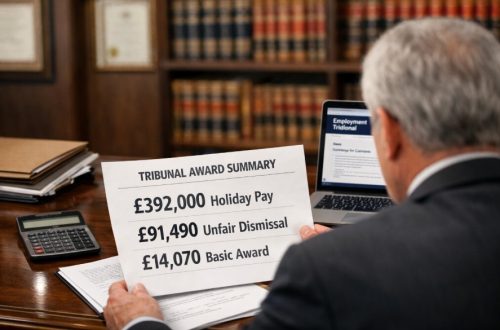
The tribunal ordered Sabtina Ltd to pay both the unpaid holiday entitlement and compensation for unfair dismissal.
| Award Type | Amount |
| Untaken holiday pay | £392,000 |
| Unfair dismissal compensation | £91,490 |
| Basic award | £14,070 |
| Total tribunal award | £497,560 |
The overall payout came close to £500,000, making it one of the most notable UK employment tribunal awards relating to annual leave.
What Does the Mossadek Ageli Holiday Pay Case Mean for UK Employers?
The Mossadek Ageli holiday pay case is a warning to employers across the UK. Businesses cannot rely on informal arrangements, verbal promises or unwritten practices when dealing with annual leave.
Employers should ensure that:
- holiday requests are properly recorded
- refusals are justified and documented
- unused leave is monitored carefully
- any payment-in-lieu arrangement is confirmed in writing
- disciplinary procedures follow employment law requirements
For employees, the case also reinforces the importance of keeping records. Mr Ageli succeeded largely because he had evidence of his entitlement, previous payments and long-standing agreements.
In sectors such as property management, retail, hospitality and care, where staff shortages are common, similar disputes could easily arise if leave is repeatedly postponed.
Conclusion
The Mossadek Ageli holiday pay case stands out for its scale, but the core issue is common. Many employees struggle to take leave due to understaffing or workplace pressure.
In this case, the tribunal found that Mr Ageli was prevented from taking holiday and had been promised compensation. When that promise was not honoured and he was dismissed unfairly, the financial impact was significant.
For UK employers, the message is clear: properly manage holiday entitlements, records and procedures to avoid costly legal claims in the future.
FAQs About Mossadek Ageli Holiday Pay
Can an employee in the UK claim pay for untaken holiday?
Yes. Employees may be entitled to payment for unused holiday if they were prevented from taking it or if an agreed carry-over arrangement exists.
How many holiday days can be carried over under UK law?
The amount depends on the reason. Some leave may be carried forward due to sickness, family leave or an employer refusing holiday requests.
Is payment in lieu of annual leave always legal?
Generally, payment in lieu is only allowed when employment ends. However, the tribunal found that Mr Ageli had a separate agreement with his employer.
What happens if an employer repeatedly refuses holiday requests?
If an employer consistently prevents a worker from taking leave, the employee may later bring a claim for untaken holiday pay.
Can an employee receive both holiday pay and unfair dismissal compensation?
Yes. In this case, Mr Ageli received both because the tribunal found that he was denied holiday pay and dismissed unfairly.
Does a verbal agreement count in a holiday pay dispute?
A verbal agreement can help, but written evidence is much stronger. Mr Ageli succeeded because he had records and previous payments to support his case.
Why do employers need written records of annual leave?
Written records reduce the risk of disputes and make it easier to prove what leave was taken, refused or carried over.