

Making Tax Digital (MTD) for Income Tax is one of the biggest changes to UK tax reporting in years, but it does not directly apply to pension income.
If you only receive a State Pension, workplace pension or private pension, you will not usually need to join the new system. However, the making tax digital pension impact becomes important if you also earn money from rental property or self-employment.
From April 2026, some retirees with mixed income will have to keep digital records and submit quarterly tax updates to HMRC.
Key points to know:
- Pension income does not count towards the MTD threshold
- Rental and self-employed income may bring you into MTD
- Pension income still has to appear in your final digital tax return
- Exemptions may be available if you are digitally excluded
What Is Making Tax Digital for Income Tax and Why Does It Matter to Retirees?
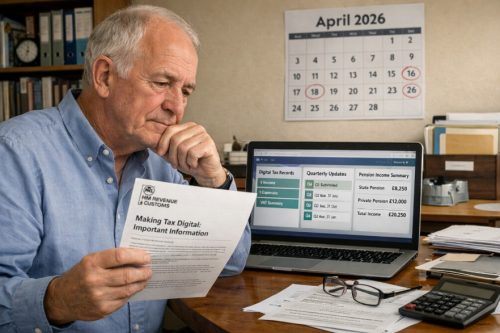
Making Tax Digital for Income Tax is HMRC’s new system for reporting self-employed and property income digitally. Instead of filing one annual Self Assessment tax return, affected taxpayers will need to use compatible software, maintain digital records and send updates every quarter.
For retirees, this matters because many people supplement their pension with rental income, part-time consultancy work or a small business. Even though pension income itself is outside the scope of MTD, the other income sources may not be.
An HMRC spokesperson explained:
“Making Tax Digital for Income Tax is designed to modernise the tax system, but only self-employment and property income count towards the qualifying threshold.”
The changes will begin in phases:
| Start Date | Who Is Affected? | Qualifying Income Threshold |
| 6 April 2026 | Sole traders and landlords | More than £50,000 |
| 6 April 2027 | Sole traders and landlords | More than £30,000 |
| 6 April 2028 | Sole traders and landlords | More than £20,000 |
The threshold is based on gross income, not profit. HMRC looks at the total amount you receive from self-employment and property before expenses are deducted.
For example, if you receive £32,000 from a buy-to-let property and £22,000 from freelance work, your qualifying income is £54,000. That means you will need to join MTD from April 2026, even if you also receive a pension.
Does Making Tax Digital Apply to Pension Income?
The simple answer is no. Pension income is not included in the qualifying income that determines whether you must use MTD for Income Tax.
This applies to:
- State Pension
- Workplace pensions
- Private pensions
- Pension drawdown income
- Annuity income
If you only receive income from one or more pensions, you do not need to use Making Tax Digital.
However, pension income does not disappear entirely from your tax affairs. If you are already within MTD because of rental or self-employed income, your pension still needs to be included in the final digital declaration at the end of the tax year.
HMRC states:
“You do not need to create digital records for pension income, but your software must be able to include it in the final declaration.”
That distinction is important. Pension income does not trigger MTD, but it still needs to be reported if you are already inside the system.
Which Pension Income Does Not Count Towards the Threshold?
All major forms of pension income are excluded from the MTD threshold. Even if your pension income is substantial, it will not bring you into the scheme on its own.
| Income Type | Counts Towards MTD Threshold? | Must Be Reported in Final Declaration? |
| State Pension | No | Yes |
| Workplace Pension | No | Yes |
| Private Pension | No | Yes |
| Pension Drawdown | No | Yes |
| Self-Employment Income | Yes | Yes |
| UK Rental Income | Yes | Yes |
What Happens If You Have Pension and Other Income?
Many retirees have more than one source of income. A retired person may receive a pension while also letting out a former home or carrying out part-time consultancy.
In those cases, HMRC only looks at the self-employed and property income when deciding whether you must use MTD. Once you are inside the system, your pension income must be added to the final submission through your software.
Which Retirees Will Need to Use Making Tax Digital?
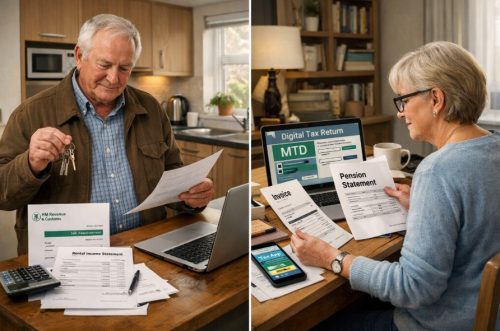
The making tax digital pension impact is most relevant for retirees with mixed income. Pensioners who also earn from property or self-employment may need to join MTD once their qualifying income exceeds the threshold.
Retirees With Rental Income
Retired landlords are likely to be one of the largest groups affected. Many people rely on one or two rental properties to top up their pension in later life.
If your total rental income is more than £50,000 in the 2024–25 tax year, you will need to use MTD from April 2026. The threshold then falls to £30,000 from April 2027 and £20,000 from April 2028.
This has caused concern among older landlords who are less confident using online accounting software.
A Treasury official recently commented:
“We recognise that some older landlords may need extra support, which is why exemptions and agent support remain available.”
Retirees With Self-Employed Income
Some retirees continue working part-time after retirement. This could include consulting, tutoring, gardening, driving or freelance work.
If your self-employed income exceeds the threshold, you will also be brought into MTD, even if the majority of your income comes from a pension.
For example, a retired engineer receiving a £24,000 private pension and £35,000 from consultancy work would need to join MTD from April 2027 because the consultancy income alone is above £30,000.
What If You Have Both Rental and Self-Employment Income?
HMRC combines both sources when calculating qualifying income. A retiree earning £18,000 from property and £15,000 from freelance work would have total qualifying income of £33,000. That means MTD would apply from April 2027.
What Counts Towards the Making Tax Digital Threshold and What Does Not?
Understanding qualifying income is one of the most confusing parts of MTD. The system only considers certain types of income.
The following count towards the threshold:
- Self-employment income
- UK rental income
- Foreign property income
The following do not count:
- Pension income
- Employment income
- Dividends
- Savings interest
- Rent-a-room income covered by relief
- Small hobby income covered by the trading allowance
This distinction means some retirees may have a relatively high total income but still remain outside MTD.
For example, a pensioner receiving:
- £28,000 private pension
- £15,000 State Pension
- £18,000 rental income
would not be required to join MTD in 2026 because only the £18,000 rental income counts towards the threshold.
When Will Making Tax Digital Start Affect Retirees in Practice?
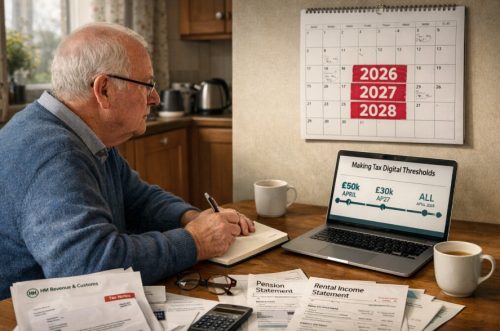
Although MTD officially begins in April 2026, many retirees need to prepare much earlier because HMRC uses previous tax returns to decide who must join.
The timeline works like this:
- If your qualifying income for 2024–25 is over £50,000, MTD starts for you on 6 April 2026
- If your qualifying income for 2025–26 is over £30,000, you join on 6 April 2027
- If your qualifying income for 2026–27 is over £20,000, you join on 6 April 2028
HMRC will normally write to you if it believes you need to join. However, you are still responsible for checking your own position.
One senior HMRC adviser said:
“Even if you do not receive a letter, it remains your responsibility to check whether your income means you need to use Making Tax Digital.”
What Will Retirees Need to Do If They Fall Within Making Tax Digital?
If retirees fall within Making Tax Digital rules, the changes are mainly administrative rather than financial. Pension income is not taxed differently, but how you manage and report your income will change.
You will need to keep digital records of rental or self-employed income using approved software, as paper records alone will no longer be enough. Instead of one annual return, you must send quarterly updates to HM Revenue and Customs, giving regular summaries of income and expenses.
At the end of the tax year, you will complete a final declaration, including pension income, savings and any other earnings.
- Use compatible software
- Submit quarterly updates
- Complete a final declaration
Choosing the right software is important, especially for those with simple income sources.
Could Making Tax Digital Be Difficult for Older or Digitally Excluded Taxpayers?
For many pensioners, the practical challenge is not tax itself but technology. Older taxpayers are more likely to rely on paper records, face-to-face support or help from family members.
The move to quarterly reporting may create additional pressure because tax affairs must be reviewed more often.
A recent conversation with a retired landlord from Kent illustrates the issue. He receives a State Pension and income from two rental flats. His rental income is around £34,000 per year, so he expects to join MTD in 2027.
He told me:
“I’ve always done my tax return once a year with a folder of receipts. Now I’m being told I’ll need software and quarterly updates. It feels like a lot to learn at my age.”
This concern is echoed across many of the competitor articles. The biggest worries tend to include:
- Learning unfamiliar software
- Paying for accountant support
- Fear of making mistakes
- Extra time spent managing tax records
Who May Be Considered Digitally Excluded?
HMRC may allow an exemption if you cannot reasonably use digital tools because of:
- Age
- Disability
- Remote location
- Religious reasons
How Do Exemptions Work?
An exemption is not automatic. You normally need to apply and explain why you cannot use the digital system. If HMRC agrees, you can continue using Self Assessment instead.
Is Making Tax Digital Really a Threat to Retirement Income?
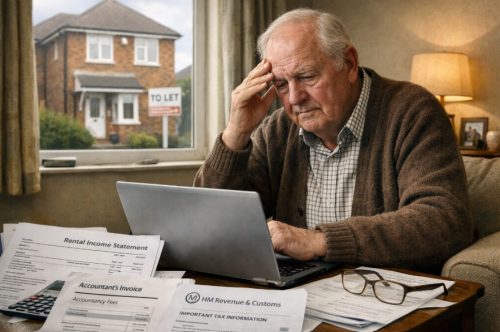
Some headlines suggest Making Tax Digital (MTD) will “decimate” pensions, but that is overstated. The making tax digital pension impact is mainly administrative, not financial. Pension income is not taxed more heavily and is not included in the qualifying threshold.
However, there may be indirect effects. Retired landlords or self-employed pensioners could face added costs for software or accountancy services, and some may leave the market due to quarterly reporting requirements.
This could slightly reduce rental supply over time. For most retirees, though, the key point is simple: if you rely only on pension income, you are unlikely to be affected.
How Can Retirees Prepare for Making Tax Digital Now?
The best approach is to review your income well before the rules begin. Separate your pension income from your rental or self-employed income and calculate whether you are likely to cross the threshold.
If you think you may be affected:
- Check your 2024–25 and 2025–26 income figures
- Speak to an accountant or tax adviser
- Research MTD-compatible software early
- Keep records digitally before it becomes compulsory
- Apply for an exemption if digital access is genuinely difficult
Preparing early will make the transition easier and reduce the risk of mistakes.
Conclusion
The Making Tax Digital pension impact is often misunderstood. Pension income alone does not bring you into the system, and State, workplace and private pensions are excluded from the threshold.
Those most affected are retirees with additional income from property or self-employment. If this exceeds the limit, you must use digital software, submit quarterly updates and include pension income in your final declaration.
For most pensioners, there is no need to worry. While the changes are important, they can be managed with proper planning, the right tools and suitable support.
FAQs About Making Tax Digital Pension Impact
Does State Pension count towards the Making Tax Digital threshold?
No. State Pension income does not count towards the threshold that determines whether you need to join MTD.
Do I need Making Tax Digital if I only receive a private pension?
No. If your only income is from a private pension, you do not need to use MTD for Income Tax.
What happens if I am retired but still earn rental income?
You may need to join MTD if your rental income exceeds the threshold. Pension income does not count, but rental income does.
Will quarterly updates include my pension income?
No. Quarterly updates only cover self-employed and property income. Pension income is added later in the final declaration.
Can I use an accountant if I am not confident with tax software?
Yes. Many retirees are expected to rely on accountants or tax agents to manage MTD submissions.
Are older people automatically exempt from Making Tax Digital?
No. You may qualify for an exemption if you are digitally excluded, but you usually need to apply to HMRC.
What software do retirees need for Making Tax Digital?
You need HMRC-compatible software that can manage digital records, quarterly updates and final declarations including pension income.