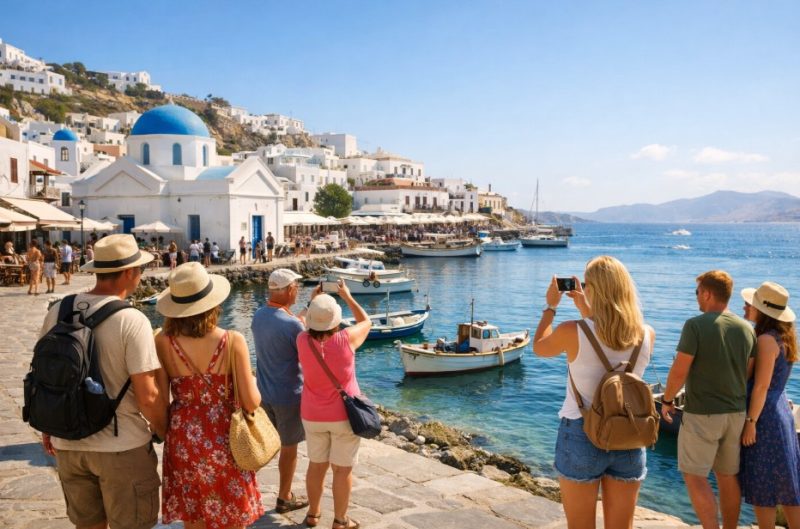
If you are planning a holiday in the Mediterranean, you may be asking, is it safe to travel to Greece right now with war in the wider region?
Yes, Greece remains open to British tourists and currently has no UK government “do not travel” warning in place.
However, travellers are advised to stay informed because global tensions, regional conflicts, and typical travel risks can still affect trips.
Before travelling to Greece, UK visitors should keep several key points in mind:
- Greece is not considered a war zone, but regional tensions in the eastern Mediterranean have raised concerns.
- The UK government advises that no international travel can ever be guaranteed completely safe.
- Tourists should monitor official travel guidance and ensure they have comprehensive travel insurance.
Understanding these factors can help you make a confident and informed decision before planning your trip.
What Should UK Travellers Know About Visiting Greece During Regional War Tensions?

When international conflicts dominate headlines, many travellers naturally question whether their holiday destination might be affected. Recent tensions linked to conflicts in the Middle East have raised broader security concerns across parts of the eastern Mediterranean.
However, Greece is not directly involved in these conflicts and remains one of Europe’s most popular tourist destinations.
According to the Greek National Tourism Organisation, the country welcomed more than 36 million international visitors in 2024, including many travellers from the UK.
In reality, the biggest change has been traveller perception rather than actual conditions on the ground. Some tourists are reconsidering eastern Mediterranean trips due to news coverage.
Despite this, Greece’s tourism infrastructure continues to operate normally, with flights, hotels, ferries, and attractions remaining open to visitors.
Is Greece Safe to Visit Right Now for British Tourists?
Overall, Greece remains a generally safe destination for British travellers. The UK government has not issued a blanket warning advising people to avoid travel to Greece.
Nevertheless, official guidance emphasises that travellers should remain aware of potential risks that can occur in almost any international destination. These risks are not unique to Greece but are common in many popular tourist locations around the world.
Typical safety considerations include:
- Awareness of your surroundings in busy areas
- Monitoring local news and official travel updates
- Keeping travel documents secure
- Avoiding demonstrations or political gatherings
A senior official involved in travel advice guidance noted:
“The aim of travel advice is not to discourage travel but to help people make informed decisions and understand potential risks before they go.”
Most visitors to Greece experience no serious difficulties during their trips. However, understanding possible risks ensures travellers can prepare appropriately.
Why Are People Worried About Travelling to Greece During the Current War?

The main reason travellers are asking “is it safe to travel to Greece right now with war nearby?” is the ongoing conflict involving Iran and other countries in the Middle East.
Although Greece is geographically close to parts of the eastern Mediterranean, it is still hundreds of kilometres away from active conflict zones.
For example, Cyprus — often referenced in discussions about regional tensions, lies around 800 kilometres from mainland Greece.
News coverage can sometimes blur the distinction between regional instability and direct safety risks in a specific destination. In reality, Greece’s tourism sector continues to function normally.
However, the wider geopolitical situation can still affect travel indirectly. These effects may include:
- Increased security awareness at airports and tourist sites
- Heightened monitoring of demonstrations
- Changes in airline routes or airspace conditions in nearby regions
A travel industry analyst recently summarised the situation:
“People are thinking more carefully about destinations near areas of conflict, even when those destinations themselves remain safe and open to visitors.”
Understanding this difference between perception and reality is key when evaluating travel plans.
What Does the Latest UK Government Travel Advice Say About Greece?
The UK government provides detailed travel advice through the Foreign, Commonwealth & Development Office to help British nationals assess potential risks before travelling abroad.
Key Safety Advice from the FCDO
The UK Foreign, Commonwealth & Development Office regularly updates travel guidance to help British nationals make informed decisions when travelling abroad.
Current advice for Greece emphasises awareness rather than avoidance. Travellers are encouraged to:
- Stay alert in crowded areas or tourist attractions
- Avoid demonstrations or large gatherings
- Follow instructions from local authorities
- Monitor updates before and during travel
Greek authorities have also increased security at prominent tourist sites due to regional tensions.
Entry Rules and Passport Requirements
British travellers must also follow the standard Schengen Area entry rules when visiting Greece. These requirements include:
- A passport issued within the last 10 years
- At least three months of validity after leaving the Schengen area
- Compliance with the 90-day visa-free stay within any 180-day period
The table below summarises key entry requirements for UK travellers:
| Requirement | Details |
| Passport validity | Issued within last 10 years and valid 3 months after departure |
| Visa requirements | No visa required for stays up to 90 days |
| Border checks | Passport stamping until EU Entry/Exit System fully launches |
| Possible documentation | Return ticket and proof of funds may be requested |
These requirements are standard across most European destinations within the Schengen area.
How Could Regional Conflict Affect Holidays to Greece?
Although Greece itself is not directly affected by the war, regional conflict can still influence travel trends and logistics.
For example, travel companies have reported that some holidaymakers are switching destinations within Europe to avoid the eastern Mediterranean region altogether. This shift has led to increased demand for destinations such as Spain, Portugal, and Italy.
However, the impact varies depending on the travel provider and route availability. Some airlines have adjusted certain flight paths to avoid nearby airspace restrictions, although these changes rarely affect direct flights to Greece.
The tourism industry has also observed changes in pricing and demand patterns.
| Potential Impact | Explanation |
| Flight routes | Some airlines may adjust airspace routes due to regional security considerations |
| Holiday demand | Travellers may compare destinations more carefully |
| Travel costs | Flight prices can fluctuate depending on demand and availability |
| Booking patterns | Some tourists may change destinations or postpone travel |
These changes do not necessarily indicate safety problems in Greece itself but reflect broader travel trends during periods of geopolitical uncertainty.
Are Athens and the Greek Islands Equally Safe for Tourists?
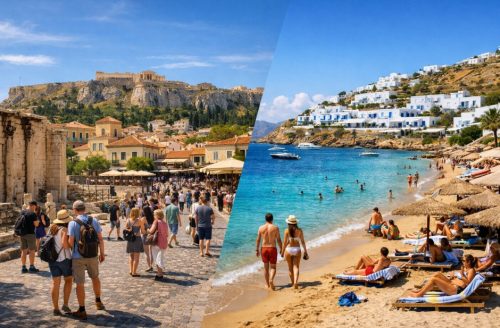
Safety conditions in Greece can vary slightly depending on the destination. While the country is generally safe overall, different areas may present different considerations.
Safety Considerations in Major Cities
Cities such as Athens attract large numbers of visitors and therefore experience typical urban issues.
- Pickpocketing may occur in crowded areas or public transport
- Demonstrations occasionally take place in central locations such as Syntagma Square
- Heavy traffic and busy streets require extra caution
Most visitors experience no major problems, but staying aware of surroundings can help prevent minor incidents.
Safety Considerations on Greek Islands
The Greek islands are typically quieter than major cities, and many visitors consider them particularly relaxed destinations. However, travellers should still be aware of practical considerations.
Healthcare services, for example, may be more limited on smaller islands compared with mainland Greece. Ambulance availability can also vary depending on the island’s infrastructure and population.
A Greek tourism official explained the balance clearly:
“Millions of visitors travel safely to the islands every year, but travellers should always be prepared and follow local safety advice.”
In general, both Athens and the islands remain popular and safe for tourists when normal precautions are followed.
Could Flights, Ferries, or Transport in Greece Be Disrupted?
Transport disruptions occasionally occur in Greece due to strikes or demonstrations, which can affect buses, trains, ferries, and sometimes air travel.
These strikes are usually announced in advance, but they can occasionally be organised at short notice. For travellers, this means checking transport updates before moving between cities or islands.
Ferries are particularly important in Greece because many travellers rely on them to reach popular island destinations. Delays or cancellations can occur during industrial action or extreme weather.
Travellers should therefore allow flexibility in their travel plans and monitor announcements from airlines and ferry operators.
What Entry Requirements and Border Changes Should Travellers Prepare For?
Travellers visiting Greece should ensure their documents meet the latest European border rules.
One important upcoming change is the European Union’s Entry-Exit System (EES), expected to become fully operational in 2026.
This system will require non-EU visitors entering the Schengen area to register biometric details such as fingerprints or facial photographs.
The table below summarises the main entry requirements:
| Requirement | Details |
| Passport validity | Issued within 10 years and valid for 3 months after departure |
| Visa rules | Visa-free travel for up to 90 days |
| Border checks | Standard passport control on entry |
| Entry-Exit System | Biometric registration expected from April 2026 |
Travellers should allow additional time at airports and border checkpoints once the system is fully implemented.
Should You Cancel Your Greece Holiday Because of the War?

For most travellers, cancelling a trip to Greece purely because of regional conflict is not necessary. Greece remains open to visitors, and millions of tourists continue to travel there safely each year.
However, each traveller’s circumstances are different. It may be sensible to review travel plans if:
- your itinerary includes several connecting flights through affected regions
- you require specialised medical care during your trip
- you prefer destinations further away from geopolitical tensions
Consider the example of a couple travelling from Manchester to Rhodes. Their trip might proceed normally, but they could still encounter typical travel issues such as ferry delays or airport queues.
These types of disruptions are common in international travel and are not necessarily related to war.
Monitoring official travel advice and keeping flexible plans can help reduce uncertainty.
How Can You Travel to Greece More Safely During Times of Global Uncertainty?
Although Greece remains a welcoming destination, travellers should always take sensible precautions when visiting any foreign country.
Some practical steps can help ensure a smoother and safer journey:
- Check official travel advice before departure
- Purchase comprehensive travel insurance
- Avoid demonstrations or large public gatherings
- Keep passports and valuables secure
- Register emergency alerts on your mobile phone
Carrying a Global Health Insurance Card (GHIC) can also help you access necessary healthcare during your stay.
A senior travel safety advisor recently stated:
“Staying informed is the most effective safety measure travellers can take. Checking official advice regularly helps visitors make confident decisions.”
Ultimately, awareness and preparation can help travellers enjoy Greece safely even during periods of international tension.
Conclusion
Greece remains a safe and popular destination for most travellers, and tourism continues to operate normally despite regional tensions in nearby areas. At present, there is no UK government advice warning travellers to avoid visiting the country.
However, as with any international trip, it is important for travellers to stay informed and prepared. Factors such as regional developments, transport disruptions, protests, or general travel risks could still affect plans.
By monitoring official travel guidance and preparing ahead, visitors can enjoy Greece with confidence. From historic cities and cultural landmarks to beautiful islands and coastal landscapes, the country continues to offer a rewarding travel experience for tourists.
Frequently Asked Questions
Can British tourists still enter Greece without a visa?
Yes. UK passport holders can visit Greece without a visa for tourism or business purposes for up to 90 days within a 180-day period under Schengen rules.
Will the new EU biometric border system affect UK travellers?
Yes. The upcoming Entry/Exit System will require travellers to provide biometric data such as fingerprints or photographs when entering the Schengen area.
Are travel insurance policies affected by regional conflicts?
Some policies may exclude claims if travellers ignore official government advice. Always check that your insurance covers medical emergencies, cancellations, and travel disruptions.
Do protests in Athens affect tourists regularly?
Protests occasionally occur in central Athens, but they rarely affect tourists who avoid demonstration areas and follow local guidance.
Is healthcare in Greece good for international visitors?
Healthcare facilities on the mainland are generally good, but services on smaller islands may be limited. Travel insurance is recommended for all visitors.
What natural risks should travellers be aware of in Greece?
Greece can experience earthquakes, wildfires during summer months, and occasional heatwaves. Travellers should follow local safety advice and emergency alerts.
How often should travellers check government travel advice before departure?
It is advisable to check official travel guidance several times before travelling and again shortly before departure to ensure no major updates have been issued.